Marine environments are characterized by high salt-spray levels, high humidity, intense ultraviolet radiation, significant temperature fluctuations, and prolonged exposure to seawater—conditions that impose stringent requirements on the corrosion resistance of piping materials.
Standard carbon steel pipes are prone to corrosion in marine atmospheres or seawater; consequently, stainless steel pipes have become a vital choice for projects such as offshore platforms, shipbuilding, seawater desalination, marine aquaculture, port facilities, and offshore wind power. As a ss pipe supplier, we’d like to make a simple introduction for you.
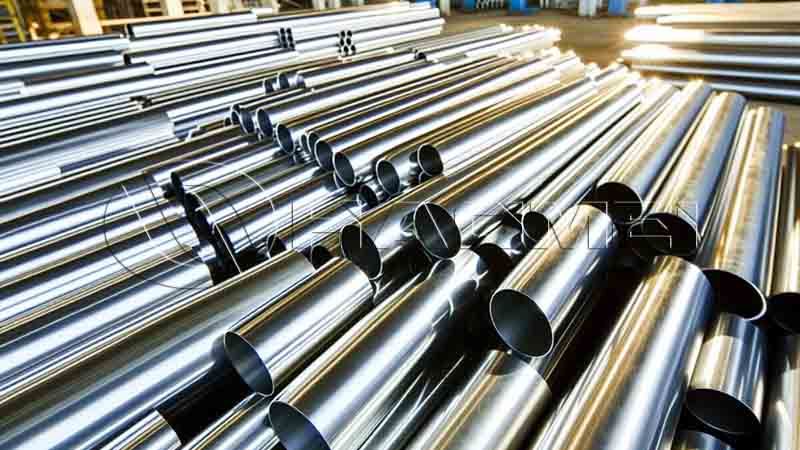
However, not all stainless steel pipes are suitable for direct contact with seawater. Material selection should be based on a comprehensive assessment of factors including chloride ion concentration, temperature, pressure, flow velocity, welding conditions, and maintenance requirements.
1. 304 and 304L Stainless Steel Pipes
Type 304 is a widely used austenitic stainless steel, offering good formability, weldability, and moderate corrosion resistance. Type 304L is a low-carbon variant that provides superior resistance to intergranular corrosion following welding.
In marine applications, 304/304L stainless steel is suitable for indoor equipment, auxiliary piping not in direct contact with seawater, and structural components exposed to intermittent salt spray. However, when subjected to long-term exposure to coastal environments, damp crevices, or direct immersion in seawater, 304 stainless steel is susceptible to pitting and crevice corrosion. Therefore, it is generally not recommended for critical applications involving the long-term transport of seawater or continuous immersion.
2. 316 and 316L Stainless Steel Pipes
Type 316 stainless steel is derived from Type 304 by the addition of molybdenum, which enhances its resistance to chloride-rich environments. Type 316L is the low-carbon version, making it well-suited for welded piping, marine equipment, and complex piping systems.
Type 316L stainless steel is a common choice in marine engineering. It is used for applications such as ship railings, auxiliary piping on offshore platforms, pre-treatment equipment for seawater desalination, architectural features in coastal structures, and instrumentation piping in moderately corrosive environments. It offers better resistance to pitting corrosion compared to 304L.
It should be noted, however, that Type 316L is not "completely resistant" to seawater. In seawater environments characterized by high temperatures, low flow velocities, significant sediment accumulation, or narrow crevices, 316L stainless steel may still be susceptible to localized corrosion. Therefore, for pipelines intended for the long-term transport of natural seawater, duplex or super duplex stainless steels should be prioritized.
3. 2205 Duplex Stainless Steel Pipes
2205 duplex stainless steel features a dual-phase microstructure consisting of both austenite and ferrite. It offers high strength, excellent resistance to chloride-induced stress corrosion cracking, and superior resistance to pitting and crevice corrosion compared to 316L.
2205 stainless steel pipes are widely used in seawater transport systems, process piping on offshore platforms, seawater cooling lines, oil and gas development facilities, seawater heat exchangers, and port equipment. Its yield strength is typically about twice that of 316L; consequently, the wall thickness can be reduced while still meeting design requirements, thereby lowering the overall weight.
For most nearshore and moderately demanding seawater environments, 2205 duplex stainless steel pipes offer an optimal balance between performance and cost.
4. 2507 Super Duplex Stainless Steel Pipes
The super duplex 2507 pipe contains higher levels of chromium, molybdenum, nickel, and nitrogen, resulting in a higher Pitting Resistance Equivalent Number (PREN). It is particularly well-suited for environments involving high chloride concentrations, elevated temperatures, high pressure, and long-term immersion in seawater.
This material is frequently used in deep-sea oil and gas extraction, subsea manifolds, seawater injection systems, high-pressure desalination equipment, piping for offshore wind power foundations, and the transport of highly corrosive chemical media. Compared to 316L and 2205, 2507 offers superior resistance to seawater corrosion, though it comes at a higher cost and presents greater challenges in terms of processing and welding.
When using 2507 pipes, it is essential to strictly control welding heat input, ensure the proper selection of filler materials, and perform thorough post-weld cleaning to prevent any degradation of corrosion resistance caused by microstructural changes in the weld zone.
5. 904L and 6Mo Super-Austenitic Stainless Steel Pipes
904L is a high-alloy austenitic stainless steel with excellent resistance to acids and chloride-induced corrosion. It is suitable for applications such as seawater desalination, flue-gas desulfurization, and the transport of corrosive liquids.
6Mo super-austenitic stainless steel pipes—such as 254SMO—contain high levels of molybdenum, providing exceptional resistance to pitting and crevice corrosion. These materials are well-suited for use in high-salinity seawater, concentrated brine from desalination processes, heat exchanger tube bundles, and marine equipment that requires non-magnetic properties. Due to their high cost, these materials are typically reserved for components where corrosion resistance requirements are particularly stringent.
Original source: https://www.marinesteelpipe.com/a/what-are-stainless-steel-pipes-for-offshore-applications.html


没有评论:
发表评论