Aluminum Circles for Cookware: 1050 vs. 1060 vs. 3003 Alloy

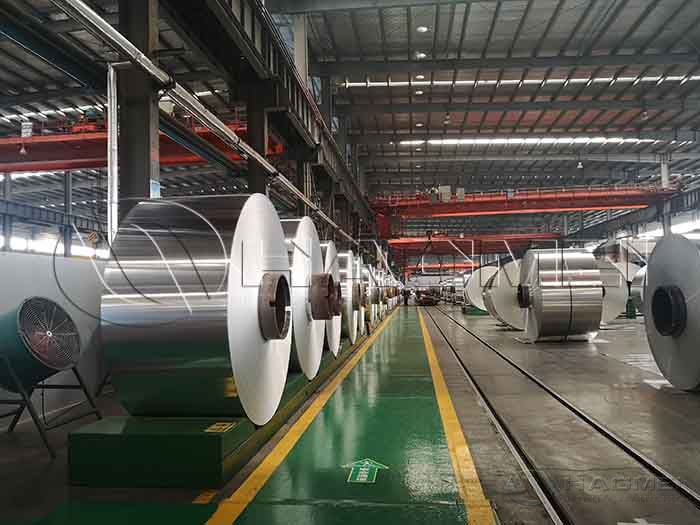
In the cookware manufacturing industry, aluminum discs have become an ideal material for a wide range of products thanks to their excellent thermal conductivity, corrosion resistance, and good workability. Among them, the 1050, 1060, and 3003 aluminum circles are particularly widely used; each possesses unique performance characteristics, making them suitable for different types of cookware.
Grades 1050 and 1060 belong to the commercially pure aluminum series, with aluminum content exceeding 99.5% and 99.6%, respectively. This composition grants them exceptional electrical and thermal conductivity, allowing for rapid and uniform heat transfer; this ensures food cooks evenly and minimizes issues like localized overheating or undercooking.
These grades are frequently found in cookware requiring superior thermal performance, such as high-end non-stick pans and precision-cast aluminum pots. For instance, certain renowned brands utilize 1060 aluminum discs as the base material for their uncoated non-stick pans to ensure rapid heat conduction to the pan's base—facilitating quick searing and stir-frying—while preventing food from burning due to localized hotspots.
However, these two grades have relatively low strength; they are prone to deformation under significant external impact, which can affect the cookware's functionality and appearance. While they exhibit good corrosion resistance in standard environments, they remain susceptible to corrosion when exposed to strong acids, alkalis, or other corrosive substances.
In contrast, the 3003 grade is an aluminum-manganese alloy containing 1.0–1.5% manganese. This addition significantly boosts its strength—by approximately 20% compared to the 1050 and 1060 grades—enabling it to better withstand the bumps and friction encountered during use while maintaining its structural integrity. Consequently, 3003 aluminum discs are the preferred choice for manufacturing large steamers and stew pots that require a certain level of strength and durability. Furthermore, this grade offers superior corrosion resistance; it is less likely to corrode—even in humid environments or when in contact with mildly acidic or alkaline foods—thereby ensuring a longer service life.
Aluminum Strip for Transformer Winding: Alloy, Temper, and Edge Quality Requirements
In transformer manufacturing, the performance of aluminum strip winding directly impacts the transformer's operational efficiency, stability, and service life; consequently, there are strict requirements regarding alloy grade, temper, and edge quality.

Commonly used aluminum strip for transformer winding belong primarily to the pure aluminum series, such as 1050, 1060, 1070, and 1350. With an aluminum content of 99.5%, 1050 aluminum strip offers high electrical and thermal conductivity. In practical transformer applications, it serves as a winding material that effectively reduces losses and enhances performance. Typically ranging from 0.1 to 1 mm in thickness, it can be configured in single or double layers to reduce coil leakage magnetic fields and improve insulation performance.
1060 aluminum strip, containing over 99.6% aluminum, is primarily used for winding in high- and low-voltage electrical transformers. It features high elongation, excellent crack resistance, and good uniformity, with an electrical conductivity exceeding 61.5% IACS. It also offers high plasticity, corrosion resistance, and superior electrical and thermal conductivity.
1070 aluminum strip, with 99.7% aluminum content, excels in electrical conductivity, corrosion resistance, and thermal conductivity. It also possesses high elongation, meeting the strength and elongation requirements for aluminum strip transformer windings, and is commonly used for dry-type transformers, oil-immersed transformers, and reactor windings.
1350 aluminum strip is widely used in the transformer industry and comes in two types: bare and coated. Bare strip is typically used for oil-immersed transformer windings, while the coated type serves primarily as interlayer insulation. It offers excellent elongation, tensile strength, plasticity, and conductivity, alongside good corrosion resistance, weldability, a smooth surface finish, low porosity (minimal pinholes), and high-temperature resistance.
Regarding alloy temper, aluminum strips for transformer windings are typically supplied in the O-temper (soft) state. In this state, the aluminum strip exhibits high plasticity, facilitating processing operations such as winding and forming, and meeting the complex winding requirements for transformer coils.
If the aluminum strip is too hard, issues such as breakage or uneven deformation are likely to occur during winding, compromising the quality and performance of the coil. Conversely, O-temper aluminum strips allow the winding process to proceed smoothly while maintaining essential material properties; this ensures the strip is wound tightly and uniformly around the core, laying the foundation for the transformer's stable operation.
Edge quality is equally critical for aluminum strips used in transformer windings. First, the edges must be free of burrs and curled sections. Burrs and curls can compromise the winding's insulation; under high-voltage operation, they may trigger partial discharge. Over time, this accelerates the aging of insulation materials and can even lead to insulation breakdown, causing transformer failure.
Second, edge straightness and flatness cannot be overlooked. Poor straightness leads to inconsistent tension during winding, affecting coil uniformity and, consequently, the transformer's electromagnetic performance. Uneven edges can result in poor contact between winding layers, increasing electrical resistance and causing uneven heat generation, which reduces the transformer's efficiency.
For large power transformers, requirements regarding aluminum strip edge quality are even more stringent. High-precision slitting equipment and advanced inspection methods are employed during production to ensure the edges meet standards, thereby guaranteeing stable and reliable transformer operation under conditions of high load and prolonged use.
Aluminum Foil for Capacitors: Purity, Etching, and Electrical Requirements
Purity is crucial for aluminum foil used in capacitors. In aluminum electrolytic capacitors, the anode foil typically consists of high-purity aluminum with a purity level exceeding 99.98%. This high purity is essential because it significantly minimizes the adverse effects of impurities on the foil's performance.
The presence of impurities interferes with electron conduction, leading to unstable current transmission; this increases the capacitor's equivalent series resistance (ESR), causing greater heat generation during operation and reducing overall efficiency and stability.

High-end electronic equipment—such as power modules for 5G base stations—requires capacitors made from ultra-high-purity aluminum foil to ensure stable operation in high-frequency, high-current environments while minimizing signal interference and energy loss.
Capacitors are indispensable components in electronic devices, and the aluminum capacitor foil used within them is a key material determining their performance. From controlling foil purity and employing unique etching processes to achieving critical electrical characteristics, every stage holds the key to enhancing capacitor performance.
The etching process is a vital method for imparting high performance to the aluminum foil. Specific etching techniques—such as electrochemical etching in a mixed sulfuric and hydrochloric acid solution—create a uniform, dense array of microscopic pores of controlled depth and size on the foil's surface. These pores vastly increase the foil's specific surface area, thereby boosting the capacitor's electrostatic capacitance.
For instance, a renowned brand’s high-performance aluminum electrolytic capacitors utilize an advanced dual-cathode electrochemical etching process. This creates uniform, shallow, elongated surface tunnels, within which further pitting occurs; this structure maximizes the specific surface area and relative specific capacitance, effectively meeting the demand for compact, high-capacity capacitors in electronic devices. However, the etching process requires precise control; otherwise, over-etching can compromise the foil's structural integrity, thereby reducing the capacitor's service life and reliability.
Electrical performance serves as the core metric for evaluating the quality of aluminum foil used in capacitors. Among these factors, specific capacitance is a key parameter; it reflects the aluminum foil's ability to store charge per unit area. A higher specific capacitance allows the capacitor to store more charge within the same volume, thereby facilitating miniaturization and increased capacity.
At the same time, the voltage withstand capability of the aluminum foil is crucial, as it determines the maximum operating voltage the capacitor can tolerate. In practical applications, if the foil's voltage withstand capability is insufficient, the capacitor may suffer dielectric breakdown under high voltage, leading to equipment failure.
Furthermore, leakage current is a significant indicator; low leakage current implies minimal charge loss during storage, enabling more stable performance. In battery management systems for new energy vehicles, aluminum foil used in capacitors is required to exhibit low leakage current characteristics to ensure the efficient operation and safety of the battery system.