显示标签为“6111 aluminum”的博文。显示所有博文

AA6016 6111 Aluminum Alloy

 In the process of the automotive industry's continuous pursuit of lightweight and high performance, aluminum alloys have gradually become the key driving force for industry change with their excellent comprehensive performance. As outstanding representatives of the aluminum alloy family, 6016 and 6111 aluminum alloys are increasingly widely used in the automotive field, bringing new ideas and solutions to automotive design and manufacturing.
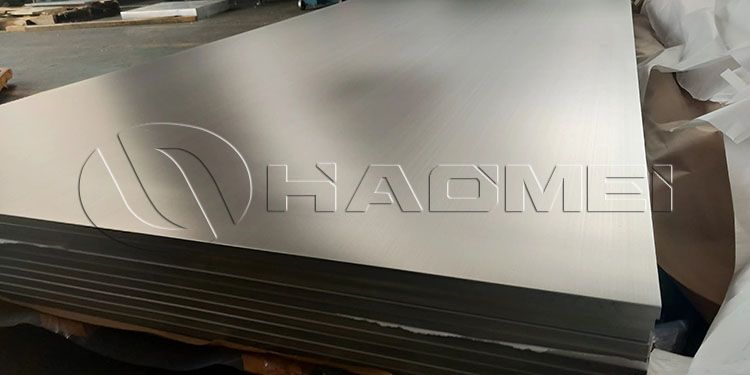
AA6016 aluminium.jpg

6111 and 6016 aluminum properties

6016 and 6111 aluminum alloys belong to the 6xxx series of aluminum alloys, with magnesium (Mg) and silicon (Si) as the main alloying elements. There are certain differences in composition and performance.

AA6016 aluminium has a low copper (Cu) content and has good fracture toughness, corrosion resistance and fatigue resistance. Its elongation can reach 22-25%, far exceeding the 15-20% of ordinary steel, which makes it perform well when stamping complex curved surfaces and can meet the complex shape requirements of automotive exterior panels.

6111 aluminum alloy has a relatively high copper content, and its strength and hardness are more outstanding. Its elongation is between 20-23%, which is also better than ordinary steel. After hardening by baking paint, its strength can be significantly improved, providing better dent resistance for automotive parts.

Application in the automotive field

In automobile manufacturing, 6016 and 6111 aluminum alloys are mainly used in automobile exterior covering parts, such as automobile hood outer panels, door panels and other parts. Taking the automobile hood outer panel as an example, as an important part of the car body, it must not only have good aerodynamic performance and aesthetics, but also take into account lightweight, safety and feasibility of manufacturing processes.

6016 and 6111 aluminum alloys can stamp out complex streamline shapes with their high elongation and low rebound rate, and the rebound angle after stamping is only about 3-5°, which effectively reduces dimensional deviation and ensures assembly accuracy.

At the same time, these two aluminum alloys have smooth surfaces, no orange peel after spraying, and good corrosion resistance. Relying on the protection of natural oxide film, they are not easy to rust after long-term use, and can maintain the beauty and integrity of the car's appearance.

In the application of car doors, 6016 aluminum alloy can meet the anti-dent design requirements of the door by increasing the thickness of the sheet and optimizing the structure. On the premise of meeting the rigidity, strength design requirements and relevant collision regulations, the use of 6016 aluminum alloy sheets can reduce the weight of the door by more than 40%, achieving a significant lightweight effect, and reducing the energy consumption and emissions of the whole vehicle.

Process maturity analysis

From the perspective of research and development history, developed countries with automobile industries such as Europe, the United States, and Japan have begun to develop automotive aluminum alloys since the 1970s. In the early 1980s, Alcan and Aluminum of Switzerland successfully developed high-Cu 6111 aluminum alloy and low-Cu 6016 aluminum alloy respectively.

After years of development and practice, the processing technology for 6016 and 6111 aluminum alloys has become relatively mature. The use of advanced rolling equipment and processes can accurately control the thickness, flatness and surface quality of the aluminum plate to meet the high-precision requirements of automotive parts.

In terms of heat treatment, Haomei Aluminum has determined the optimized process parameters such as 560℃/1min solution treatment + 80℃/6h pre-aging treatment, which can make the plate have good forming performance before stamping, and can quickly improve the strength during the baking process after stamping, so as to obtain ideal comprehensive performance.

In the surface treatment stage, the mature application of processes such as anodizing, coating treatment, and passivation treatment has further improved the corrosion resistance and aesthetics of aluminum alloy plates, meeting the automotive industry's strict requirements on product appearance and protective performance.


Original Source:https://www.autoaluminumsheet.com/a/aa6016-6111-aluminum-alloy.html

How to Produce 6111 6061 Automotive Aluminum Sheet

 Different countries have different emphasis on aluminum alloys for automobiles. The Japanese automobile industry uses more 5xxx series alloys. The United States mostly uses 2xxx series alloys, while Europe is more interested in 6xxx series alloys. The ABS alloys that China focuses on developing are 6016, 6022, 6061 and 6111 aluminum.

It is difficult to stably produce ABS panel in batches and the technical threshold is high. It is a complex system project. The process parameters of each process should be strictly controlled in order to produce ABS with just the right combination of various properties.

6111 aluminum.jpg

In terms of the main processes, the upstream process of ABS is equivalent to the process of producing other bulk high-precision aluminum plates like smelting, casting, hot rolling, and cold rolling. In fact, the specific process parameters are different.

First of all, the alloy composition should be carefully designed, internal standards should be formulated, and the ingredients should be batched according to the internal standards to ensure that the ingot composition meets the requirements of the internal standards. The melting temperature should not be too high. It is best to control it within the limit specified in the regulations.

The charge and flux must comply with regulatory requirements and must be carefully refined, degassed, and slag removed. The amount of grain refiner added before casting should be appropriate.

During casting, a stable melt flow should be maintained, and the liquid level height, casting speed, cooling water temperature, pressure, and flow rate should be well controlled to cast an ingot with a dense and uniform dendrite grid and fine and consistent grains. The process of smelting and casting is very important. Only with high-quality ingots can high-quality aluminum sheet be rolled. Production practice shows that about 70% of defects in plate production are more or less related to smelting and casting.

Only a good structure of the hot-rolled aluminum blanks can ensure that the cold-rolled aluminum sheet has a precise and delicate crystal structure, and can ensure that ABS has good formability and flanging plasticity, achieving the best match of strength and plasticity. Homogenization annealing of the ingot is also a key process. The temperature should be higher and the holding time should be longer. It is necessary to ensure that the intra-granular deviation is completely eliminated and all the solid-soluble phases are dissolved. The cooling rate must also be appropriately controlled.

The initial rolling temperature is around 500°C, and that of 7xxx series alloy is around 475°C. The reduction rate in the first and second passes should be small, the reduction rate in the middle passes should be larger, and the final pass should be in the middle. The total reduction rate must be greater than 75 %. The casting organization must be completely eliminated. The final rolling temperature is 350℃±10℃.

Haomei Aluminum has the main 6xxx aluminum alloys like 6016 plate. Welcome to leave message below to inquire what you need.

Original source: https://www.aluminium-auto-sheet.com/a/how-to-produce-6111-6061-automotive-aluminum-sheet.html

6111-t4 Aluminum Mechanical Properties

 The lightweight of automobiles has become the trend of the development of the world automobile industry. There are two ways to reduce the weight of automobiles: one is to optimize the car frame structure; the other is to use lightweight materials. Aluminum alloys have the advantages of light weight, wear resistance, corrosion resistance, high specific strength, good impact resistance, and easy surface coloring, etc. More than 80% of aluminum can be recycled and reused, making aluminum alloy an ideal lightweight material for automobiles.

6111 aluminum sheet.jpg

6000 series aluminum alloys like 6111 aluminum have the characteristics of heat treatment strengthening, which just matches the existing automobile body production system. The prepared and processed aluminum alloy plates can be solid solution and pre-aging in the material factory to make them have good rormability, and then go to the automobile factory for stamping and forming to manufacture body components. Therefore, 6XXX aluminum alloys are considered to be the most promising aluminum alloy materials for automobile bodies.

The main parts of aluminum alloy sheet used in cars are the body in white (four doors, two covers and fenders). The types of alloys involved include 6016, 6022, 6111, 6181, 5754, 5182 and 5052. Among them, the inner body panels are basically made of 5182 alloy and 6181A alloy, while the outer body panels are mainly made of 6016, 6111 and 6022 alloys.

In the early 1980s, North America and Europe respectively developed high-Cu 6111 aluminum alloy and low-Cu 6016 aluminum alloy. On the basis of 6010 aluminum alloy, the paint hardening and formability of 6111 aluminum alloy were significantly improved.

6111 aluminum alloy has higher strength after baking paint treatment. European car manufacturers mostly use low Cu 6016 aluminum alloy with better formability, and the United States uses more 6111 aluminum alloy and 6022 aluminum alloy with higher strength properties.

The strength of the 6111-T4 aluminum plate is only increased by 20MPa after baking at 185℃/20min. In the process, pre-aging treatment is generally used to suppress or alleviate natural aging, and at the same time increase the yield strength increment after baking.

6111-T4 Properties

Properties

Metric

Imperial

Density

2.71 g/cm³

0.0979 lb/in³

Melting point (T4)

585-650°C

1085-1202°F

Tensile strength

280 MPa

40610 psi

Yield strength

150 MPa

21755 psi

Elongation at break

26%

26%

Shear modulus

26 GPa

3770 ksi

Poisson’s ratio

0.33

0.33

Thermal conductivity

154 W/mK

1068 BTU in/hr.ft².°F

Original source: https://www.aluminium-auto-sheet.com/a/6111-t4-aluminum-mechanical-properties.html

6111 Alumium for Car Body

 With the rapid development of the automobile industry, the resulting problems of energy consumption and environmental pollution have become more and more serious. As an effective way to reduce the fuel consumption rate of automobiles and save energy, the lightweight of automobiles has become the trend of the development of the world automobile industry.

There are two ways to reduce the weight of automobiles: one is to optimize the car frame structure; the other is to use lightweight materials. The practice of industrialized countries shows that the former has little potential to be tapped, so the automobile industry generally focuses on the development of lightweight materials to solve this problem.

6111 aluminum.jpg

Among high-strength and light-weight materials, composite materials are difficult to recycle and cause environmental pollution. Magnesium alloys limit their application in automotive body panels due to their poor corrosion resistance and formability.

Aluminum alloy has the characteristics of light weight, wear resistance, corrosion resistance, high specific strength, good impact resistance, easy surface coloring, etc., and more than 80% of aluminum can be recycled and reused, making aluminum alloy an ideal lightweight material for automobiles.

Since the 1970s, developed countries in the automobile industry such as Europe, America and Japan have developed several 6xxx aluminum alloys such as 6009, 6010, 6016, 6111, and 6022. In the early 1980s, North America and Europe respectively developed high-Cu 6111 aluminum and low-Cu 6016 aluminum alloy.

On the basis of 6010 aluminum alloy, the paint hardening and formability of 6111 aluminum alloy were significantly improved, and the 6111 aluminum alloy has higher strength after being treated with baking hardening.

At present, the 6XXX aluminum for car body are mainly 6016, 6111, and 6022 aluminum alloys. European automakers mostly use low-Cu 6016 aluminum alloy with good formability, and the United States uses more high-strength aluminum alloys 6111 and 6022.

Al 6111 compostion

Alloy

Si

Fe

Cu

Mn

Mg

Cr

Zn

Ti

Standard(wt%)

6111

0.6-1.1

0.40

0.5-0.9

0.1-0.45

0.50-1.0

0.10

0.15

0.10

Original source: https://www.aluminium-auto-sheet.com/a/6111-alumium-for-car-body.html

Flexible Aluminium Strips

  Flexible aluminium strips are specified when a component must be bent, wrapped, stamped, rolled, or formed without surface splitting. The ...