显示标签为“7075 aluminium sheet”的博文。显示所有博文

6061 Aluminum vs 7075 Aluminum

 As aircraft soar through the clouds, the materials used for key components like the fuselage, landing gear, and wings directly determine flight safety and efficiency. Within the aviation aluminum alloy family, 6061 and 7075 aluminum plates are the two most commonly used grades, but their performance differs significantly: the former is a versatile performer, while the latter is a powerhouse.
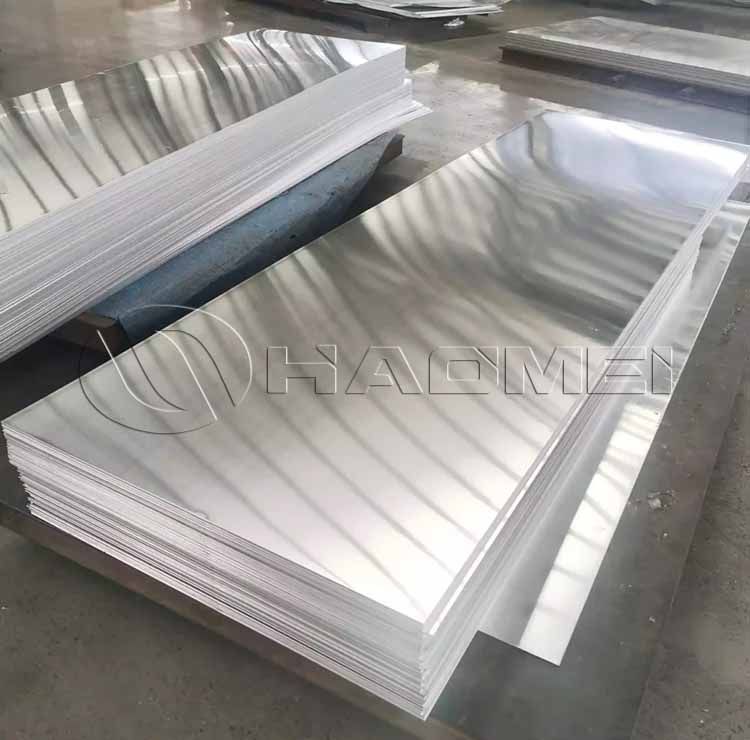
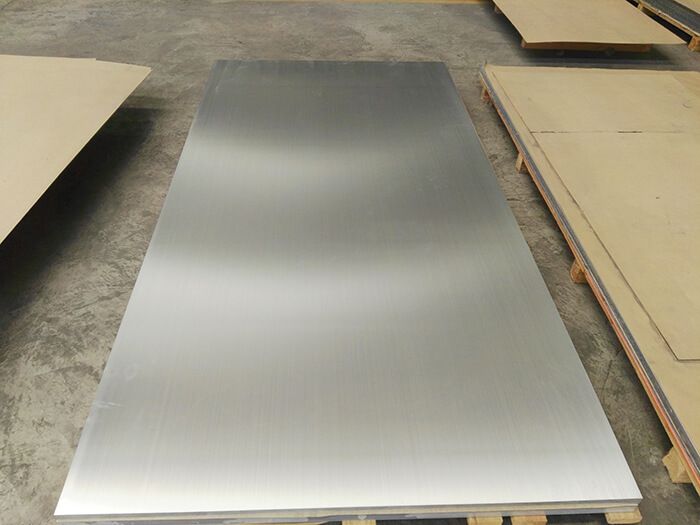
6061 aluminum sheet.jpg

Core Performance

Both are heat-treatable aluminum alloys, but their compositional differences (6061 contains magnesium and silicon, while 7075 contains zinc, magnesium, and copper) lead to significant differences in performance.

In terms of tensile strength, 6061 reaches approximately 290 MPa in the T6 state, while 7075 reaches 570 MPa in the same state, nearly double the strength of the former. This makes 7075 more suitable for load-bearing components in the aviation industry. In terms of yield strength, 6061-T6 reaches approximately 240 MPa, while 7075-T6 aluminum reaches 500 MPa, meaning 7075 has greater deformation resistance and impact resistance.

In terms of corrosion resistance, 6061 aluminium sheet performs excellently, and its protection can be further enhanced through anodizing, making it more suitable for humid or high-altitude corrosive environments. 7075 has moderate corrosion resistance and is susceptible to stress corrosion, requiring surface treatment to meet aviation requirements.

In terms of processability, 6061 aluminum sheet is easy to cut and bend, with low molding difficulty, making it suitable for the manufacture of complex structural parts. However, due to its high hardness, 7075 is prone to sticking during cutting and is difficult to mold, so it should only be considered when extreme strength is required. In terms of welding performance, 6061 aluminum offers excellent welding results and minimal weld strength loss, making it suitable for components requiring welding. 7075 is prone to cracking during welding, requiring specialized processes and limiting welding applications.

Thickness Selection

1. Thin Gauge (Thickness ≤ 6mm)

Applicable Components: Fuselage Skin, Wing Leading Edge Skin, Ducting, Instrument Housings

Alloy Selection Logic:

These components require "lightness, thinness, and ease of forming," and some require high-altitude corrosion resistance or weldability (such as ducting). Therefore, 6061 alloy is the mainstream alloy. For example, the 6061 aluminum sheet thickness for fuselage skins is commonly 1.5-3mm, which reduces weight while also providing resistance to high-altitude moisture corrosion through anodizing.

Thin gauge 7075 (e.g., 2-4mm) is only used for small, high-strength components (such as small engine brackets). Due to its high processing difficulty, it is rarely used for large, thin-walled parts.

2. Medium-Thickness (6mm < Thickness ≤ 25mm)

Applicable Components: Wing Ribs, Fuselage Frames, Landing Gear Connectors, Seat Rails

Alloy Selection Logic:

These components must bear certain loads (e.g., wing ribs must support the weight of the skin and fuel), but they cannot be too thick or heavy. In this case, the alloy selection should be based on "strength priority":

If welding or complex structures are required (e.g., a fuselage frame with multiple welds), choose 6061-T6 medium-thick plate (e.g., 10-15mm). This is easy to drill and mill grooves during processing, and has minimal strength loss after welding.

If higher load requirements are required (e.g., landing gear connectors must transmit landing gear impact forces), choose 7075-T6 medium-thick plate (e.g., 12-20mm). However, please note: 7075 medium-thick plate requires specialized tools (e.g., carbide milling cutters) and stress relief treatment to prevent deformation after processing.

3. Thick Plate (Thickness > 25mm)

Applicable Components: Landing Gear, Wing Spars, Engine Mounts

Alloy Selection Logic:

These are the aircraft's "load-bearing skeleton" and must withstand extreme loads (for example, the landing gear must withstand impact forces several times the weight of the fuselage during landing).

Therefore, thick 7075 plate is the only choice, with thicknesses of 30-80mm commonly used (some large passenger aircraft landing gear even use 7075-T73 with thicknesses exceeding 100mm. The T73 temper offers better stress corrosion resistance than the T6 temper). Welcome to learn more about aluminum 7075 material properties here.

Thick 6061 plates (e.g., 30-50mm) are only used for low-load, thick-walled parts (such as aviation components for ground equipment). Due to their insufficient strength, they should never be used in critical load-bearing aircraft components.


Original Source:https://www.aircraftaluminium.com/a/6061-aluminum-vs-7075-aluminum.html
How to Ensure Quality of 2024 and 7075 Aluminum Plate

 As a relatively mature light-weight alloy material, aluminum alloy is widely used in aerospace. It is generally used as structural materials, which has higher specific strength and better processing performance than steel. The aerospace field mainly develops aluminum alloys with high strength, high toughness and strong corrosion resistance to meet the harsh conditions of use in aerospace.

7075 aluminum sheet is an aluminum-magnesium-zinc-copper alloy, which is a heat-treatable alloy. It belongs to superhard aluminum alloy and has good wear resistance. The aluminum plates are all ultrasonically detected to ensure that there are no blisters and impurities. 7075 t6 aluminum plate is a popular choice.

aircraft aluminum.jpg

2024 aluminum is one of the strongest 2xxx alloys, with copper and magnesium being the main elements in the alloy. The most commonly used tempers are 2024T3, 2024T351, 2024T4, 2024 T6 and 2024T4. Its corrosion resistance is not so well as most other aluminum alloys and intergranular corrosion may occur under certain conditions. Therefore, it is usually clad with high-purity alloys or 6xxx series magnesium-silicon alloys.

The thick aircraft aluminum plates must be produced by ingot hot rolling (including Hazelett continuous casting and rolling method). The thick plate production capacity does not refer to the production capacity of the hot rolling mill, but the production capacity of the rear finishing equipment (solution treatment furnace, aging furnace, pre-stretching machine, ultrasonic probe production line, etc.)

2XXX series hard aluminum alloys are highly sensitive to overburning, especially the 2024 alloy, which is the most widely used in aviation. Since there is a (a+0+S) eutectic with a melting point of 507 degrees Celsius while the quenching temperature of 490-501 degrees Celsius is very close to the eutectic point temperature. 2024 aluminum is prone to overburning, so the solution heating temperature must be strictly controlled.

The aviation aluminum alloys are sensitive to the quenching transfer time, and are prone to so-called "delayed quenching", which can not obtain the best mechanical properties and aggravate the intergranular corrosion of the material. Usually, the quenching transfer time of the 2xxx alloys is less than 20s, and the quenching time of 7xxx alloys is less than 15s.


Original Source:https://www.aircraftaluminium.com/a/how-to-ensure-quality-of-2024-and-7075-aluminum-plate.html

7075 T6 Aluminum Plate for Aluminum Plane

 7075-T651, 7075-T7351, 7075-T73,7075 T6 aluminum plate are the common tempers of 7075 aluminum used on the aluminum plane. It is a high-strength, heat-treatable wrought alloy developed by Alcoa in 1943.

7075 alloy contains zinc, magnesium, chromium and copper as hardeners, as well as small amounts of iron, silicon, manganese and titanium. Al-7075 is much stronger than carbon steel after heat treatment.

7075 T6 aluminum plate.jpg

Aluminum 7075 responds to age hardening heat treatments resulting in extremely high mechanical properties. However, this alloy shows some degree of notch sensitivity. 7075 aluminium exhibits good formability under annealed and solution heat treated conditions at ambient temperature. 7075-T6 has good formability at elevated temperatures.

Alloy 7075 has good machinability in the annealed condition with little or no warping during age hardening. It has good corrosion resistance and is further improved by heat treatment and aging. The alloy resists stress corrosion cracking in the 7075-T73 temper. Al-7075 can be resistance welded, but fusion welding is generally not recommended.

7075 t6 aluminum has the highest mechanical strength properties, but the fracture toughness is low, and it is sensitive to stress corrosion, and its toughness decreases with the decrease of temperature. Therefore, the T6 state material is not suitable for the manufacture of low-temperature structural parts and workpieces.

The density of 7075 alloy is 2.8g/cm3, the resistivity at room temperature is 57.4nΩ·m, and the electrical conductivity is related to the state of the material. The T6 material is 17.7MS/m~20.6MS/m. The room temperature formability of 7075-T6 alloy is poor, but its formability can be significantly improved if heated to 150℃~220℃.

7075 aluminum alloy various standards

ASTM B209: Aluminum and Aluminum Alloy Sheets and Plates.

ASTM B210: Drawn Seamless Pipe.

ASTM B211: Rolled or Cold-Worked Bar, Rod, and Wire.

ASTM B221: Extruded Rod, Rod, Wire, Profile, and Tube.

AMS-QQ-A-225/9: Aluminum 7075, bar, wire and special shapes.

AMS-QQ-A-250/12: AA 7075, Plate and Sheet

AMS-WW-T-700/7: Tube, Drawn, Seamless

Application of 7075 Alloy

It includes aircraft structures, piping systems, mobile equipment and high pressure hydraulics, blow molds, ultrasonic plastic welding molds, shoe molds, paper molds, foam molds, dewaxing molds, fixtures, mold processing, high-end aluminum alloy bicycle frames, etc. Welcome to leave message below to inquire 7075 t6 price.


Original Source:https://www.aircraftaluminium.com/a/7075-t6-aluminum-plate-for-aluminum-plane.html

Types of Marine Grade Aluminium Sheets

 Aluminum and aluminum alloys are used more and more widely in the shipbuilding industry, ranging from small motorboats to 10,000-ton oil tankers, from offshore hovercraft to submarine . The marine grade aluminium sheet is used to make ship shells, support structures, supporting facilities, pipelines, etc.

6061 aluminum sheet.jpg

The aluminum sheet used in the marine industry can reduce the overall weight of the ship, increase the speed of the ship, and resist the corrosion of the ship by seawater. It is mainly divided into aluminum-copper alloys, aluminum-magnesium alloys and aluminum-silicon alloys.

Aluminum-magnesium alloys are mainly used for hull shells, water pump pipes, pump shells and frame brackets, etc. The grades are 5083, 5086, 5456, 5466, etc. 5083 aluminum plate can be regarded as its typical one. The common tempers are O, H111, H112, H116 and H321,etc. It has medium strength, good corrosion resistance and formability, high fatigue resistance, and is generally used as the main structure of the hull.

7075 aluminium sheet belongs to the Al-Zn-Mg-Cu series. It has good corrosion resistance, good oxidation resistance, good easy processing and wear resistance, and good workability. It has high strength below 150℃, and has particularly good low temperature strength. However, it has poor welding performance, and stress corrosion cracking tendency.

6061 aluminum sheet has excellent processing performance, excellent welding characteristics and electroplating properties, good corrosion resistance and excellent anodizing effect. The commonly used plates include thin plates over 1.6mm and thick plates over 30mm. In order to prevent slip, the deck adopts 6061 textured aluminium sheet.

Original source: https://www.hm-alu.com/a/types-of-marine-grade-aluminium-sheets.html

Aluminium Strip for Cables Armoring

  Cable factories facing Christmas and New Year shutdowns have little tolerance for material delays or coil defects. An armor-strip issue di...