显示标签为“automotive aluminum sheet”的博文。显示所有博文

Aluminium Used in Cars

 Amidst the rapid development of the automotive industry, material innovation remains a key driver of vehicle performance upgrades. Aluminum alloy, with its numerous advantages, such as lightweight, high strength, and corrosion resistance, has long played an irreplaceable role in many key automotive components.
Automotive aluminium.jpg

Body Frame

The vehicle body frame is a core structure for ensuring driving safety and significantly impacts vehicle weight. Traditional steel bodies, while strong, are also heavy, increasing fuel and energy consumption. Aluminum alloy body frames perfectly address this dilemma.

Currently, many mid-to-high-end and new energy vehicle models utilize aluminum alloy body frames, such as doors, hoods, trunk lids, and the main body structure. For example, the common 6-series abs aluminum plate has a tensile strength exceeding 300 MPa, enabling a 30%-50% weight reduction compared to steel bodies while maintaining strength. Lightweight bodies not only reduce fuel consumption in combustion-powered vehicles (data shows that every 10% reduction in vehicle weight reduces fuel consumption by 6%-8%), but also extend the range of new energy vehicles. This is why aluminum alloy bodies are increasingly favored in new energy vehicles.

Furthermore, aluminum alloy exhibits excellent corrosion resistance, resisting rust even after prolonged exposure to the elements. This effectively extends the vehicle's service life and reduces maintenance costs. Furthermore, in a collision, the aluminum alloy body frame absorbs impact energy through optimal deformation, better protecting occupants and achieving the "double guarantee" of lightweight and safety.

Chassis System

The automotive chassis is a critical component that supports the vehicle body, transmits power, and ensures driving stability. It demands extremely high material strength, toughness, and wear resistance, and aluminum alloys are widely used in chassis systems.

Firstly, components such as chassis control arms and steering knuckles must withstand the various impact forces and torques experienced during vehicle operation. Aluminum alloys, such as the 7 Series aluminum alloy, offer excellent strength and fatigue resistance, ensuring stable performance over long periods of use and reducing the risk of component deformation or damage. At the same time, lightweight aluminum alloy chassis components can reduce the vehicle's unsprung mass, improving handling and comfort, and providing a smoother driving experience.

In addition, some models also utilize aluminum alloy for their chassis subframes. As a crucial structure connecting the chassis components to the body, the subframe requires sufficient rigidity and torsional resistance. Aluminum alloy not only meets these requirements but also further reduces chassis weight, contributing to the overall vehicle lightweighting.

Powertrain

The automotive powertrain is the "heart" of the vehicle, and its performance directly impacts its power output and fuel efficiency. Therefore, the use of aluminum alloy in the powertrain is crucial.

Among engine components, aluminum alloy is the most widely used. For example, core components such as the engine block and cylinder head are mostly made of aluminum alloy. This is because aluminum alloy has excellent thermal conductivity, allowing it to quickly dissipate heat generated during engine operation, preventing overheating and ensuring stable engine operation.

Furthermore, lightweight aluminum alloy engine components can reduce overall engine weight, minimize power loss, and improve engine power efficiency, resulting in stronger vehicle performance while also reducing fuel consumption. In addition to the engine, aluminum alloy is also commonly used in transmission cases. Transmissions generate a certain amount of heat and vibration during operation. Aluminum alloy not only effectively dissipates heat but also offers certain shock-absorbing properties, reducing noise and vibration during transmission operation and improving driving comfort. Furthermore, a lightweight transmission case further reduces the weight of the powertrain, contributing to the overall vehicle lightweighting.

Interior and Accessories

Beyond core components such as the body, chassis, and powertrain, aluminum alloy is widely used in automotive interiors and accessories, adding a touch of sophistication and practicality to the interior.

In automotive interiors, aluminum alloy is often used in decorative parts such as center console trim, door trim, and shift paddles. These aluminum alloy decorative parts not only have a metallic texture and a refined and beautiful appearance, enhancing the interior's sense of class, but also offer excellent wear and scratch resistance, maintaining their appearance over time and resisting fading or damage.

Aluminum alloy is also commonly used in automotive accessories. For example, most passenger cars on the market now use aluminum alloy wheels. Compared to traditional steel wheels, aluminum alloy wheels are lighter, reducing a vehicle's unsprung mass and improving handling and fuel efficiency. They also offer improved heat dissipation, effectively dissipating heat generated by the tires and brake system, reducing tire wear and the risk of brake overheating. Furthermore, aluminum alloy wheels come in a variety of shapes and designs, offering greater design flexibility to meet the personalized needs of different consumers.

Automotive aluminium is also commonly used in components such as sunroof frames and seat rails. These components require excellent wear resistance and smoothness, and aluminum alloy not only meets these requirements but also reduces component weight, improving user convenience and comfort.

Original source: https://www.aluminium-auto-sheet.com/a/aluminium-used-in-cars.html
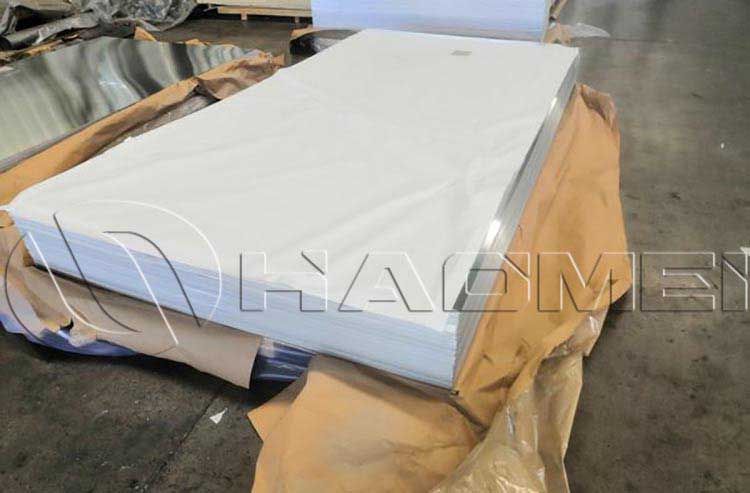
6101 Aluminum Sheet and 5754 Aluminum Sheet

 Automotive aluminum sheets can be classified into 5xxx, 6xxx and 7xxx aluminum alloys on alloy composition. 5754, 5182, 5023 are used for inner covering parts and structural parts; 6016, 6014, 6022, 6111 are used for outer covering parts; 7075 is used for hot-formed structural parts.

There are many alloy grades of 6 series aluminum profiles, the most commonly used ones are 6463, 6262, 6201, 6082, 6063, 6061, 6010, 6009, 6005, etc. Aluminum-magnesium-silicon alloy is the most commonly used aluminum alloy in wires and cables, which are 6101 aluminum and 6201 alloys, and the states are T1 and T4. In 2020, the global consumption of this aluminum alloy exceeded 5000kt.

5754 aluminum sheet.jpg

6101 aluminum alloy wire has medium strength and high conductivity, and can be used for long-distance transmission lines. Compared with traditional steel core aluminum alloy stranded wire (ACSR), the all-aluminum alloy stranded wire (AAAC) twisted by a single Al-Mg-Si alloy wire can well avoid electrical corrosion, and can reduce the maintenance cost of transmission lines while improving transmission efficiency. At the same time, Al-Mg-Si series alloys are heat-treatable strengthening alloys, and their strength and conductivity can be adjusted by solid solution + aging heat treatment.

5754 aluminum sheet is mostly used by automobile manufacturers abroad, such as door panels, engine covers, or trunk covers. Usually 5754 aluminum sheet is processed into H111 state or H0 state through annealing, because it can only be bent in this state, and of course the price is higher than 5052 aluminum alloy sheet.

5754 aluminum alloy is a typical alloy in Al-Mg alloy series, with medium strength, good corrosion resistance and weldability, easy processing and forming, etc. 5754 aluminum alloy plates in different heat treatment states are widely used in welding structural parts, large roof panels, automobile manufacturing, rail transportation and shipbuilding industries, among which H32 state aluminum plate is one of the most widely used heat treatment states.

Haomei Aluminum has rich alloys of 5xxx and 6xxx aluminum alloys for automobile manufacturing. Welcome to leave message below to inquire what you need from us.

Original source: https://www.aluminium-auto-sheet.com/a/6101-aluminum-sheet-and-5754-aluminum-sheet.html

6016 Automotive Aluminum Sheet

 The automotive aluminum sheets can be classified into 5000 series, 6000 series and 7000 series in terms of alloy composition. 5754, 5182, 5023 are used for inner covering parts and structural parts; 6016 aluminum, 6014, 6022, 6111 are used for outer covering parts.

6000 aluminum alloys are currently the most widely used aluminum alloys for automobile sheet metal parts in the automobile industry. They have excellent formability, high strength performance, corrosion resistance, hemming performance, high surface performance, etc. At the same time, after painting and baking, the strength performance has been improved to a certain extent.

 6016 aluminum.jpg

6009, 6010 and 6016 aluminum alloys are currently used in the outer and inner panels of automobile bodies due to their good plasticity and the artificial aging that can be achieved in the process of painting and baking after forming to obtain higher strength.

6016 aluminum sheet is used in the outer panel of the car door, which can meet the dent resistance design requirements by increasing the thickness of the sheet and optimizing the structure. Under the premise of meeting the rigidity, strength design requirements and relevant collision regulations, AA6016 aluminum alloy plates can be widely used to replace traditional steel plates in the outer panels of automobile doors, so that the weight can be reduced by more than 40%, and the purpose of lightweight can be achieved.

The 6061 alloy reaches medium strength after special treatment (T6), and its strength is higher than that of the 5 series alloys. Moderate strength is very suitable for the automotive industry. The aluminum alloy sheet used for different parts of the automobile body is also different. Among them, the 6061 aluminum sheet is used for the car fender, outer hood panel and car door.

The 6016 aluminum sheet can meet the vehicle manufacturing requirements after the solid solution-T4P-baking paint treatment, but the process parameters have a great influence on the final performance.

Insufficient solution treatment reduces the precipitation power of T4P and artificial aging during the baking process. Long holding time may lead to grain coarsening. Low pre-aging humidity will reduce the performance stability of the plate during placement and the hardening effect during the baking process.

If the temperature is too high, it will affect the formability of the stamping process. It can be seen that the solid solution and T4P process parameters should be optimized in order to obtain ideal comprehensive properties.

Original source: https://www.aluminium-auto-sheet.com/a/6016-automotive-aluminum-sheet.html

5083 6061 Aluminum Sheet for Bus Body

 For the buses, the trend of new energy has been unstoppable. In major and medium cities, pure electric and other new energy buses have been put into operation. However, at present, there has always been a serious problem for new energy buses, especially pure electric buses.

Due to the addition of a large number of battery packs to the vehicles, to a certain extent, compared with fuel buses, at least 1- 2 tons weight is added. Originally, there is a problem with the battery life of pure electric buses, and such an increase in weight greatly reduces the cruising range of the vehicle.

6061 t6 aluminum plate .jpg

In terms of realizing the lightweight of the body and the weight reduction of the whole vehicle, the all-aluminum body structure has become the most effective way. With its excellent characteristics, it has been set as the standard configuration of the body frame and skin of new energy buses, especially pure electric buses, by many bus OEMs and bus companies.

The frame of the whole vehicle is welded by 6 series aluminum alloy, and the skin is completed by 5 series aluminum plate. The aluminum bus body brings long cruising range, and its weight reduction ratio is more than 30% compared with the general steel body. The car adopts a low entrance structure, and the interior space is spacious, with a maximum passenger capacity of about 80 people.

The main aluminum used in the bus is 6061 t6 aluminum plate. The main connecting parts are fully riveted. The weight of our 12-meter bus has been reduced by 500kg to one ton. The 12-meter city bus that has been supplied in batches weighs about 920 kilograms.

Vans and semi-trailers both adopt lightweight frame. The material is generally high-strength aluminum alloy (or high-strength steel plate), and equipped with air suspension , aluminum alloy rims, 425/65R22.5 tires,etc.

For example, the tank body of oil tanker produced in China is made of marine grade aluminium 5083 6mm sheet. The front and rear heads are made of 5083 7mm thick aluminum alloy.

On the premise of ensuring the quality, the weight of the body is greatly reduced, and the weight of the whole vehicle is only 7600kg (the weight of the ordinary steel structure 3-axle liquid tanker is about 11 000kg).


Original Source:https://www.autoaluminumsheet.com/a/5083-6061-aluminum-sheet-for-bus-body.html

Colored Aluminum Sheet Metal tor Race Cars

 The colored aluminum sheet metal for race cars are used for the four card doors, hood cover, trunk and fenders. The race car aluminium sheets include 6016, 6022, 6111, 6181, 5754, 5182 and 5052, among which, the inner panels of the body are basically made of 5182 alloy and 6181A alloy, while the outer panels of the body are mainly made of 6016, 6111 and 6022 alloys.

6000 series aluminum alloys are currently the most widely used aluminum alloys for automobile sheet metal parts in the automobile industry. They have excellent formability, high strength performance, corrosion resistance, hemming performance, high surface performance, etc. At the same time, after painting and baking, the strength performance has been improved to a certain extent.

1655372791346849.jpg

In the mid-1970s, the United States took the lead in developing 6009 and 6010 aluminum alloys. The paint hardening properties of 6009-T4 aluminum alloys and 6010-T4 aluminum alloys are better than those of 2036-T4 aluminum alloys, and the alloys have excellent corrosion resistance and weldability.

In the early 1980s, North America and Europe developed high-Cu 6111 aluminum alloys and low-Cu 6016 aluminum alloys respectively. 6111 aluminum alloys were significantly improved in paint hardenability and formability on the basis of 6010 aluminum alloys. 6016 aluminum alloy shows better formability and corrosion resistance.

Al6016 is widely used in ABS, but the heat treatment process is complicated, and pre-aging treatment T4P must be carried out between solution treatment and paint baking treatment to obtain good performance. Because it should have good formability before stamping, and the strength can be rapidly increased during the paint baking process after stamping, so it has high dent resistance.

Among many aluminum alloys, 5000 and 6000 aluminum alloys have excellent application effects in the field of automobile manufacturing. Welcome to leave message below to inquire what you need.

5052 ABS Aluminum Sheet

 The ABS aluminum plate is mainly used for the four doors, hood panel, trunk lid, lid,etc. The alloys involved in car body panels include 6016, 6022, 6111, 6181, 5754, 5182 and 5052. The size of aluminum alloy plate for car body is mainly concentrated in the thickness of 0.7-3mm and the width of 900-2130mm.

5xxx alloy is an aluminum alloy that cannot be strengthened by heat treatment. It has good corrosion resistance and welding performance. However, it may produce Ludes lines and delayed yielding during processing deformation in the annealed state. Therefore, it is mainly used for the inner panels. 5083 and 5052 aluminium plate are used most.

ABS aluminum plate .jpg

5052 aluminum sheet is a widely used rust-proof aluminum plate with high strength, especially fatigue resistance, high plasticity and corrosion resistance and good weldability. 5052 aluminum plate is an aluminum alloy that cannot be strengthened by heat treatment. It is suitable for parts with complex shapes such as inner panels of the body.

5052 aluminium plate is mainly composed of aluminum and magnesium, and the Mg content is 2.2-2.8. In terms of mechanical properties, the tensile strength is 170-305MPa, and the elongation is 9-22%. It has a wide range of applications and is suitable for chassis and cabinet materials, sheet metal parts of transportation vehicles, ships, hardware products, electrical enclosures,etc.

5052h32 aluminum sheet is a popular type among the 5052 aluminium sheets. It shows high fatigue strength, good cold workability, excellent polishing effect and excellent corrosion resistance, which is an ideal material for a variety of vehicle skins, such as delivery cars, trailers, marine diesel tanks, truck air brake boxes, gasoline or lube oil pipes, etc.

The use of alu 5052 for cars can the car's own weight without reducing the car's load, thereby reducing the body's center of gravity and making the car run more smoothly and comfortably. Welcome to leave message below to inquire what you need.


Original Source:https://www.autoaluminumsheet.com/a/5052-abs-aluminum-sheet.html

Is 6061Al Right for Car Body

 The main alloy elements of 6061 al are Mg and Si, which is one of the most widely used aluminum alloys. After heat treatment and pre-stretching, 6061 t6 properties are very excellent, having good strength and toughness, excellent machining performance, good corrosion resistance and ideal anodizing effect, which can be used for welding in various welding processes.

6061 aluminum for car body not only has obvious effects of weight reduction and energy saving, but also conforms to the development trend of safety and environmental protection trend. Since the weight of the car body plays a decisive role in the entire vehicle, the development of high-performance aluminum body panel is an important link in the lightweight automobile.

6061 aluminum plate.jpg

6061 aluminum alloy reaches medium strength after special treatment (T6), which is higher than that of the 5 series alloy. Moderate strength is extremely suitable for the automobile manufacturing industry.

Different parts of automobile body panels use different aluminum alloy sheets. Among them, 6061 aluminum alloy is an aluminum sheet for lightweight body production. It is mainly used for automobile fenders, hood outer panels and car doors.

6061 aluminum plate is a representative aluminum plate among the 6xxx plate with good performance after hot rolling. After hot tandem rolling, aluminum plates with different thicknesses can be formed. After pr-stretching, it ensure no deforming during the further processing.

6061 automotive aluminum sheet has excellent processing performance, good corrosion resistance, no deformation after processing, easy coating, good oxidation effect and other excellent characteristics. It is widely used in automobile lightweight, mobile phone housing, aerospace and other fields. Welcome to leave message below to inquire its price.

Original source: https://www.aluminium-auto-sheet.com/a/is-6061al-right-for-car-body.html

Automotive Aluminum Sheet for Lightweight

 With the increase in car ownership year by year, cars have become the main consumer of oil. To save energy and reduce pollution, auto companies can develop new energy vehicles, adjust product structure, develop high-efficiency drive systems, and lightweight vehicles. Among them, lightweight is the easiest and most effective way to realize this purpose.

Lightweight is an inevitable demand for automobile development. Reducing the weight of the vehicle can increase the output power of the entire vehicle, reduce noise, improve handling and reliability, increase vehicle speed, reduce fuel consumption, and reduce exhaust emissions.

6061 aluminum sheet.jpg

Studies have shown that if the weight of the vehicle is reduced by 10%, the fuel efficiency can be increased by 6%-8%; for every 100 kg reduction in vehicle weight, fuel consumption per 100 kilometers can be reduced by 0.3-0.6 liters ; 800-900g of CO2 emissions can be reduced.

Automotive aluminum sheet has outstanding comprehensive cost performance and is a primary choice for automobile lightweight. At present, the main car lightweight material high-strength steel, aluminum alloy, magnesium alloy and carbon fiber composite materials. It has comparative advantages in terms of application technology, operational safety, and recycling. For example, 95% of the Tesla Model S is made of aluminum alloy.

At present, cast aluminum alloy accounts for about 77% of automotive aluminum, which can be used to manufacture engine parts, shell parts and other parts on the chassis; deformed aluminum alloy (forged aluminum alloy and aluminum alloy sheet) is used in body parts and structural parts. For example, 5182 aluminum sheet is used for the automotive inside hood and door. 6061 aluminum sheet is used for wheel hub, car door,etc. Welcome to leave message below to inquire what you need directly.


Original Source:https://www.autoaluminumsheet.com/a/automotive-aluminum-sheet-for-lightweight.html

Flexible Aluminium Strips

  Flexible aluminium strips are specified when a component must be bent, wrapped, stamped, rolled, or formed without surface splitting. The ...