显示标签为“aluminum closure sheet”的博文。显示所有博文

Aluminum Sheet for PP ROPP Caps

 Holiday beverage promotions, gift packs, and limited-edition spirits create a predictable pressure point for closure converters: cap-shell production must remain stable while decoration schedules, carrier capacity, and plant holidays compress lead times.

For operations sourcing Aluminum Sheet for PP ROPP Caps, the primary holiday risk is not simply material availability. It is inconsistent forming performance that causes splits, wrinkling, poor curl quality, or printing defects after production has already been scheduled. A well-defined closure-stock specification helps protect output when Q4 demand rises.
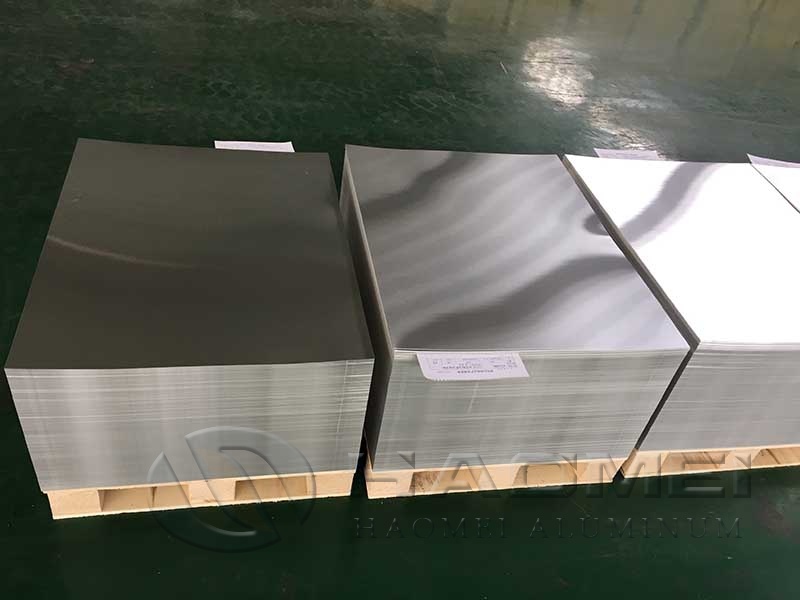
aluminum plain sheet for bottle cap

The term PP ROPP may be used differently across supply chains. Confirm whether PP refers to a polypropylene liner, a coating requirement, or an internal product designation. ROPP means roll-on pilfer-proof, a closure formed and threaded on the bottle during capping. The aluminum substrate, surface treatment, coatings, and cap-converter tooling must therefore be reviewed as one system.

Make Formability the Holiday Production Priority

ROPP cap stock is commonly slit from coil into widths suited to cap-shell presses. During high-volume seasonal production, small variations in mechanical properties or surface condition can interrupt feeding, deep drawing, knurling, curling, and printing. The practical objective is repeatable conversion behavior from the first coil to the final scheduled run.

Do not order only by thickness and width. Request a documented specification covering the material state needed by the converter's tooling. Alloy and temper must be agreed with the cap manufacturer, because each shell diameter, draw depth, and forming sequence creates different demands.

Production concernWhat to define in the purchase specificationHoliday impact if omitted
Deep drawing and curlingAlloy, temper, thickness tolerance, mechanical-property targetsCracking, wrinkling, curl defects, and lost press time
Coil processingWidth, edge condition, coil ID, maximum coil weight, winding directionFeeding issues or unplanned setup changes
DecorationCoating type, color standard, printability, protective varnish requirementsRework or missed limited-edition launch dates
Closure functionCap dimensions, liner compatibility, intended bottle finishFit and seal validation may be delayed
TraceabilityCoil number, certificate format, inspection records, retained samplesFaster containment if a conversion issue appears

A sample trial remains the most direct control. Use the same press, tooling, inks, varnishes, liner system, and capping conditions planned for the seasonal run. Record scrap rate, draw quality, curl appearance, coating adhesion, and print results. A laboratory sample cannot fully replace a line trial when closure geometry is demanding.

For uncoated material programs, Plain Aluminum can be evaluated where the converter applies its own coating and decoration system. This can offer process control, but only if coating capacity and curing time are protected before holiday shutdowns.

Build a Q4 Supply Plan Around Conversion, Not Just Arrival

In 2026, U.S. Thanksgiving falls on November 26, Black Friday on November 27, and Christmas Day on December 25. These dates affect not only customer demand but also carrier schedules, warehouse staffing, printing windows, and factory closures. Seasonal gift programs may require finished closures well before retail holidays.

Use backward scheduling from the date the capped product must be packed, rather than from the date metal is expected at the converter.

  1. Set the finished-cap need date by SKU, including promotional colors and printed variants.
  2. Reserve press time, coating time, printing time, curing time, lining, inspection, and packing capacity.
  3. Allow time for incoming inspection and first-coil approval before releasing the full conversion schedule.
  4. Confirm material dispatch date, transit method, customs requirements where applicable, and receiving-hour restrictions.
  5. Identify the final date for artwork approval and color-standard signoff.
  6. Hold an agreed contingency quantity for coils most difficult to replace, such as custom-painted or printed material.
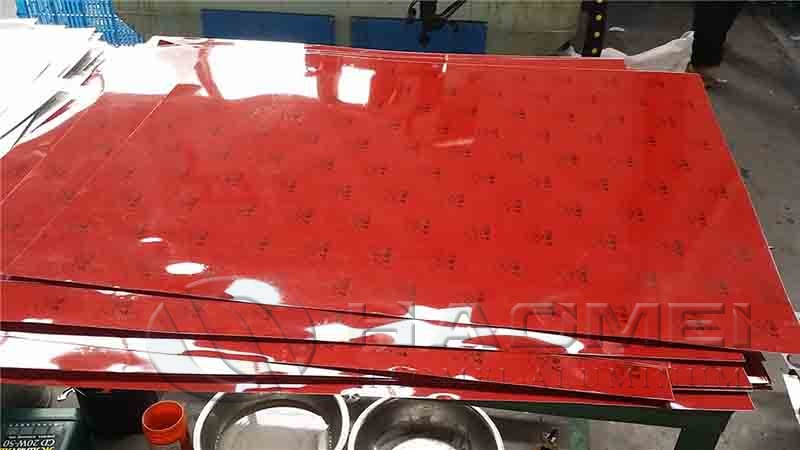
printed aluminum closure sheet

The most reliable holiday solution is a staged release plan. Approve a production trial first, then release the main run after the converter verifies formability. For branded seasonal closures, separate the plain-stock approval from artwork approval so that a graphics delay does not conceal a metal-performance issue.

Ask suppliers to state what they can document, rather than accepting broad claims such as food-grade or compliant. For coated aluminum intended for food-contact closure applications, the applicable compliance route depends on the full article and market. In the United States, resinous and polymeric coatings are addressed under FDA 21 CFR 175.300 when applicable. In the European Union, Framework Regulation (EC) No 1935/2004 establishes general requirements for food-contact materials. These references do not automatically approve a specific cap; coating formulation, intended use, migration assessment, and the finished closure system require appropriate verification.

Release Checklist for PP ROPP Closure Stock

Before issuing the purchase order, align the following items in writing with the mill, coating provider, converter, and brand owner.

  • Confirm what PP means in the closure specification and identify the liner or coating interface.
  • State alloy, temper, nominal thickness, tolerances, strip width, coil dimensions, and edge requirements.
  • Define coating construction: base coat, color, varnish, lubricant, print surface, and target appearance.
  • Provide an approved color reference or controlled physical standard for seasonal branded caps.
  • Specify required inspection documents, including coil traceability and certificate data.
  • Complete press-forming and decoration trials using production-intent tooling.
  • Obtain food-contact declarations relevant to the destination market and intended use.
  • Confirm packing protection against moisture, abrasion, and edge damage during transport and storage.
  • Set delivery appointments before holiday receiving restrictions begin.
  • Establish a written process for handling nonconforming coils without delaying the scheduled cap run.

white aluminum closure sheet

A holiday closure program succeeds when the metal is specified for the actual forming process, qualified on production equipment, and released early enough to absorb transport or decoration variance. Treat each coil as part of the finished-package schedule, not as a standalone commodity input.

Original Source: https://www.alclosuresheet.com/a/aluminum-sheet-for-pp-ropp-caps.html
What Are Popular Tempers of 3105 Aluminum Closure Sheet

 In the packaging industry, bottle caps, as key components for product sealing and quality assurance, place extremely high demands on the selection of raw materials. 3105bottle cap material with its excellent comprehensive properties, is an ideal choice for aluminum sheet for bottle caps.

3105 h14 aluminum.jpg

3105 Aluminum Closure Sheet

3105 aluminum alloy, an Al-Mn alloy, offers excellent corrosion resistance, formability, and weldability, making it a standout in the bottle cap manufacturing industry. Compared to other aluminum alloys, 3105 aluminum sheet for bottle caps is less susceptible to cracking and deformation during processing, effectively ensuring the dimensional accuracy and appearance quality of bottle caps. Furthermore, its excellent corrosion resistance prevents rust from environmental factors (such as humidity and chemicals) during long-term storage and use, thus ensuring product safety and stability.

Furthermore, 3105 aluminum sheet for bottle caps is lightweight, which is crucial for reducing overall packaging costs, facilitating transportation, and enhancing the consumer experience. Whether in the food and beverage, pharmaceutical, or cosmetics industries, 3105 aluminum sheet for bottle caps meets the stringent requirements of various products, making it the preferred raw material for many companies.

3105-H14

The "H14" in 3105-H14 indicates that the aluminum sheet has undergone a specific processing technique: "cold working followed by partial annealing." This treatment imparts unique performance advantages to 3105 h14 aluminum, making it widely used in bottle cap manufacturing.

In terms of mechanical properties, 3105H14 aluminum sheet offers moderate strength and hardness. Its tensile strength typically ranges from 145-180 MPa, and its yield strength is around 110-140 MPa. This strength level meets the basic requirements for bottle caps to resist compression and deformation during use, ensuring they are less susceptible to damage during opening and closing. Furthermore, compared to some higher-strength aluminum sheets, 3105H14 aluminum sheet exhibits excellent formability. During the stamping and stretching processes of bottle caps, it can easily adapt to complex mold shapes, resulting in highly precise, smooth-looking bottle caps. This effectively reduces scrap and improves production efficiency.

In terms of application scenarios, 3105-H14 aluminum sheet is particularly suitable for bottle caps that require both a certain degree of forming difficulty and a certain level of strength. For example, food and beverage bottle caps with complex patterns and special shapes utilize 3105H14 aluminum sheet as raw material, ensuring both aesthetics and functionality while reducing processing difficulty and production costs.

3105-H24

Unlike 3105-H14, 3105 h24 aluminum undergoes a "cold working followed by full annealing" process. This difference in processing yields distinct performance differences, particularly in terms of strength. 3105-H24 aluminum sheet typically has a tensile strength of 170-210 MPa and a yield strength of 150-180 MPa, significantly higher than 3105H14 aluminum sheet. This higher strength and hardness provide significant advantages in resisting external impact and deformation, providing more reliable protection for bottle caps.

For products that require long-term storage and are subject to harsh transportation environments, such as alcoholic beverages and chemicals, bottle caps made from 3105 H24 aluminum can effectively prevent damage from collisions and crushing during transportation, thereby ensuring product sealing and quality.

However, it should be noted that as strength increases, the formability of 3105H24 aluminum sheet declines slightly compared to 3105H14 aluminum sheet. For bottle caps with complex shapes and high stretchability, more advanced processing equipment and processes, or optimized mold design, may be required to ensure smooth forming.

Therefore, 3105H24 aluminum plate is more suitable for manufacturing bottle cap products that have high strength requirements but relatively low forming difficulty, such as some industrial bottle caps with simple structure and large thickness, or pharmaceutical bottle caps with extremely high requirements for sealing and safety.

Original Source: https://www.alclosuresheet.com/a/what-are-popular-tempers-of-3105-aluminum-closure-sheet.html

Bottle Cap Manufacturing Process with Aluminum Bottle Cap Material

 Aluminum caps is widely used for the sealing of wine, beverage, medicine bottles. What is the bottle cap manufacturing process? With Haomei quality aluminum bottle cap material, the finished caps has a good shape no matter they are PP caps or screw caps. Haomei Aluminum offers you 1060,8011,3105,etc aluminum closure sheet for you. Come on to contact us: dolly@alumhm.com or visit our website: https://www.alumhm.com/product/aluminum-cap-closure-sheet.html


5182 Aluminum Sheet for Pull Ring and Can Cap

 5182 aluminum sheet belongs o the Al-Mg aluminum alloy and has a wide range of applications, especially in the packaging material industry for 5182 aluminum alloy as good corrosion resistance, excellent weldability, good cold workability, and medium strength. It is especially suitable for the use in making packing can lids and pull ring.

5182 aluminum closure sheet is mainly used to make all-aluminum cans and tinplate cans lids and pull rings. Aluminum cans have the advantages of light weight, heat resistance, good conductivity, hygiene, good printing effect, and recyclability.

5182 aluminum sheet.jpg

The amount of cans has increased sharply, and aluminum cans have an absolute dominant position in the world beverage packaging market. Especially in developed countries, in order to meet the requirements of green packaging materials, there is still huge room for development of aluminum cans. The demand for the aluminum bottle cap material will also keep increasing.

5182 aluminum alloy is a main alloy of pull ring material. With the development of the beverage industry and the replacement of old packaging materials, 5182 aluminum alloy will usher in greater applications in the packaging market.

At the same time, as an Al-Mg aluminum alloy, 5182 aluminum sheet is a non-heat-treatable alloy with good strength, corrosion resistance, and good machinability. It can also be used to manufacture aircraft fuel tanks, oil pipes, transportation vehicles, and ship sheet metal parts.

Haomei 5182 aluminum bottle cap material has the following advantages:

1. There is no peeling, bubbles, rough surface and local mechanical damage on the surface.

2. It is of good corrosion resistance, good cold workability, and medium strength.

3. The welding performance of gas welding, argon arc welding, spot welding and seam welding is very good.

The specification of 5182 aluminium sheet

Alloy

5182

Application

Can lids and pull ring

Temper

H19/H48

Thickness

0.22- 500 mm

Width

100-2650mm

Original source: https://www.hm-alu.com/a/5182-aluminum-sheet-for-pull-ring-and-can-cap.html

Aluminum Circle, Strip, and Foil: Which Alloy Is Right for Your Application?

  Aluminum Circles for Cookware: 1050 vs. 1060 vs. 3003 Alloy In the cookware manufacturing industry, aluminum discs have become an ideal ma...