显示标签为“ctp plate”的博文。显示所有博文

Tres tipos de planchas offset

 Después del pulido electrolítico y la oxidación anódica, se recubre la superficie de las planchas offset con una capa de material fotosensible. Incluye placa PS positiva, placa CTCP/UV-CTP y planchas ctp.
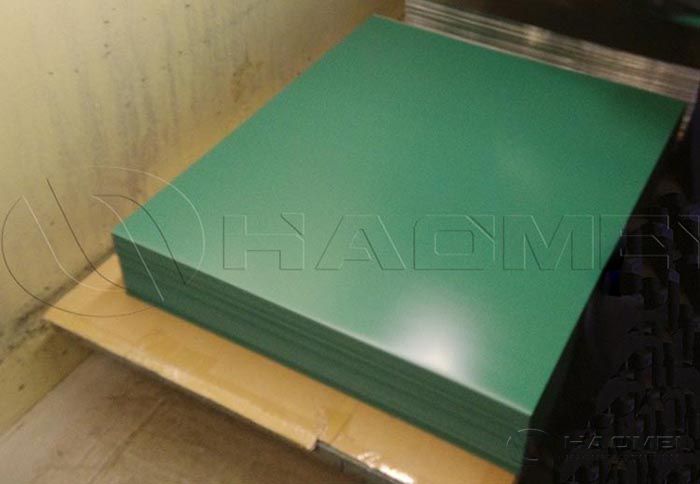
planchas offset.jpg

Placa PS positiva

Las planchas utilizadas en el proceso CTF son principalmente planchas de PS, es decir, planchas fotosensibles prerrevestidas, que se desarrollan para adaptarse al rápido desarrollo de la impresión litográfica. La placa de PS está compuesta por un sustrato de aluminio y un revestimiento de placa de PS.

La parte lipófila de la placa de PS es una resina diazo fotosensible con una altura de aproximadamente 3 μm en el plano base. Es una buena película lipófila e hidrófoba, y la tinta es fácil de esparcir sobre ella, pero el agua es difícil de esparcir.

Si se hornea a una temperatura de 230-240 °C durante 5-8 minutos, la película fotosensible se esmaltará y también mejorará la dureza de la plancha de impresión, y la durabilidad de la impresión de la plancha de impresión puede alcanzar los 200.000- 300.000 hojas.

La parte hidrófila de la placa de PS es una película delgada de óxido de aluminio con una altura de 0,2 a 1 μm. Su hidrofilicidad, resistencia a la abrasión y estabilidad química son relativamente buenas, por lo que la durabilidad de la impresión de la plancha de impresión también es relativamente alta.

Placa CTCP

La tecnología de impresión de planchas CTCP es una solución de fabricación de planchas por ordenador basada en las condiciones de impresión existentes. Aunque el precio de las planchas de impresión CTP ha bajado considerablemente después de años de producción en masa, todavía no puede bajar al nivel de precios de las planchas de PS, y las planchas utilizadas en la fabricación de planchas CTCP son planchas de impresión convencionales baratas, es decir, planchas de PS.

Más importante aún, gracias al uso de planchas de PS, las imprentas pueden mantener el estado anterior en términos de inventario de planchas, capacitación de operadores y kits de lavado sin reinversión, por lo que los costos de mantenimiento posteriores son bastante bajos.

Placa térmica CTP

El ámbito comercial de las empresas de impresión comercial y de embalaje que tienen altos requisitos en cuanto a la calidad del material impreso suele incluir álbumes boutique de alta gama y productos de embalaje exquisitos, por lo que les gusta elegir la tecnología térmica CTP con prioridad en la calidad.

La característica de la placa ctp es que la plancha de impresión se graba con un láser con una longitud de onda de 830 nm o 1064 nm, y el contorno del punto obtenido es más claro y la forma del punto es más fuerte.

El punto débil de las planchas CTP térmicas es su baja sensibilidad, entre decenas y cientos de milijulios por centímetro cuadrado. Para lograr una eficiencia de producción adecuada, a menudo se utiliza tecnología de grabación en paralelo con múltiples rayos láser y el costo de la fuente de luz es relativamente alto.

Haomei Aluminium tiene estos tres tipos de planchas de impresión de aluminio para satisfacer las múltiples necesidades de impresión comercial, impresión de envases e impresión de periódicos. Bienvenido a dejar un mensaje a continuación para preguntar qué necesita.

Fuente original: https://www.placadealuminio.es/a/tres-tipos-de-planchas-offset.html
Types of Aluminum Offset Printing Plates

 In book production, printing is an important production link and printing costs account for a large proportion of book production costs. At this stage, there are mainly three types of printing plates: PS plate, CTP plate and CTCP plate.

PS plate offset printing .jpg

PS plate

PS plate offset printing is a photosensitive offset printing plate with a multi-layer structure. It uses an aluminum plate as a support, and the aluminum plate has been processed by various processes, the purpose of which is to endow it with photosensitive properties and printability.

How to choose PS plate? There are three tips: The choice should be based on the right size, proper printing endurance to match the printing quantity and suitable quality. For example, The size specifications of the PS plates include length, width and thickness specifications, and the PS plate should be selected according to the printing plate size requirements of the printing machine used.

CTP Plate

Compared with PS plates, there are more types and varieties of CTP plates like silver salt ctp plate, thermal ctp plate and violet ctp plate. Among them, thermal CTP plate is more popular. The thickness of the aluminum plate for CTP plates is generally 0.280mm, which is slightly thicker than the PS plate currently produced (the thickness of the PS plate base is 0.270mm±0.005mm). It is certain that Haomei Alumium has different thicknesses for you to choose from.

CTCP plate

CTCP technology images digital information on ordinary PS plates. The consistency of the printing plates ensures the normal operation of all printability. Printing companies do not need to worry about various problems caused by changes in printing suitability, and do not need to spend a lot of time and energy to complete the matching of aluminium offset printing plates and printing machines.

Haomei Aluminum has all these different kinds of printing plates. Welcome to leave message below to inquire what you need.

Original source: https://www.alumhm.com/a/types-of-aluminum-offset-printing-plates.html

The Different Requirements of PS/CTP Plate on Aluminum Plate

 The CTP offset printing plates’ basic requirements for the appearance of the aluminum plate base are clean, flat, free of cracks, corrosion pits, spots, vents, scratches, creases, marks, peeling, etc. There is no slight color difference.

The PS plate can ignore the above problems. The main reason is that the CTP equipment uses scanning imaging, unlike the PS plate, which uses a vacuum method to make the plate and the film close. If the CTP plate flatness is poor, it will affect the laser imaging quality.

The difference between CTP plate and PS plate on the geometrical size requirements of aluminum plate base:

CTP offset printing plates.jpg

1. Thickness difference

The thickness of the aluminum plate base for CTP thermal is generally 0.280mm, which is slightly thicker than the PS plates currently produced (the thickness of the PS plate base is 0.270mm±0.005mm). Since the aluminum plate base is thicker, the printing plate stiffness will be better, and it is not easy to bend.

2. Width difference

Since the production of CTP plates does not install an online trimming device, the width tolerance of the aluminum coil is required to be ≤±0.5mm, preferably without tolerance. There are also clear requirements for the cutting quality of aluminum coils, that is, there should be no burrs, flounces, etc. on both sides of the aluminum coil after slitting.

3. Vertical and horizontal uniformity

The longitudinal and transverse thickness tolerances of the aluminum plate base should be ≤±0.005mm. The thickness deviation will affect the plate making, and the parameters set by the CTP plate making machine are generally not allowed to be adjusted casually.

The difference between CTP plate and PS plate on the electrolytic performance requirements of aluminum plate base:

Because CTP printing plates are mostly used for high-end color printing, the basic grain value of CTP plates is finer than that of PS plates. The reduction is directly related to the surface roughness of the plate base, that is, the grain value of the plate base. The thicker the grain, the worse the reducibility of the dots and lines.

To prepare a fine and uniform grain, the internal composition of the aluminum plate base is very important, which is related to the composition of the aluminum alloy. Haomei aluminum plate for CTP thermal has good physical and mechanical properties and can significantly improve its electrolysis suitability. 

Original source: Original Source:


Mill Finish Aluminum Circle VS Color-Coated Aluminum Circle: Which Is Better for Cookware

  Aluminum circles are the core raw materials for manufacturing various cookware, including pots, pans, woks, and pressure cookers. Their su...