显示标签为“marine aluminum extrusion”的博文。显示所有博文

Marine Aluminium Extrusions

 Marine aluminium extrusions are popular for boat structures, gangways, handrails, T tracks, frames, ladders, and lightweight deck hardware because they combine strength, corrosion resistance, and easy fabrication. On Q and A platforms, the most common confusion is not whether aluminium works at sea, but which alloy and temper to pick, what surface finish actually survives salt exposure, and how to specify an extrusion so it fits and welds without surprises.
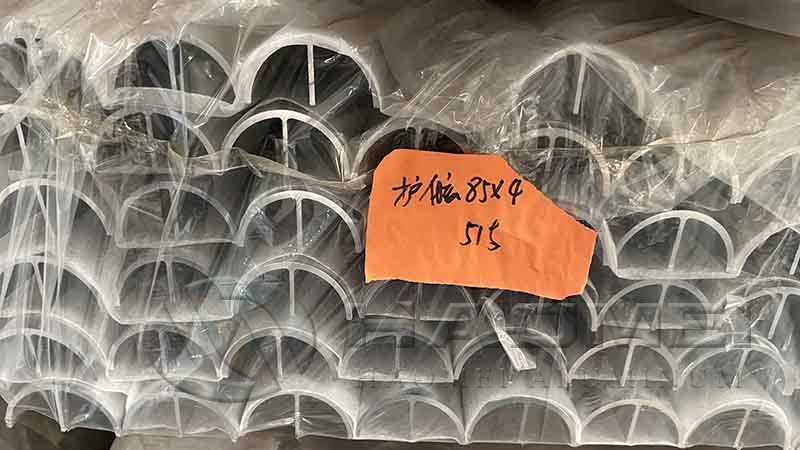
aluminum gangway

1) What is the best alloy for marine aluminium extrusions: 6061, 6063, or 6082?

People keep asking this because listings often label all three as "marine grade," yet they behave differently once you start welding, machining, and living with seawater.

Practical selection (typical small to mid marine structures):

  • 6082-T6 or T651 is often the most balanced choice in Europe and many export markets for structural extrusions. It tends to offer strong mechanical properties and good corrosion resistance for above waterline parts.
  • 6061-T6 is globally common, very available, and friendly for machining and general fabrication. It is a safe default for many structural profiles, brackets, and frames.
  • 6063-T5 or T6 is usually chosen for excellent extrudability and surface finish, so it is common for rails, trims, and profiles that benefit from clean anodizing. It is generally not the first pick when you need maximum structural strength.

Where these differences show up in real projects is in weld zones. If you will weld heavily, you may prefer designs that avoid concentrating loads right next to welds, or you may accept that post weld strength near the heat affected zone is lower than base metal. If you need a quick reference for common mechanical expectations and availability, see Alu 6061 and Alu 6082.

2) Do marine aluminium extrusions corrode in seawater, and what protection matters most?

Yes, aluminium can corrode in marine environments, but the failure mode most people fear is rarely uniform rust like steel. The common problems are pittingcrevice corrosion, and galvanic corrosion.

What actually matters in practice:

  • Design out crevices. Trapped salty moisture under pads, inside tight overlaps, or in unsealed joints causes local attack. Simple drain paths and accessible rinse points help more than many coatings.
  • Avoid dissimilar metal contact. Stainless fasteners on aluminium are common, but direct contact plus seawater can create galvanic coupling. Use isolating washers, sleeves, bedding compounds, or barrier tapes.
  • Pick the right finish for exposure. Anodizing helps above waterline, but in tight crevices it cannot compensate for poor design. Coatings can be excellent if edges and fastener holes are properly sealed.

If your project includes plates welded to extrusions, pairing profiles with proven marine plate alloys is common.
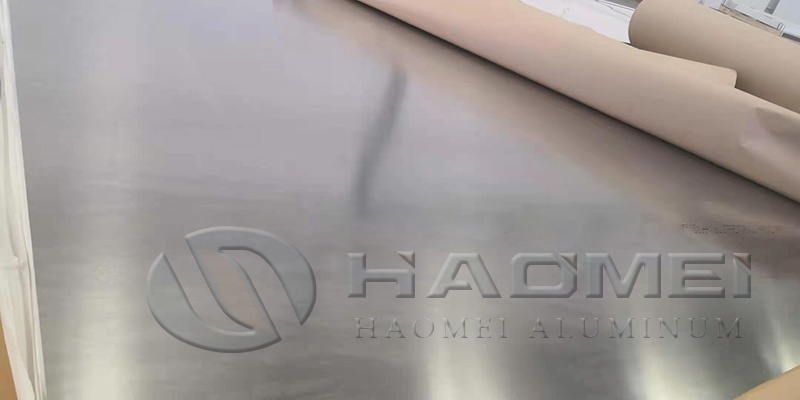
5083 aluminum sheet

3) Is anodized aluminium okay on boats, or should I use powder coating or bare mill finish?

This is asked frequently because people have seen both beautiful long lasting anodized rails and also chalky, stained, or peeling finishes.

How to choose:

  • Anodizing (especially for 6063 profiles) offers a hard, attractive surface and good UV stability. It is excellent for handrails, window frames, and decorative or semi structural parts above waterline. Specify marine appropriate sealing and a thickness that matches the exposure.
  • Powder coating can give great aesthetics and color options, but marine success depends on pretreatment, film build, edge coverage, and avoiding sharp corners. If the pretreatment is weak or the coating is damaged, corrosion can creep under the film.
  • Mill finish can work for parts that are regularly rinsed, not cosmetic, or will be wrapped or protected by other systems. But it shows staining and is less forgiving in splash zones.

A useful rule: if the part will be handled, scuffed, or exposed to strong sun, pick a finish that you can maintain and touch up. Also remember that anodizing changes fit slightly, so tight tolerance sliding parts should be designed with the coating thickness in mind.

4) What is the real difference between "marine grade" aluminium and "aircraft grade" for extrusions?

This question pops up because the word "aircraft" sounds superior, and some sellers use it loosely. For marine extrusions, the better question is whether the alloy temper and corrosion behavior match the environment and fabrication.

Reality check:

  • Many so called aircraft alloys are optimized for high strength, fatigue performance, and strict process control, but some are more sensitive to corrosion in salt exposure without robust protection.
  • Marine use rewards alloys with good seawater corrosion resistance, reliable weld behavior, and stable supply in extrusion form.
  • The right answer is typically not a label, but a spec: alloy, temper, mechanical requirements, inspection needs, and surface finish.

If someone is offering an "aircraft grade" extrusion without stating alloy and temper, treat it as a marketing phrase and ask for the actual designation and test certificate.

5) What should I specify when ordering marine aluminium extrusions so they fit and weld correctly?

A large share of Q and A discussions are really about parts not fitting, distortion after welding, or holes and slots not lining up. These issues are avoidable with clear ordering details.

Use this checklist when requesting a quote:

  • Alloy and temper: e.g., 6082-T6, 6061-T6, or 6063-T5.
  • Profile drawing and critical dimensions: mark what must be tight tolerance vs general.
  • Straightness and twist limits: especially for long rails and tracks.
  • Surface finish: mill, anodized (type and thickness), or powder coated (system and color).
  • Length and cut tolerance: random length vs fixed cut length.
  • Welding plan: tell the supplier if you will MIG or TIG, and where welds will be placed.

Common marine extrusion choices, pros, and cautions

AlloyTypical temperBest forStrength levelCorrosion behaviorNotes
6061T6Structural frames, brackets, machined partsMedium to highGood above waterlineWidely available, predictable machining
6082T6Structural extrusions, beams, load bearing profilesHighGood above waterlinePopular for marine structures in many regions
6063T5, T6Rails, trims, anodized visible profilesMediumGood with anodizingExcellent surface finish and extrudability

Fasteners and isolation: what people miss

ConnectionRisk in salt exposureWhat to doWhat to avoid
Stainless bolt into aluminiumGalvanic corrosionUse isolating washers, sleeves, bedding compoundBare metal to metal contact in wet crevices
Aluminium to carbon steelVery high galvanic riskSeparate with robust barriers or redesignDirect bolting with water traps
Rivets and insertsCrevice corrosionSeal interfaces, choose compatible materialsUnsealed blind holes in splash zones

aluminum squre tube

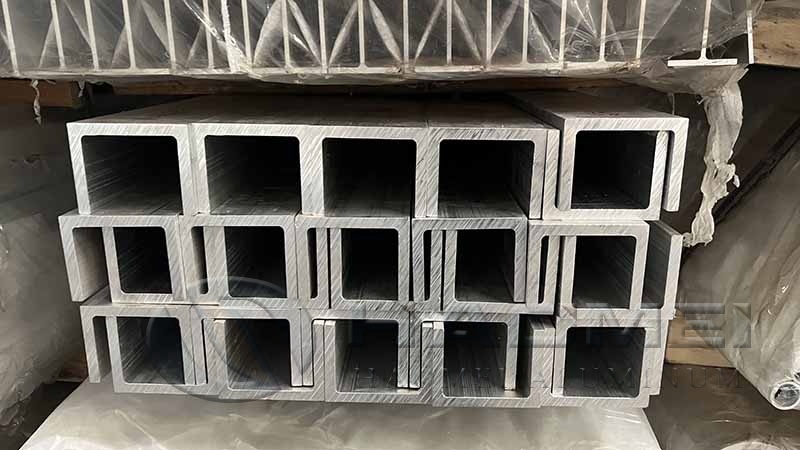
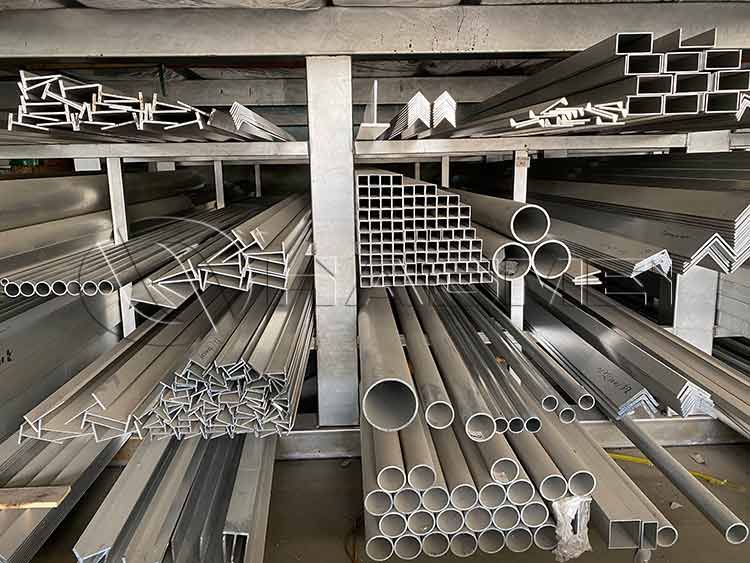
When you see marine extrusions marketed for gangways, frames, and supports, square and rectangular profiles are common because they are easy to cut, jig, and weld, but the marine success depends more on joint design and isolation than on shape alone. If you are comparing suppliers, ask for dimensional inspection capability, coating process details, and how they package long profiles to prevent transit scratches that later become corrosion initiation points.


Original Source:https://www.marinealu.com/a/marine-aluminium-extrusions.html
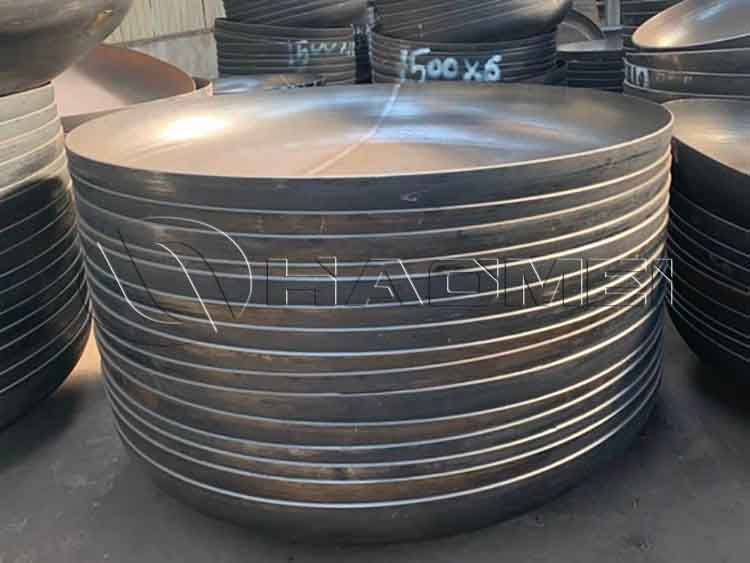
Aluminum Elbow and Pipe End Caps for Shipbuilding

 With the increasing demands for lightweight and corrosion-resistant properties in the shipbuilding industry, marine aluminum, with its advantages of low density, high strength, and corrosion resistance, has gradually become an important material in shipbuilding. Aluminum elbows and caps, as key components in aluminum processing, play an irreplaceable role in core aspects of ship piping systems and structural connections.

aluminum pipe end caps.jpg

Aluminum Elbows

Ships have complex piping systems, including fuel lines, cooling water lines, ballast water lines, and ventilation lines. These lines need to be able to turn and connect in multiple directions within limited space, and aluminum elbows are the key components to achieve this function.

1. Application Scenarios

In marine fuel systems, aluminum elbows are used to connect fuel lines in different directions, ensuring a smooth flow of fuel from the fuel tank to the engine. Because fuel is corrosive and leakage must be avoided during transport, the corrosion resistance and sealing accuracy of aluminum elbows are crucial.

Aluminum elbows produced using high-precision forging processes have smooth, burr-free inner walls, reducing fuel flow resistance. Simultaneously, the sealing groove design at the interface ensures a perfect fit with the sealing ring, eliminating the risk of fuel leakage.

Aluminum elbows also play a crucial role in ship cooling systems. Ship engines generate significant heat during operation, requiring cooling water to be transported through cooling water pipes for cooling. These pipes must bypass engines, generators, and other equipment, making multiple turns to complete the circulation.

Aluminum elbows offer a variety of angle specifications (e.g., 45°, 90°, 135°), allowing for flexible selection based on piping layout. Furthermore, aluminum's good thermal conductivity aids in rapid heat dissipation from the cooling water pipes, preventing localized overheating that could affect equipment operation.

2. Core Advantages

Compared to traditional steel elbows, aluminum elbows offer two core advantages in shipbuilding: Firstly, they are lightweight. An aluminum elbow of the same specifications weighs only one-third of a steel elbow. Extensive use further reduces the overall weight of the ship's piping system, improving the ship's load capacity and navigational flexibility.

Secondly, they are corrosion-resistant. Aluminum elbows require no additional galvanizing or painting for corrosion protection and maintain stable performance in seawater and salt spray environments, with a service life exceeding 10 years, far surpassing the 5-6 years of steel elbows. This reduces the frequency and cost of parts replacement during ship maintenance.

Aluminum Caps

If aluminum elbows are the "steering core" of pipelines, then aluminum pipe end caps are the "sealing guardians" of ship structures and pipelines. In shipbuilding, aluminum caps are mainly used for sealing pipeline ports and plugging pre-drilled holes in structural components. By preventing impurities from entering and ensuring stable system pressure, they safeguard the safe operation of the ship.

1. Application Scenarios

During the installation of ship pipelines, some pipeline ports need to be temporarily sealed before commissioning is completed to prevent dust, moisture, and debris from entering the pipeline and affecting subsequent use—this is where aluminum caps come in handy.

Aluminum caps use a snap-on or threaded design, allowing for quick connection to pipeline ports, and offer excellent sealing performance. Even under conditions of ship rolling and vibration, they maintain a stable seal, effectively preventing impurities from entering.

Aluminum caps are also indispensable in the processing of ship structural components. During the production of aluminum alloy decks, bulkheads, and other structural components of ships, pre-drilled holes are reserved for subsequent equipment installation. These holes must be sealed before use to prevent seawater and rainwater from seeping into the structure, causing aluminum corrosion or a decrease in structural strength.

Aluminum caps can be customized according to the hole dimensions and fixed to the structural components by welding or bonding. This not only achieves effective sealing but also creates a unified appearance with the structural components, enhancing the overall aesthetics of the ship.

2. Core Advantages

The advantages of aluminum caps are mainly reflected in their adaptability and ease of installation. On the one hand, the material of aluminum caps is highly compatible with commonly used aluminum alloys in ships (such as 5083 and 6061 aluminum alloys), preventing electrochemical corrosion due to material differences and ensuring the stability of the structural components.

On the other hand, the processing technology of aluminum caps is simple, and they can be made into various shapes such as round, square, and oval to meet the sealing requirements of different scenarios. In addition, the installation of aluminum caps requires no complicated tools, and both temporary and long-term sealing can be completed quickly, significantly improving the construction efficiency of shipbuilding.


Original Source:https://www.marinealu.com/a/aluminum-elbow-and-pipe-end-caps-for-shipbuilding.html

What Are Aluminum Threaded Pipe Fittings

 In shipbuilding and maintenance, the choice of pipe fittings directly impacts navigation safety, equipment lifespan, and operating costs. Compared to traditional copper and steel fittings, marine aluminum threaded pipe fittings are becoming the new favorite in ship piping systems due to their lightweight, corrosion-resistant, and easy installation advantages. Threaded aluminum pipes and caps, as core components, demonstrate irreplaceable performance in seawater environments and vibration conditions.

marine aluminum threaded pipe fittings .jpg

Threaded Aluminum Pipes

The threaded aluminum tube is the foundation of marine piping systems, primarily used to transport fuel, lubricants, coolants, and other media. Their advantages are particularly pronounced in weight-sensitive applications like ships:

The lightweight advantage is significant: Aluminum has a density only one-third that of steel. Using threaded aluminum pipes significantly reduces the overall weight of a ship, reducing fuel consumption while also improving stability and load capacity. For small and medium-sized vessels or those with strict draft requirements, this lightweight feature can even directly impact navigation efficiency.

Corrosion resistance is ideal for marine environments: Seawater and salt spray are natural enemies of pipe fittings, but aluminum forms a dense oxide film in the air, effectively resisting salt spray corrosion. Threaded aluminum pipes that have undergone special surface treatments (such as anodizing and spray-coated with an anti-corrosion coating) maintain structural stability even under long-term immersion or humid conditions, preventing the risk of leaks caused by corrosion.

Threaded connections offer both sealing and convenience: The connectors of threaded aluminum pipes utilize precision threads. When used with specialized sealants or sealing rings, they provide a reliable seal, preventing leakage. Furthermore, threaded connections eliminate the need for complex welding processes; installation and removal can be accomplished with standard tools, significantly reducing labor costs during ship maintenance and making them particularly suitable for emergency repairs mid-sea.

In practice, the specifications of threaded aluminum pipes are selected based on the pressure and temperature of the medium being transported. For example, threaded aluminum pipes used to transport high-pressure fuel are made of high-strength aluminum alloy and feature thicker walls to enhance pressure resistance. Threaded aluminum pipes used in cooling systems, on the other hand, prioritize smooth interior walls to reduce water flow resistance.

Threaded Aluminum Pipe Caps

If threaded aluminum pipes are the "blood vessels" of ship piping, then aluminum pipe cap threaded is the key component protecting the "ends" of these vessels. They primarily fit over the ends of threaded aluminum pipes, providing a seal, dustproofing, and damage prevention. Their value is reflected in three key scenarios:

Pre-installation protection: During transportation and storage, the threads of newly produced threaded aluminum pipes are easily damaged by collisions and dust. Applying threaded aluminum pipe caps at this time prevents thread deformation and corrosion, ensuring a tight seal during installation. Especially given the long construction period of ships, threaded aluminum pipe caps can effectively extend the "shelf life" of pipe fittings.

Temporary sealing during pipeline maintenance: When a ship's pipeline malfunctions and requires disassembly for repair, unconnected threaded aluminum pipe ends are exposed. If not sealed promptly, seawater, oil, or impurities may enter the pipe, contaminating the media or clogging it. Threaded aluminum pipe caps quickly provide a temporary seal, saving time for repairs and reducing the workload of subsequent pipeline cleaning.

Long-term protection for idle pipelines: Some ships reserve spare pipelines or deactivate certain pipelines during specific missions. For these idle threaded aluminum pipes, threaded aluminum pipe caps provide a long-term seal, preventing environmental corrosion and ensuring the pipes can be used directly upon reactivation without requiring additional maintenance.

Notably, high-quality threaded aluminum pipe caps feature internal sealing grooves that can be used with rubber sealing rings to further enhance the sealing effect. Furthermore, the thread accuracy of the caps is precisely matched to the corresponding aluminum pipes, preventing loosening or damage caused by misalignment. Threaded aluminum pipe caps are typically made from the same material as the threaded aluminum pipes to ensure matching corrosion resistance and thermal expansion coefficients, thus avoiding connection issues caused by material differences.


Original Source:https://www.marinealu.com/a/what-are-aluminum-threaded-pipe-fittings.html

What Are Uses of 6082 t6 Aluminum Rod

 In the vast universe of materials science, 6082 aluminum rod is a shining star. With its excellent performance, wide applicability and unlimited innovation potential, it has become an indispensable and important element in many industries. Today, let us step into the world of 6082 aluminum and explore the wireless possible application areas it brings.

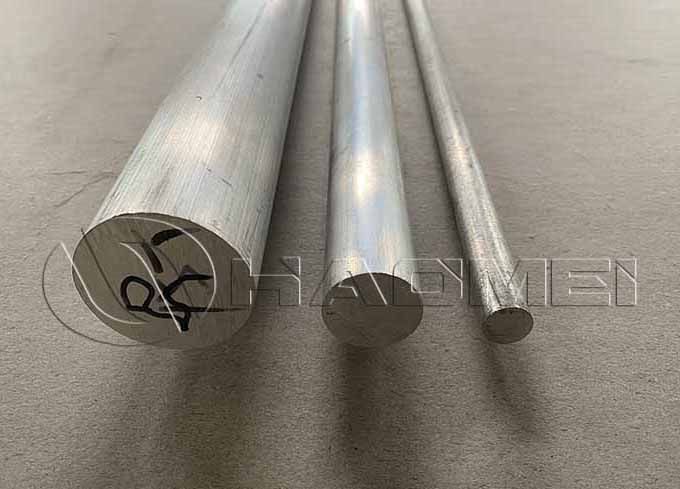
Let's take a look at the basic characteristics of 6082 aluminum rod. 6082 aluminum rod is a a high-quality aluminum alloy with high strength, good corrosion resistance and machinability. These characteristics make 6082 aluminum perform well in many fields.

 6082 aluminum rod.jpg

In the field of electronic product accessories, the application of 6082 aluminum bars is particularly extensive. With the rapid development of science and technology, electronic devices such as smartphones and tablets have become an indispensable part of people's lives. As the shell and radiator material of these devices, 6082 aluminum bars not only provide solid protection, but also ensure good heat dissipation performance of the equipment. Its light weight and beautiful features also make electronic devices more portable and fashionable.

However, the application of 6082 aluminum rods is far more than that. In the field of aerospace, 6082 aluminum rods are favored for their high strength and corrosion resistance. Aircraft fuel tanks, fuselages, skins, compressors and other parts need to withstand huge pressure and harsh environmental conditions, and 6082 aluminum rods are the ideal material for these parts. Its use not only reduces the overall weight of the aircraft, improves fuel efficiency, but also ensures the safety and stability of flight.

In the field of automobile manufacturing, 6082 aluminum bars also show their unique advantages. With the improvement of environmental awareness and the requirements of energy conservation and emission reduction, automobile lightweighting has become an important trend in the development of the industry. As a lightweight and high-strength material, 6082 aluminum bars are widely used in precision parts such as engine parts, suspension systems and braking systems. Its use not only reduces the fuel consumption and emissions of automobiles, but also improves the performance and safety of automobiles.

In addition, 6082 aluminum bars are also widely used in the fields of shipbuilding and marine engineering, machinery manufacturing, etc. In the shipboard and components of marine ships, the corrosion resistance of 6082 aluminum bars enables it to cope with the challenges of seawater environment. The ribbed aluminum plate is another popular aluminum profile used in the shipbuilding field.

With the continuous progress and innovation of science and technology, we believe that 6082 aluminum bars will open up more and more unlimited application areas. For example, in the field of new energy, 6082 aluminum bars can be used to manufacture solar panel brackets, wind turbine blades and other components to support the development of renewable energy.

Haomei Aluminum provides different forms of 6082 aluminium alloy products. Welcome to inquire what you need from us.

Original source: https://www.marine-aluminium-plate.com/a/what-are-uses-of-6082-t6-aluminum-rod.html

How to Choose Aluminum Profile for Different Applications

 As an important building and industrial material, aluminum profiles are widely used in various fields. The selection of aluminum profiles of different alloys will affect the performance and applicable scenarios.

 6061 aluminum tubing.jpg

Al-Mg-Si alloy profile

It is an aluminum profile with high strength and rigidity. It adds magnesium and silicon elements to aluminum alloy profiles. It has better wear resistance and corrosion resistance and can cope with harsh environments and high pressure conditions.

Main applications

Automobile manufacturing: automobile body, chassis, frame, engine parts, etc.

Aerospace: aircraft structure, wings, spacecraft, etc.

Sports equipment: bicycles, mountaineering equipment, skiing equipment, etc.

6061 aluminum alloy

6061 alloy is often used to make aluminum boat extrusions like 6061 aluminum tubing. Its hardness and strength are higher than 6063 aluminum profile. It is suitable for scenes with large loads and stresses, such as building structures, mechanical equipment, etc. Its advantage lies in good corrosion resistance.

Main applications

Architecture: building structures, support columns, beams, etc.

Mechanical engineering: mechanical equipment, parts, molds, etc.

Aerospace: aircraft structures, parts, spacecraft, etc.

Automobile manufacturing: automobile chassis, frames, engine parts, etc.

6063 aluminum alloy

It has good machinability and corrosion resistance, and is suitable for scenes that require high-precision machining and surface treatment, such as doors and windows, curtain walls, industrial assembly line frames, radiators, etc. Its advantages are good plasticity, suitable for extrusion production, and a wide range of applications.

Main applications

Construction field: doors and windows, curtain walls, display racks, balcony railings, etc.

Interior decoration field: furniture, decorations, cabinets, floor strips, etc.

Industrial equipment: assembly line frames, robot fences, equipment racks, etc.

6082 aluminum alloy

Because it contains Mn, the corrosion resistance and welding performance of 6082 allooy are even better. Especially in marine ships, 6082 is widely used, and ship hull and components are inseparable from it.

6082 marine aluminium extrusions not only has excellent formability, weldability, machinability and corrosion resistance, but also has medium strength. Whether it is a bar, plate, pipe or profile, it can show excellent operability. In Europe and the United States, 6082 alloy is very popular and is widely used in various fields, such as seamless aluminum tubes and structural profiles.

Aluminum-titanium alloy profile

It is a high-strength, corrosion-resistant aluminum profile. Aluminum-titanium alloy profile is suitable for manufacturing lightweight structural parts and parts that bear high loads.

Main applications

Aerospace field: aircraft structure, engine parts, spacecraft, etc.

Transportation field: high-speed trains, subway vehicles, etc.


Original Source:https://www.marinealu.com/a/how-to-choose-aluminum-profile-for-different-applications.html

Aluminum Circle, Strip, and Foil: Which Alloy Is Right for Your Application?

  Aluminum Circles for Cookware: 1050 vs. 1060 vs. 3003 Alloy In the cookware manufacturing industry, aluminum discs have become an ideal ma...