显示标签为“aircraft aluminum sheet”的博文。显示所有博文

Typical Aircraft Aluminum Sheet 2024

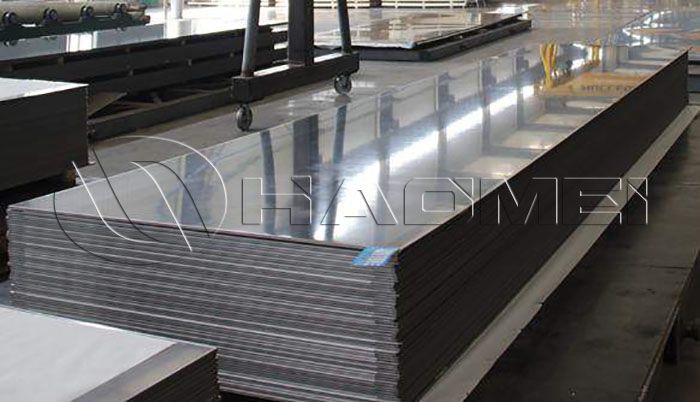
 High-strength aircraft aluminum sheets are of low density, high strength, and good thermal processing performance, which have broad application prospects in aerospace components. For example, high-strength aluminum alloy thick plates are used as the main load-bearing components, and the proportion of use accounts for 30% to 35% of the total aluminum consumption in the aircraft.

Aluminum-copper (2000 series) alloys are the predominant aluminum alloys used in airframe structures, where the primary design criterion is damage tolerance. Compared with other series of aluminum alloys, 2000 Al-Cu alloys have higher strength, higher damage tolerance and good fatigue crack growth resistance due to the precipitation of Al2Cu and Al2CuMg phases. 2024 are the typical grade.

2024 aluminum.jpg

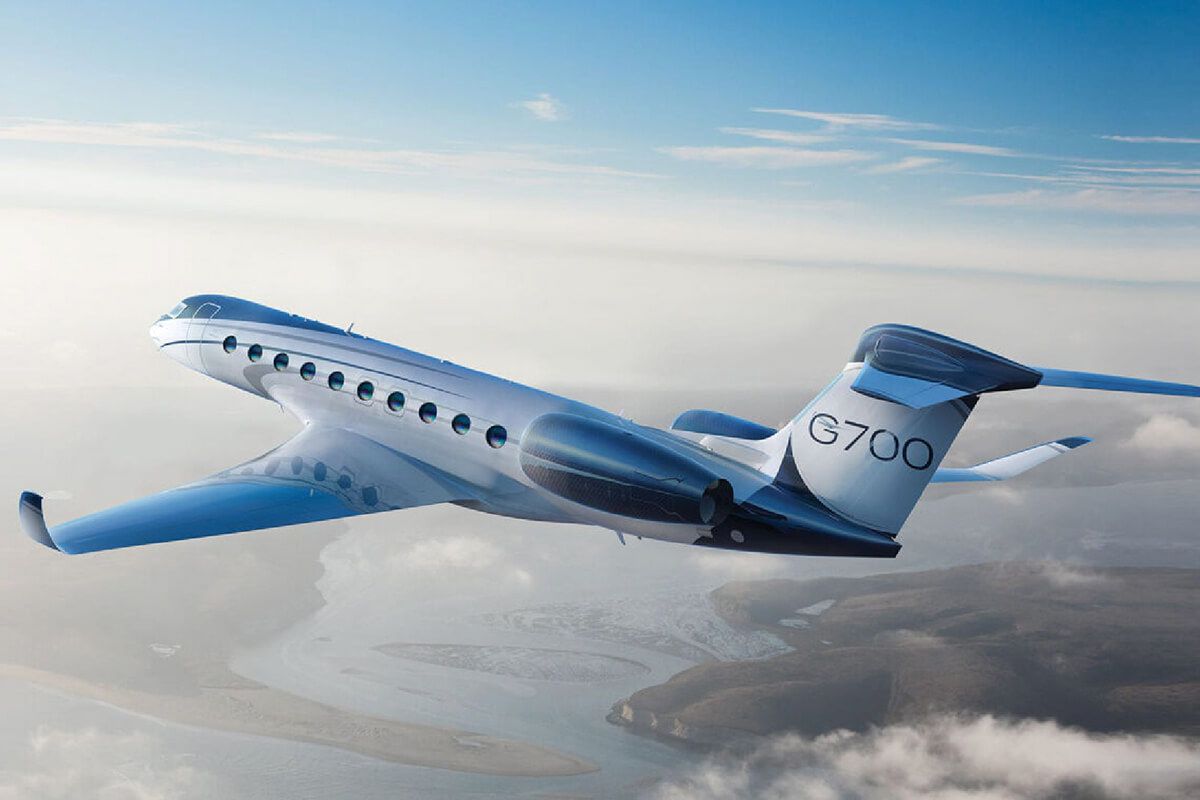
2024 aluminum is a typical hard aluminum alloy with good comprehensive performance. It has high compressive strength, certain temperature resistance, and can be used as working parts below 150 degrees. After heat treatment, the 2024 aluminum alloy has undergone solid solution treatment to obtain relatively high compressive strength and ductility. It is generally used to produce skins, roof beams, bulkheads, and wings of airplanes.

The compressive strength of 2024 aluminum sheet is higher than that of 7075 aluminum sheet. The forming properties are better in the thermal condition, quenching and new heat treatment conditions, and the heat treatment process enhancement effect is remarkable, but the heat treatment method is strictly specified. Its corrosion resistance is weak, but it can be reasonably maintained by cladding with pure aluminum.

2024-T3 is one of the most widely used alloys in airframe construction. It has moderate yield strength, very good resistance to fatigue crack growth and good fracture toughness. 2024 aluminum sheet remains an important aircraft structural material due to its excellent damage tolerance and high resistance to fatigue crack growth under T3 aging conditions. Welcome to leave message below to inquire 2024 aluminum sheet price.
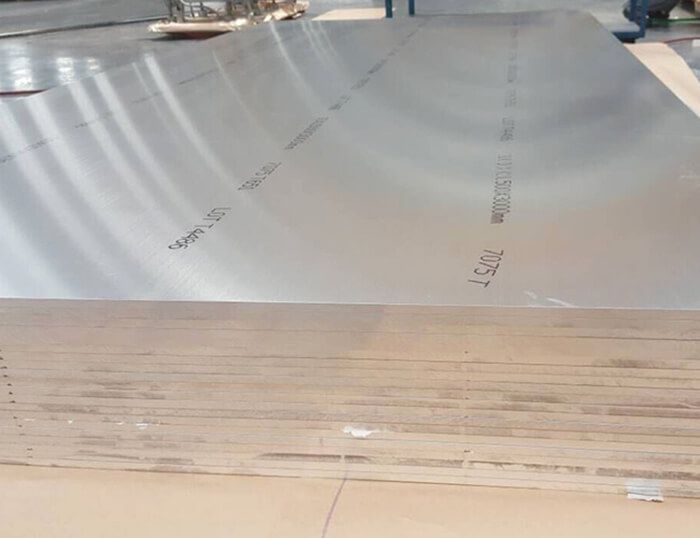
How to Choose Aircraft Aluminum Sheet for Sale

 For different applications, different aluminum sheet properties are needed like strength, corrosion resistance, decoration, and workability. If it is difficult to satisfy all the items and it is not necessary, it is recommended to decide on the priority.

 7055 aluminum.jpg

1. General purpose

Well-known pure aluminum plates such as 1100 and 1200 can be used for various purposes. The purity of both is above 99.00%.

About 0.1% of Cu (copper) is added to 1100 aluminum sheet, so it is more advantageous than 1200 in terms of strength.

2. Strength

The common strength reference standard is

Pure aluminum (1000 alloy) <Al-Mn (3000 alloy)<Al-Mg (5000 alloy)<Al-Mg-Si (6000 alloy)<Al-Cu (2000 alloy)< Al-Zn-Mg (7000 alloy).

The corresponding representative alloy grades are as follow

  • Al-Mn alloy: 3003, 3004

  • Al-Mg alloy: 5052, 5083

  • Al-Mg-Si alloy: 6063, 6061, 6005

  • Al-Cu alloy: 2014, 2017, 2024

  • Al-Zn-Mgalloy: 7003, 7204, 7075, 7050, 7055 aluminum alloy

The tensile strength of aluminum alloys ranges from 60MPa (1080-O alumiium) to 90MPa (7075-T6). For structures with welding as the main body, please consider 5083 aluminum sheet. When higher weld strength is required, consider 7204 or 7003.

When there is no corrosion resistance problem or complete anti-corrosion treatment is done, 2014-T6, 2017-T3, 2024-T4, 7075-T6 materials can be selected. Compared with 7150-T77, the stress corrosion resistance of 7055-T77 is almost same, but the strength is greatly improved, which is the highest strength among the current aircraft aluminum alloys.

3. Corrosion resistance

Corrosion resistance will vary greatly depending on the use environment. For medicine and food containers, please consider 1100 and 1200 aluminum alloy. When higher corrosion resistance is required, consider higher purity aluminum such as 1070 and 1080. In terms of water resistance, 3003 aluminum shet is used for fresh water, and 5052 or 5083 aluminum plate is used for sea water. Al-Cu and Al-Zn-Mg alloys cause stress corrosion cracking depending on the conditions of use.

4. Processability

Extrusions such as beer cans generally use 1100, 3003, and 3004.

Among common cutting materials, 2011 has excellent machinability, but poor corrosion resistance.

5. Weldability

For MIG and TIG welding, pure aluminum, Al-Mn, Al-Mg and and Cu-free has excellent weldng performance. When the strength after welding is emphasized, 7204 and 7003 should be selected, and when the corrosion resistance is valued, 5083 should be used.

The strength of Al-Mg-Si alloys decreases after welding. 6063 aluminum alloy is a heat-treatable strengthening alloy with medium strength in the AL-Mg-Si series. What are 6063 t6 aluminum properties? It has good corrosion resistance, excellent weldability, good cold workability, and moderate strength.


Original Source:https://www.aircraftaluminium.com/a/how-to-choose-aircraft-aluminum-sheet-for-sale.html

What Is Aircraft Aluminum Sheet Thickness

 In the manufacture of large aircraft, aluminum alloy materials account for a considerable proportion. The aluminum alloy materials of the French Airbus A380 aircraft account for 61%, the aluminum alloy materials of the American Boeing 767 passenger aircraft account for about 81%, and that of the Chinese domestic large aircraft C919 accounts for for about 70% of the total weight.

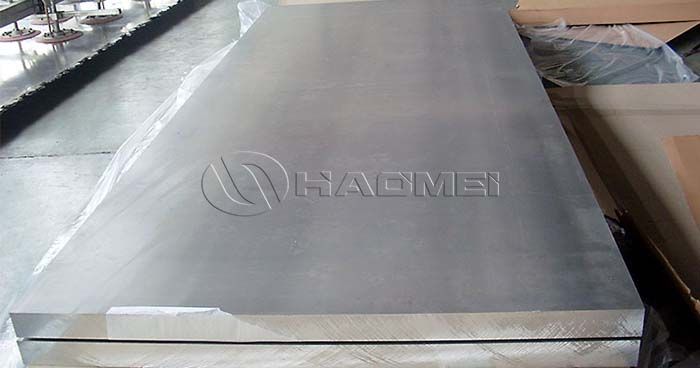
According to the aircraft aluminum sheet thickness, they all belong to thick aluminum sheet, which are mainly used for the production of aircraft fuselage, wings, tail and skin and other components. These parts are usually directly milled from high-strength aluminum alloy thick plates to reduce manufacturing costs, reduce body mass and facilitate management. If the aluminum plate is not thick enough, these large parts cannot be cut at all.

aircraft aluminum sheet thickness.jpg

The aluminum sheet thickness of C919 aircraft plane is up to 200mm, and it must also meet the performance requirements of corrosion resistance, high strength, fatigue resistance, dimensional stability, easy machining (polishing, cutting, etc.)

Aluminum thick plates can be divided into ingot hot-rolled thick plates and cast thick plates according to the production process. The thickness of the cast thick plate is basically unlimited (the maximum thickness can reach 1.2 meters); the mechanical properties of the hot rolled thick plate are better after the rolling process, so the aviation products generally use the hot rolled aluminum plate.

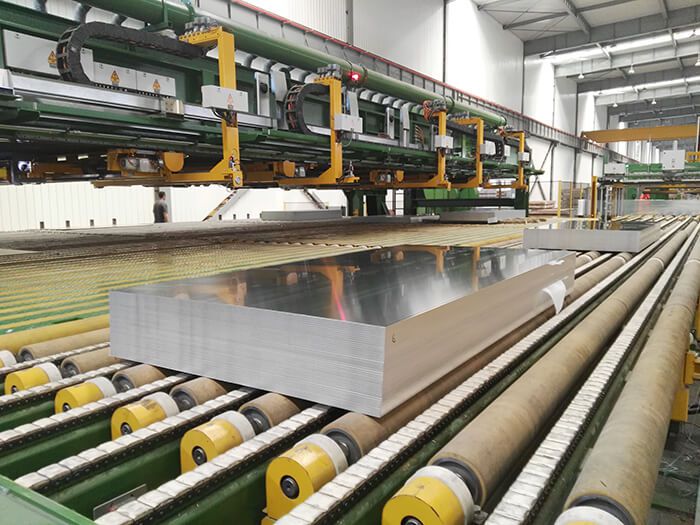
The typical production process of aerospace aluminum sheet metal is: raw material - casting - ingot milling - hot rolling - solution treatment - quenching - stretching - sawing. Due to the large temperature difference between the inside and outside of the plate during quenching, when the aluminum thick plate exceeds 6mm, a large quenching residual stress will be formed.

The thicker the aluminum alloy sheet, the greater the internal quenching residual stress, and the greater the tensile force required for the stretching process. The tensile force required to stretch the aluminum alloy thick plate with a thickness of 200mm will reach 10,000 tons.

With the appearance of the 12,000-ton aviation-grade aluminum alloy sheet tension stretching machine independently developed by China, Haomei Aluminum also has the ability to make it. Welcome to leave message below to inquire Haomei aerospace aluminum sheet metal.


Original Source:https://www.aircraftaluminium.com/a/what-is-aircraft-aluminum-sheet-thickness.html

The Manufacturing Level of Aircraft Aluminum Sheet in China

 Aviation materials are the foundation for the development of the aviation industry and involve a large amount of global import and export trade. Due to the high demand for materials by aerospace parts manufacturers, the aerospace materials market in Asia-Pacific, Europe and North America has huge potential.

The aviation material including aircraft aluminum sheet are important technical guarantees for realizing advanced aircraft with high performance, light weight, high reliability, long life, and low cost. Based on the importance of aircraft materials,the world's aviation powers attach great importance to the development of aircraft materials.

 2024 aluminum sheet.jpg

At present, China has basically formed a relatively complete aviation material research and development technology system and mass production capacity, and has the ability to supply key materials for major aviation equipment. There are some typical ones.

2024 Aluminum Sheet

2024 T3 aluminum sheet is the most common high-strength aluminum alloy. 2024-T3 aluminum plate is of super high strength and excellent fatigue resistance. Welding is generally not recommended. The typical use is for fuselage, wing shells and aircraft structure.

6061 T6 Aluminum

It has very good corrosion resistance and finishing ability, and good welding performance. The strength level of 6061-T6 aluminum plate is equivalent to that of low carbon steel. Its typical uses are aircraft landing pads, truck bodies and frames, structural parts, etc.

7075 Aluminum Alloy

Aircraft manufacturers use high-strength alloys, 7075 aluminum alloy to strengthen aluminum aircraft structures. 7075 aluminum sheet belong to Al-Zn-Mg-Cu alloy for ultimate strength, but the copper content makes it very difficult to weld. On the other hand, it has good anodizing effect. Aluminum 7075 has the best machining performance and can achieve very good results.


Original Source:https://www.aircraftaluminium.com/a/the-manufacturing-level-of-aircraft-aluminum-sheet-in-china.html

2024/2524/7075 Aircraft Aluminum for Fuselage Skins

What Is Aircraft Fuselage Skin

It refers to the dimension-shaped component that surrounds the aircraft frame structure and is fixed to the frame with adhesive or rivets to form the aerodynamic shape of the aircraft. The fuselage skin is a force-bearing member covering the outside of the frame. Its function is to form a streamlined outer surface of the wing.

The fuselage skin and the frame should have a large bearing capacity and rigidity, but its own weight is very light, which can bear and transmit aerodynamic loads. After the skin is subjected to aerodynamics, the force is transmitted to the connected fuselage wing frame. It is also in direct contact with the outside world.

Therefore, the fuselage skin material is required to not only have high strength and good plasticity, but also have smooth surface and excellent corrosion resistance. Duralumin and super duralumin are widely used in modern aircraft fuselage body.

Airplane fuselage.jpg

Aluminium Alloys Are Used to Make Aircraft Body

Boeing 747

It is the world’s first wide-body civil aircraft produced by the Boeing Civil Aircraft Group of the United States. The Boeing 747 is a four-engine aircraft that can be used for passenger, cargo, military and other purposes.

Aluminum alloys for aircraft body: 2524,2024, 7075

Boeing 777

The Boeing 777 is a large-scale civil airliner launched by the Boeing Company in the 1990s. Most of the materials used are mature materials in the late 1980s and early 1990s, or commercialized materials in the 1990s. Therefore, its selection of materials is very classic.

Aluminum alloy for fuselage skin: 2524-T3

Airliner A380

A380 aircraft body structure has used large amount of aluminium alloy, accounting for 61% of the weight. The composite materials accounts for 25%, iron and steel account for 10 %,others account for 4%.

Aluminum alloy for aircraft fuselage: 2024 and 2524

ARJ21

ARJ21 regional airliner is an aircraft with independent intellectual property rights developed by China in accordance with international standards. ARJ21 includes basic models, freight models and business models.

Fuselage skin aluminum alloys: 2024, 2324, 2524, 7475

Development of Aircraft Aluminum Alloy

Aircraft Aluminum Alloy.jpgThe classic 2024 aluminum plate has also developed a series of improved grades, such as 2124, 2224, 2324, etc., by reducing the content of Fe and Si impurities. The theory and technology of alloy purification and microalloying promotes the development of the third generation high-strength and high-toughness aluminum alloys.
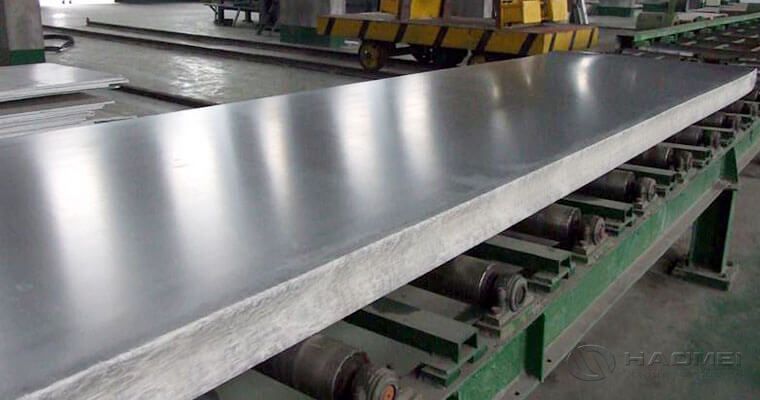
In response to the high damage resistance requirements of aircraft fuselage skin, Alcoa has successfully developed high damage resistance 2524 by further reducing the content of impurities such as Fe and Si, adding microalloying elements, optimizing the main alloy composition.

Super strong, high toughness and corrosion resistantence7055-T77 alloy and high damage resistance 2524-T39 alloy have been successfully applied to the upper wing panel and fuselage skin of B777, which are regarded as typical representatives of the fourth generation of aviation aluminum alloy.

In order to meet the advanced welding requirements and forming needs of the fuselage skin and wing wall panel of large aircraft, Al-Falumin has developed 6056, 6156, 2022, 2023,etc.

Typical Aircraft Aluminum Grades

2024 Aluminum Plate: Alulminum alloy 2024 is a typical duralumin alloy-Al-Mg-Cu aluminum alloy, with 4.5% copper, 0.6% manganese and 1.5% magnesium. It is of reasonable composition and good overall performance. 2024 aluminum also features high strength, a certain degree of heat resistance, can be used as working parts below 150 ℃.

7075 Aircraft Aluminum: High-strength aluminum alloys are mainly used for aircraft fuselage parts, engine compartments, seats, control systems, etc., and are the most widely used. 7075 aluminum plate belongs to the Al-Zn-Mg-Cu super hard aluminum.

2524 Aluminum Alloy: 2524-T3 Al plate has a nominal composition (%w.t) of 3.84% Cu, 0.04% Si, 0.06% Fe, 1.31% Mg, 0.56% Mn, 0.029% Ti, 0.01% Zn with the made up of Al.

The Market Situation of Aircraft Aluminium Alloy

 For more than 100 years since the world’s first all-metal monoplane made of aluminum was developed in 1912, there has been no change that aircraft aluminum alloy has played a leading role in aircraft body materials.

Since the aircraft aluminium sheet is of high specific strength, good forming and processing properties, they are widely used in the manufacturing of wings, fuselage skins, upper and lower wing beams,seat slides, keel beams, vertical stabilizer, horizontal stabilizer,etc.

aircraft aluminium sheet.jpg

A380-800 Airbus aluminum alloy material accounts for the largest proportion, reaching 61%, A350-900XWB Airbus aluminum alloy material accounts for 20%, and Boeing 787-8 Airbus aluminum alloy material accounts for 15%- 20%.

The main kinds of aircraft aluminum sheets used in large aircraft structures worldwide are 2xxx aircraft aluminum(2024, 2224, 2324,2424, 2524) and 7xxx aircraft aluminum(7055, 7075, 7085,etc.).

2xxxx aluminum ally, Al-Cu alloy is the most widely used structural aluminum alloy. Its main alloys and chemical elements are listed in the table.

The tensile strength of 2××× series aluminum alloy is 400~500 MPa, which is lower than the room temperature strength of 7××× series aluminum alloy, but the heat resistance, fatigue characteristics, especially fatigue crack growth resistance are all higher than 7×× × aircraft aluminum.

7xxx aluminum alloy, Al-Zn-Mg-Cu alloy, has high specific strength and hardness, good corrosion resistance, high toughness, and excellent processing performance.

The aircraft aluminum sheet has high technical requirements. The aircraft aluminum sheet manufacturer is not so much as that of the common aluminum alloy products. The foreign manufacturers have Alcoa, Alcan, Aleris,etc. In China, Haomei Aluminum is one of the aircraft aluminum suppliers. 2024 aluminum sheet and 7075 aluminum are are both its best selling products.
Original Source: 

Aluminium Strip for Cables Armoring

  Cable factories facing Christmas and New Year shutdowns have little tolerance for material delays or coil defects. An armor-strip issue di...