显示标签为“6056 Aluminum”的博文。显示所有博文

Effect of Homogenization Annealing on Microstructure and Properties of 6056 Aluminum Alloy

 6056 aluminum alloy is an Al-Mg-Si-Cu alloy widely used in the automotive and aviation fields. Its strength is 15% higher than that of 6061 aluminum alloy. Its weldability, corrosion resistance and cutting performance are better than 7075 and 2024.

The composition of 6056 aluminum alloy is complex. During the semi-continuous casting process, the ingot structure will deviate from the equilibrium state, resulting in severe dendrite segregation and a large amount of non-equilibrium solidification eutectic structure.
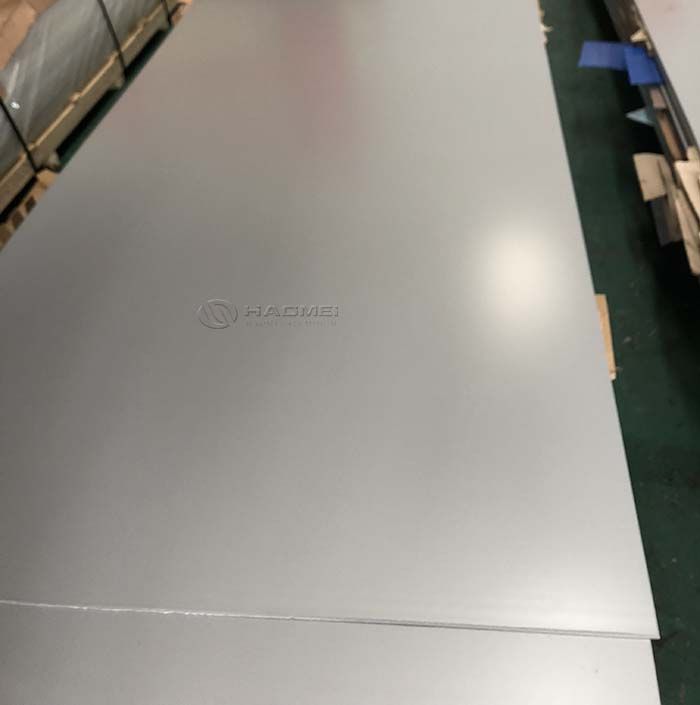
6056 aluminum alloy .jpg

Therefore, 6056 aluminum alloy ingot must be homogenized annealed to eliminate dendrite segregation, minimizing the residual crystalline phase in the matrix, and improving the plasticity of the alloy.

Homogenization annealing treatment is one of the key links to obtain ideal process and mechanical properties of 6056 aluminum alloy. The increase in temperature is conducive to accelerating the diffusion process, that is, accelerating the homogenization process.

The homogenization annealing temperature should be increased as much as possible, but considering the accuracy of the homogenization annealing equipment and the actual production, the homogenization temperature is selected at 540 ℃.

Through the observation of DSC curve of 6056 aluminum cast rod after homogenization treatment at 540 ℃×12 h, the endothermic peak at 554 ℃ has disappeared, that is to say, after the homogenization annealing treatment, the non-equilibrium freezing point eutectic structure mostly disappears.

With the progress of homogenization annealing treatment, the strength of 6056 aluminum alloy begins to gradually decrease, and the plasticity increases. The strength of 6056 aluminum alloy treated by homogenization annealing treatment at 540 ℃×6 h decreases to 214 MPa, and the ductility increases to 6.0%.

The strength of 6056 aluminum treated by homogenization annealing at 540 ℃×12 h decreases to 205 MPa, and the ductility increases to 16.5%. This is due to the dissolution of the second phase that hinders the movement of dislocations and pinned grain boundaries during the homogenization process, which reduces the strength of 6056 aluminum alloy.

The casting stress is gradually eliminated, the alloy dendritic segregation and non-equilibrium eutectic structure are eliminated, the structure becomes uniform, and the alloy plasticity is enhanced, so the elongation rate is increased.


Original Source:https://www.autoaluminumsheet.com/a/effect-of-homogenization-annealing-on-microstructure-and-properties-of-6056-aluminum-alloy.html
The Features of 6xxx Automotive Aluminum Sheets

 6xxx automotive aluminum is an aluminum alloy with magnesium and silicon as the main alloying elements and Mg2Si phase as the strengthening phase, which is a heat-treated aluminum alloy. It has medium strength, high corrosion resistance, no stress corrosion cracking tendency, good welding performance, unchanged corrosion performance of the welding zone, good formability and process performance.

When the alloy contains copper, the strength of the alloy can be close to that of the 2 series aluminum alloy, and the process performance is better than that of the 2 series aluminum alloy, but the corrosion resistance becomes worse. The most widely used 6xxx automotive aluminum sheets are 6061 and 6063.

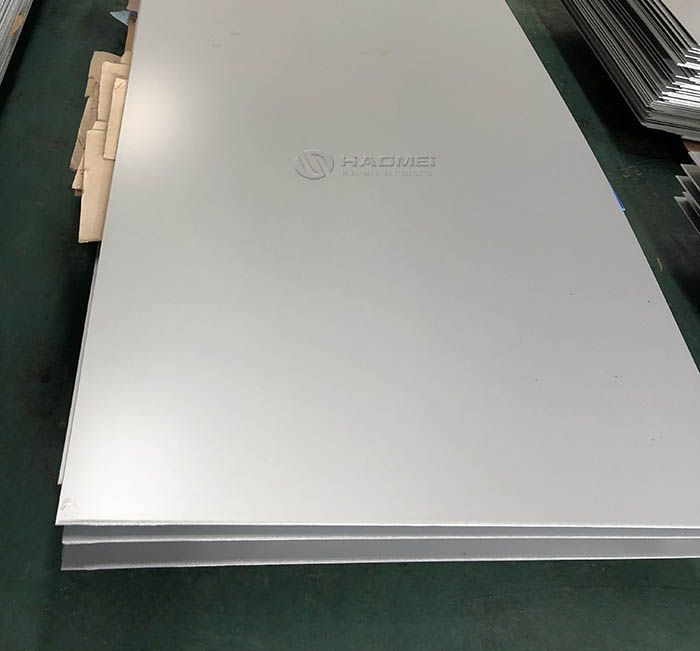
6xxx automotive aluminum.jpg

The main grades of 6xxx aluminum alloy are 6005, 6060, 6061, 6063, 6082, 6201, 6262, 6463, 6A02 and 6056 aluminum alloy. There is a brief introduction of 6056 aluminum:

6005: it is used for structural parts that require a strength greater than 6063 alloy, such as ladders, TV antennas, etc.

6061: It is used for a variety of industrial structures requiring certain strength, weldability and high corrosion resistance, such as trucks, ships, mechanical parts, car body panel,etc.

6063: It is often used as industrial profiles, construction profiles, irrigation pipes and extrusion materials for vehicles, benches, furniture, fences, etc.

6101: It is used for high-strength bars for buses, electrical conductors and radiator materials, etc.

6151: It is used for die forging crankshaft parts, machine parts and production of rolled rings. It is used for applications that require good forgeability, high strength, and good corrosion resistance.

6201: It is used to make high-strength conductive rods and wires.

6262: It is used to make high-stress parts which require higher corrosion resistance than 2011 and 2017 alloy.

6A02: It is used to make aircraft engine parts, complex forgings and die forgings.

6056 Aluminum: It is an Al-Mg-Si-Cu alloy widely used in the automotive and aviation fields. Its strength is 15% higher than that of 6061 aluminum alloy. Its weldability, corrosion resistance and cutting performance are better than 7075 and 2024 aluminum alloy.

Original source: https://www.autoaluminumsheet.com/a/the-features-of-6xxx-automotive-aluminum-sheets.html

Food Container Aluminum

  Food packaging companies, converters, and processors usually ask one question first: which aluminum grade gives the safest and most stable...