显示标签为“aircraft aluminium sheet”的博文。显示所有博文

What Are The Features of Aluminum Alloys for Aerospace Manufacturing

 When designing aircraft and other equipment with extremely high detail requirements, nothing can go wrong, so metals used in aerospace are required to perform exceptionally well at all times. Some of the specific properties required of materials used in the aerospace industry include: high strength, heat resistance, long life, fatigue resistance, and wear resistance. Weight is also very important, especially when considering aerodynamics and fuel.
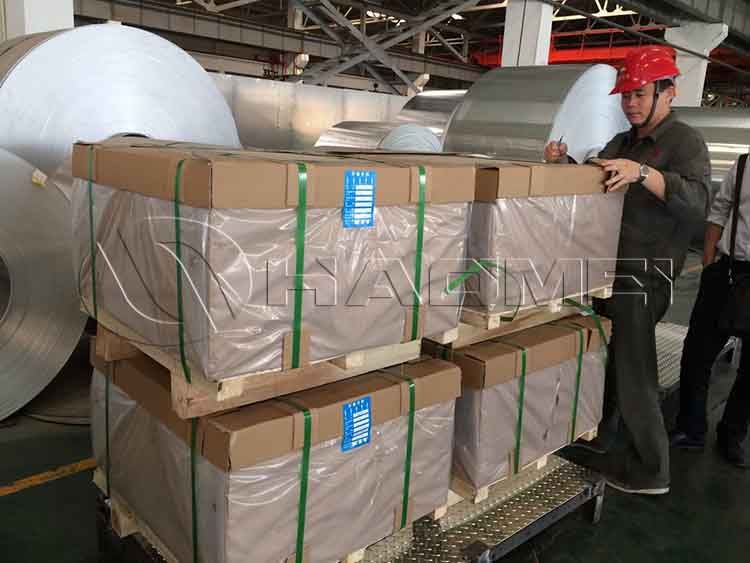
Aeroplane aluminium.jpg

Features of aircraft aluminum alloys

1. Lightweight: Aluminum is much lighter than steel, which is critical to the aerospace industry because reducing weight can improve fuel efficiency, reduce costs and increase payload capacity.

2. High strength: Aeroplane aluminium is designed to withstand the extreme stresses of flight and space travel, ensuring the safety and reliability of aircraft and spacecraft.

3. Corrosion resistance: Aluminum naturally forms a protective oxide layer when exposed to air, which makes it resistant to corrosion. This is critical for aerospace applications, as exposure to moisture, high altitude and space conditions can cause severe damage to the material.

4. Formability: The aluminum alloy is ductile and can be easily formed into the complex geometric shapes required for aircraft fuselages, wings and structural components.

Common alloys used in aerospace applications

Although 6000 series aluminum alloys such as 6061 and 6063 have low strength, they have good ductility and are often used in fuselage frames and outer frame structural parts, bolt assemblies, and door and window frames.

7000 series aluminum alloys such as 7075 are the strongest of all series of aluminum alloys. They are usually used where high fixing force is most needed. This alloy is mainly used in the windward part of the entire aircraft, such as the upper outer plate and longitudinal beams of the wing, the tail, the wing ribs and the reinforcement of the fuselage bulkhead. In addition, it is also often used in gears and shafts, instrument shafts and turbines.

Importance of aeroplane aluminum in aircraft design

Lightweight materials improve fuel efficiency

One of the key reasons aerospace-grade aluminum is vital in aircraft design is its lightweight properties. In commercial aviation, fuel costs are one of the largest operating expenses. By using lightweight materials such as aluminum, airlines can significantly reduce the overall weight of their aircraft, thereby improving fuel efficiency.

The introduction of advanced aluminum alloys has enabled manufacturers to design lighter, more fuel-efficient aircraft. For example, Boeing uses a higher percentage of aluminum in its structures to reduce weight while maintaining the strength and durability required for long-distance flights.

Improved Structural Integrity

The strength-to-weight ratio of aerospace-grade aluminum makes it ideal for high-stress applications in aircraft. Components such as wings, fuselages, and engine mounts require materials that can withstand the forces experienced during takeoff, flight, and landing. The ability to combine lightness with strength makes aluminum a material of choice for aerospace engineers, as it allows for the creation of strong structures without adding excessive weight.

Improved durability and safety

The natural corrosion resistance of aerospace-grade aluminum is essential to the life of an aircraft. Commercial and military aircraft are exposed to extreme conditions, including high altitudes, varying temperatures, and constant moisture. By using rust- and corrosion-resistant aluminum alloys, aircraft manufacturers can ensure their products have a longer service life, thereby reducing maintenance costs and improving passenger safety. Welcome to inquire 7075 t6 price from us.


Original Source:https://www.aircraftaluminium.com/a/what-are-the-features-of-aluminum-alloys-for-aerospace-manufacturing.html
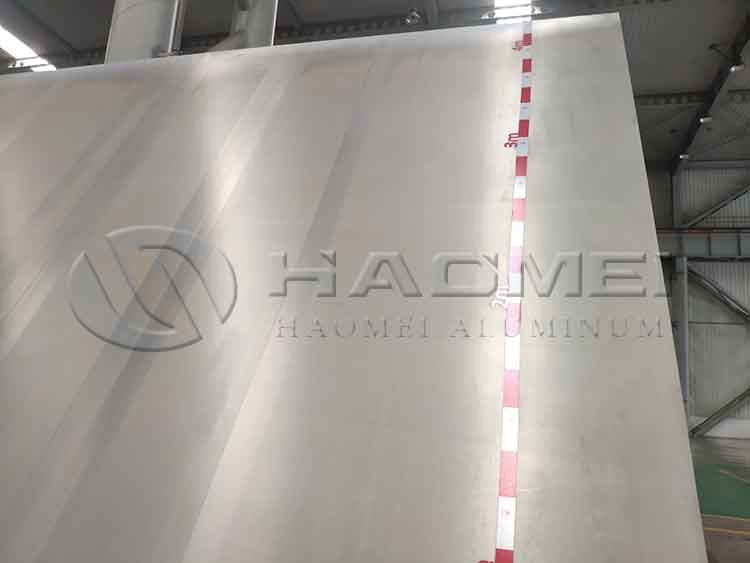
Dural 30mm Aluminum Sheet for Aircraft

 More than 90% of the thick aircraft aluminium sheets are produced by heat-treatable aluminum alloys (2XXX, 6XXX, 7XXX, and a small amount of 8XXX series alloys), while about 85% of the aluminum alloy thick plates used in other industries are produced by heat treatment non-strengthenable aluminum alloys (1XXX, 3XXX, 5XXX, some 8XXX series alloys).

Among the aluminum thick plates used in aerospace, the thickness ≤ 75mm accounts for about 95%, the width is not more than 3600mm, and the length is not more than 32.5m. 30mm aluminium plate is a common thickness.

30mm aluminium plate.jpg

Commonly used aerospace aluminum alloys

Medium-strength aluminum alloys: 2xxx series and Al-Mg-Li alloys in aluminum-lithium alloys.

Dural aluminum alloys: 7xxx series and Al-Cu-Li series, Al-Cu-Li-Mg series alloys in aluminum-lithium alloys.

Corrosion-resistant aluminum alloys: 5xxx and 3xxx aluminum alloys

7xxx dural aluminum alloys are used to manufacture aircraft structures and other high-stress structural parts that require high strength and strong corrosion resistance, such as upper and lower wing panels, purlins, and bulkheads.

After solution treatment, the plasticity is good, and the heat treatment strengthening effect is particularly good. It has high strength below 150°C, and has particularly good low-temperature strength, poor welding performance, and tends to stress corrosion cracking..

Aluminum alloy thick plates must be produced by ingot hot-rolling method (including Hazelett continuous casting and rolling method). The thick plate production capacity does not refer to the production capacity of the hot rolling mill, but the production capacity of the rear finishing equipment (solution treatment furnace, aging furnace, pre-stretching machine, ultrasonic probe production line, etc.)

Modern roller hearth solution treatment furnaces, pre-stretchers and ultrasonic flaw detectors are a must for the production of high-quality aerospace aluminum alloys. As one of the aircraft metal suppliers in China, we have them.

Some components of the aircraft wing are made of 2XXX and 7XXX dural aluminum alloy thick plates. The longest length of the required plate is about 38m, and the widest width is about 4100mm. Therefore, the maximum width of the rolls of the hot rolling mill can reach 4300mm, and the maximum length of the hearth of the roller hearth solution treatment can reach 40m, which can meet the needs of the aviation industry for aluminum alloy thick plates.


Original Source:https://www.aircraftaluminium.com/a/dural-30mm-aluminum-sheet-for-aircraft.html

What Are 2024T3 and 7075T6 Properties

 2024 aluminum is an Al-Cu-Mg aluminum alloy with a density of 2.73 g/cm, which can be strengthened by heat treatment, and has moderate plasticity in the quenched and just quenched states. It has poor corrosion resistance, but it can be effectively protected by covering it with pure aluminum; it is prone to cracks during welding, but it can be welded or riveted by special processes.

The common tempers of 2024 aircraft aluminum alloy is T3, T4, T351 and T851. What are aluminium 2024 t3 properties? It has an ultimate strength of 62000 PSI and a shear strength of 40000 PSI. 2024 plate has an ultimate tensile strength of 400–430 MPa (58–62 ksi) and a yield strength of at least 270–280 MPa (39–40 ksi). It has an elongation of 10-15%.

Al 7075 t6 properties.jpg

2024 t3 aluminum sheet is considered an aircraft alloy due to its strength and also has excellent fatigue resistance. Soldering is generally not recommended. Typical uses for 2024-T3 aluminum sheet are fuselage and wing skins, roofs and aircraft structures.

7075 aluminum sheet is a cold-processed forging alloy with high strength, far superior to mild steel. Zinc is the main alloying element in 7075. Adding magnesium to an alloy containing 3%-7.5% zinc can form MgZn2 with a significant strengthening effect, making the heat treatment effect of the alloy far better than that of aluminum-zinc binary alloys. It is especially suitable for manufacturing aircraft structures and other high-stress structures that require high strength and corrosion resistance.

7075 aluminum has O, T6, T651 and T7 tempers. What are Al 7075 t6 properties? 7075 t6 has an ultimate tensile strength of 510–540 MPa (74,000–78,000 psi) and a yield strength of at least 430–480 MPa (63,000–69,000 psi). It has an elongation at failure of 5-11%.

7075 T6 is typically achieved by homogenizing casting 7075 at 450°C for several hours, quenching and then aging at 120°C for 24 hours. This produces the peak strength of the 7075 alloy. The strength comes mainly from finely dispersed eta and eta' precipitates within the grains and along the grain boundaries.


Original Source:https://www.aircraftaluminium.com/a/what-are-2024t3-and-7075t6-properties.html

Aluminum 7075 Material Properties

 7075 aluminum sheet is a commonly used grade in the 7xxx aluminum alloys. Zinc is its main alloying element. The addition of magnesium to the alloy containing 3%-7.5% zinc can form MgZn2 with a significant strengthening effect, so that the heat treatment effect of 7075 aluminum is far better than that of the aluminum-zinc binary alloy.

Aluminum plate 7075 is used to manufacture a variety of structural parts, especially aerospace structural parts. It is the most widely used high-strength aluminum alloy today, ranging from the front fuselage truss of the C919 large aircraft to the mobile phone casing. What are aluminum 7075 material properties?

7075 aluminum sheet.jpg

It is available in various heat treatment tempers: T6, T73, T76, T77. Through a large number of experimental data and theoretical analysis, on the basis of 7075-T6, the aging heat treatment process was used to successfully develop 7075-T73, which is resistant to stress corrosion. Although this material sacrifices part of its static strength, its corrosion resistance has been significantly improved.

Later, 7075-T76 was further developed, which not only obtained stronger corrosion resistance, but also sacrificed a lower static strength than 7075-T73, which improved the comprehensive properties of aluminum alloy materials and became the best corrosion-resistant aluminum alloy.

7075 alloy can be resistance welded, and the long-term working temperature of the workpiece is less than or equal to 125℃. For incomplete annealing of materials or workpieces, the specification is 290°C~320°C, and after holding for 2h~4h, it is air cooled. Complete annealing specification is (390~430)℃/(0.5~1.5)h and it should be cooled down to ≤200℃ with a cooling rate not greater than 30℃/h.

The solution treatment temperature of 7075 alloy sheet is 460℃~490℃, and the treatment temperature of aluminum sheet should be close to the lower limit, and the number of repeated treatments should not be more than 2 times, so as to prevent alloy elements from diffusing through the aluminum clad layer and reducing the corrosion resistance of the material.

AA7075 composition

Alloy

Si

Fe

Cu

Mn

Mg

Cr

Zn

Zr

Ti

Standard

7075

0.40

0.50

1.2-2.0

0.30

2.1-2.9

0.18-0.28

5.1-6.1

-

0.20

GB/AMS/EN

What Is 7075 Aluminum Plate

The 7075 aluminum plate is an important aircraft aluminium sheet. It is an aluminum-magnesium-zinc-copper alloy and a heat-treatable alloy. It is a super hard aluminum alloy and has good wear resistance. After further processing, it doesn’t have deformation.
aircraft 7075 aluminium sheet.jpg
Of this alloy, the 7075 T6 aluminum plate is a top grade and it is known as the best product among aluminum alloys with high strength. This alloy also has good mechanical properties and anodizing reaction.
Zinc is the main alloying element in 7075 aluminum sheet. Adding magnesium to the 7075 aluminum alloy containing 3%-7.5% zinc can form MgZn2 with a significant strengthening effect, making the alloy's heat treatment effect far better than aluminum-zinc aluminum alloys. Increasing the content of zinc and magnesium in the alloy will further improve the tensile strength, but its resistance to stress corrosion and spalling corrosion will decrease.
The 7075 aluminum plate is mainly used to manufacture aircraft structures and other high-stress structural parts that require high strength and corrosion resistance, such as aircraft upper and lower wing panels, stringers, etc. It is also widely used in mold processing, mechanical equipment, phone shell,etc.
After solution treatment, 7075 aluminium sheet has good plasticity and good heat treatment strengthening effect. It also has good strength below 150 degrees, and has particularly good low temperature strength, poor welding performance, and stress corrosion cracking tendency.
As a big 7075 aluminium plate supplier, Haomei 7075 aluminum plate has internal stress relief and no deformation when cutting. The maximum width is 2600mm and the maximum thickness is 200mm.
All of our 7075 aluminum plate is rolled by the ultra-wide 2650mm German SMS cold rolling mill, which has better shape, higher precision and more stable performance. All the super wide 7075 aluminum alloy plates produced by Haomei are ultrasonically detected, which can effectively ensure that there are no blisters and impurities.

Food Container Aluminum

  Food packaging companies, converters, and processors usually ask one question first: which aluminum grade gives the safest and most stable...