显示标签为“aluminum 5083 h321”的博文。显示所有博文

Three Common Tempers of 5083 Aluminum Sheet Factory

 5083 Aluminum sheet factory belong 5xxx Al-Mg alloy. It is a typical anti-rust aluminum sheet with good corrosion resistance, excellent weldability, and good cold workability. The common tempers are H111, H116 and H321. They are widely used to make tank truck cylinder, automobile fuel tanks, bus skins, marine ships,etc.
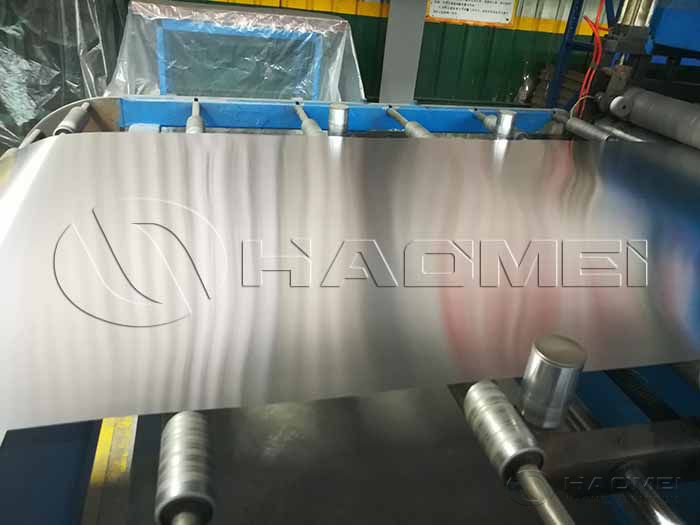
5083 Aluminum sheet factory.jpg

5083 aluminum plate is used to make different types of tanker vehicles include oil tankers, cement tankers, natural gas tankers, and sprinklers. increasing, and they are enthusiastically sought after by the public. The 5083 ultra-wide aluminum plate is the main alloy material for aluminum tank trucks.

5083 aluminum plate is generally used for the tank body, the tank head an baffle. 5083 H111 is used for the tanker body. Aluminum 5083 h111 features superior performance in extreme environment such as industrial chemical environment. Its strength can keep changing after welding.

Aluminum 5083 h321 and h116 belong to marine grade aluminum sheet, which are used in oceans and lakes. The length and width requirements are high. .In addition, it must be certified by the classification society.

Aluminum 5083 H116 belongs to the hot-rolled aluminum sheet. To get this temper, it needs to undergo a particular degree of intergranular and exfoliation corrosion. By using continuous casting and rolling processing technology, it has good forming performance, excellent corrosion resistance and good weldability,

Aluminum 5083 h321 refers to a processing method in which 5083 aluminum sheet is hardened and subjected to low temperature heat treatment, or directly heated during processing, so as to obtain stable mechanical properties.

The mechanical properties of 5083 h321 are shown in its tensile strength (250℃MPa) of 275-350, yield strength of 210, hardness (HB) of 65, and elongation of 16. it is not difficult to find that 5083 h321 aluminum plate has high strength, excellent welding performance and better corrosion resistance than 5052 aluminium plate.

Original source: https://www.hm-alu.com/a/three-common-tempers-of-5083-aluminum-sheet-factory.html
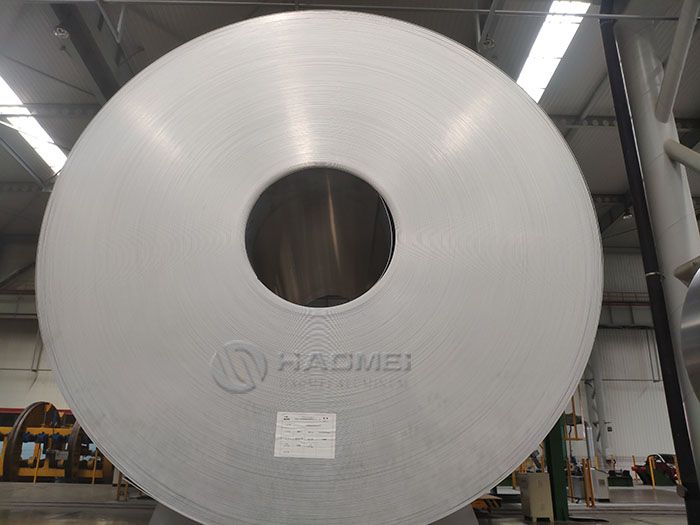
The Manufacturing Process of Aluminium 5083 H321

 The 5083 aluminum alloy sheet has many advantages such as light weight, medium strength, and easy forming. It can be used in the manufacture of automobile parts, ships and truck tank. However, 5083 aluminum alloy has a relatively high Mg content. It is easy to precipitate β phase (Mg2Al3) at the grain boundary when placed at room temperature for a long time. The precipitation of β phase will make the material age soften.

5083 aluminum alloy .jpg

In order to reduce the adverse effects of β phase precipitation, aluminum 5083 h321 was developed. Stabilizing annealing is carried out on the cold-deformed 5083 aluminum alloy sheet, so that part of Mg can be uniformly precipitated in the alloy in the form of β phase, ensuring that the material after aging softening still meets the performance requirements.

In the manufacturing process of 5083 h321 sheet, the amount of cold deformation after recrystallization annealing, and the temperature and time of stabilization annealing after cold deformation are three key process parameters that affect the final properties of the 5083 aluminum plate.

During the cold deformation process, as the amount of cold deformation increases, the plate lattice distortion and the degree of grain breakage will increase, and the large grains will be elongated along the rolling direction to form a fiber or band-like structure, and a large number of bits will be generated inside the grains. The interaction between dislocations is enhanced, therefore, the strength of the alloy increases.

With the increase of the annealing temperature and the extension of the holding time of the stabilized annealing, the tensile strength and the yield strength will decrease. This is due to the large deformation storage energy accumulated after the cold working of the plate, which causes recovery and softening during annealing. Partial work hardening is eliminated, so the strength is reduced and the elongation is increased.

As the amount of deformation increases, the intergranular corrosion resistance of 5083-H321 sheet decreases, and when the amount of deformation and the stabilization annealing time are the same, the intergranular corrosion resistance of the plate depends on the temperature of the stabilization annealing.A cold deformation of 20% and a stabilized annealing system of 180℃/2h are the best production processes for the 3 mm 5083 aluminum sheet.

Original source: https://www.aluminumtankerplate.com/a/the-manufacturing-process-of-aluminium-5083-h321.html

Mill Finish Aluminum Circle VS Color-Coated Aluminum Circle: Which Is Better for Cookware

  Aluminum circles are the core raw materials for manufacturing various cookware, including pots, pans, woks, and pressure cookers. Their su...