Embossed aluminum is widely used in sectors such as thermal insulation, refrigeration equipment, architectural decoration, and home appliance casings, thanks to its combination of lightweight properties, corrosion resistance, and aesthetic appeal.
Among the various types, bead embossed aluminium coil and diamond stucco embossed aluminium coil are the most common ones. Both are produced by rolling aluminum sheets or coils to create surface textures; however, they differ in terms of visual effect, wear resistance, processing adaptability, and intended application.
I. Differences in Texture and Appearance
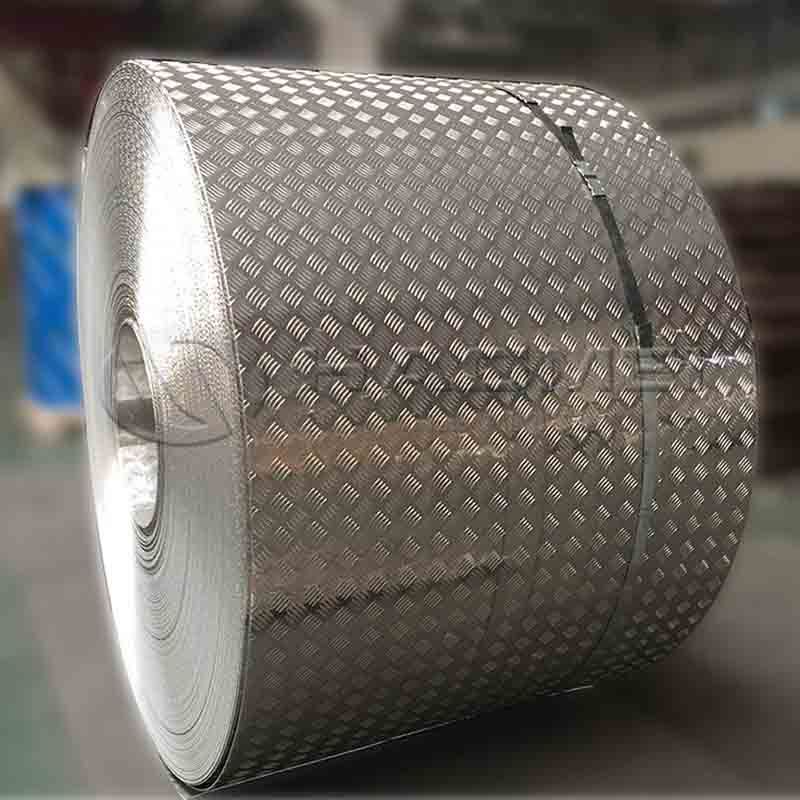
Bead embossed aluminum features a surface covered in continuous, fine-to-medium granular protrusions—resembling small beads, stippling, or a fine "orange-peel" texture. The pattern is highly uniform and produces a soft, diffused reflection. It effectively masks the ripples, scratches, and minor indentations often found on flat aluminum sheets, resulting in a more refined visual appearance—ideal for products that require a high degree of aesthetic consistency.
Diamond-stucco embossed aluminum, by contrast, is characterized by an interlocking arrangement of diamond shapes or irregular, stucco-like patterns. The texture has more pronounced relief, offering a stronger decorative quality and a greater sense of three-dimensionality. Often referred to as "diamond-orange-peel" or "stucco-pattern" embossing, this surface effectively scatters light and excels at concealing minor substrate imperfections. It is well-suited for applications that demand a durable finish with a degree of scratch resistance.
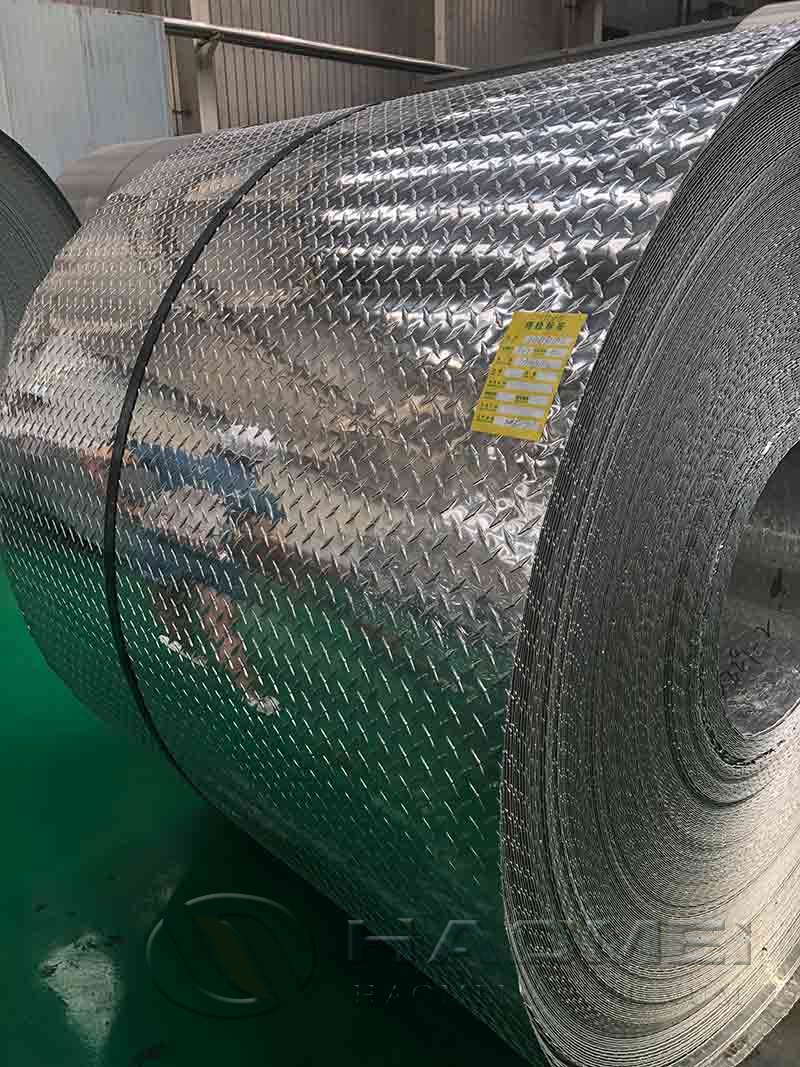
It is important to note that diamond-stucco embossing is not the same as the heavy-duty, raised-pattern anti-slip aluminum plate (such as "five-bar" or "diamond-tread" plate) used for vehicle flooring or industrial platforms. If an application involves foot traffic, load-bearing requirements, or strict anti-slip safety standards, one must select specialized structural anti-slip aluminum plates—such as five-bar or "pointer" (diamond-pattern) tread plates—rather than relying solely on the general term "embossed."
II. Performance Comparison
Regarding corrosion resistance, the fundamental performance of both types of embossed aluminum depends primarily on the aluminum alloy grade, surface treatment, and the operating environment, rather than the specific texture itself. Embossed structures reduce large-area specular reflection and, to some extent, diminish the visibility of minor scratches. However, in environments exposed to moisture, salt spray, or chemicals, careful attention must still be paid to alloy selection and edge sealing.
Stucco-embossed (pebble-patterned) surfaces typically feature a fine texture, resulting in a relatively flat panel that is well-suited for processes such as bending, wrapping, lamination, and roll-forming. A drawback is that the shallow texture offers limited resistance to scratching by hard objects; if used in areas subject to frequent friction, it is advisable to increase the material thickness, apply a protective coating, or utilize an alloy with higher strength.
Diamond-patterned (stucco-stucco) embossing, characterized by a deeper texture, generally offers superior scratch resistance and effectively masks minor dents. This makes it ideal for areas prone to contact or friction during transport, installation, or routine maintenance. Note, however, that deep embossing alters local elongation; therefore, before performing small-radius bending, stamping, or high-precision lamination, sample testing should be conducted to prevent issues such as texture cracking, localized deformation, or coating distortion.
III. Recommendations for Alloy Selection
For applications such as general thermal insulation cladding, pipe wrapping, HVAC ductwork, and interior/exterior finishes for cold storage facilities, 1050, 1060, or 1100 series pure (or near-pure) aluminum alloys are commonly used. These materials offer excellent ductility, good corrosion resistance, and stable embossing characteristics; they are frequently supplied in tempers such as H14 or H18. When cost-effectiveness and formability are the primary considerations, 1060-series embossed aluminum coils are a frequent choice.
For components such as refrigerator liners, refrigeration equipment, roof insulation, curtain wall backing panels, and decorative elements requiring a certain degree of structural strength, 3003-series alloys may be considered.
As an aluminum-manganese alloy, 3003 generally provides higher strength than 1060 while maintaining good corrosion resistance and workability, making it a popular choice for both pebble-patterned and stucco-patterned embossed aluminum. When higher requirements for strength, durability, and processing stability are involved, 3003 is often a more suitable choice than pure aluminum.
In humid, coastal, or highly corrosive environments, the 5052 alloy offers superior corrosion resistance and higher strength, making it suitable for equipment enclosures, components for transportation infrastructure, and decorative panels in specialized settings. However, 5052 bead embossed aluminium coil comes at a relatively higher cost, and its embossing and bending parameters require more precise control; therefore, its use should be evaluated based on the specific service life requirements of the project.
IV. How to Choose
If a project prioritizes a refined appearance, soft light reflection, ease of processing, and lightweight characteristics, bead-embossed aluminum is the more suitable choice. Conversely, if the focus is on a three-dimensional texture, scratch-resistant aesthetics, and the ability to conceal surface imperfections, diamond-stucco embossed aluminum offers a distinct advantage.
Final material selection should not be based solely on the pattern; it must also take into account the alloy grade, thickness, temper, embossing depth, coating type, and the intended operating environment.
For general interior decoration or standard thermal insulation projects, 1060 alloy is often the preferred choice. When both strength and corrosion resistance are required, 3003 alloy is a suitable option. For applications in high-humidity, coastal, or long-term outdoor environments, 5052 alloy—paired with appropriate surface treatments—should be considered.


没有评论:
发表评论