In marine piping systems, elbow selection is often treated as a simple routing decision: choose the fitting that turns the pipe where space is available. In reality, the radius of an elbow can influence much more than layout convenience. It affects fluid resistance, pressure drop, erosion patterns, vibration behavior, maintenance intervals, and the long-term fatigue life of the piping system.
For aluminum pipework used on vessels, offshore platforms, workboats, and marine auxiliary systems, the choice between long-radius and short-radius elbows deserves careful engineering attention. This is particularly true when piping is manufactured from corrosion-resistant materials such as aluminum 5083 alloy seamless pipe, which is commonly selected for its good weldability, strength, and seawater-service performance.
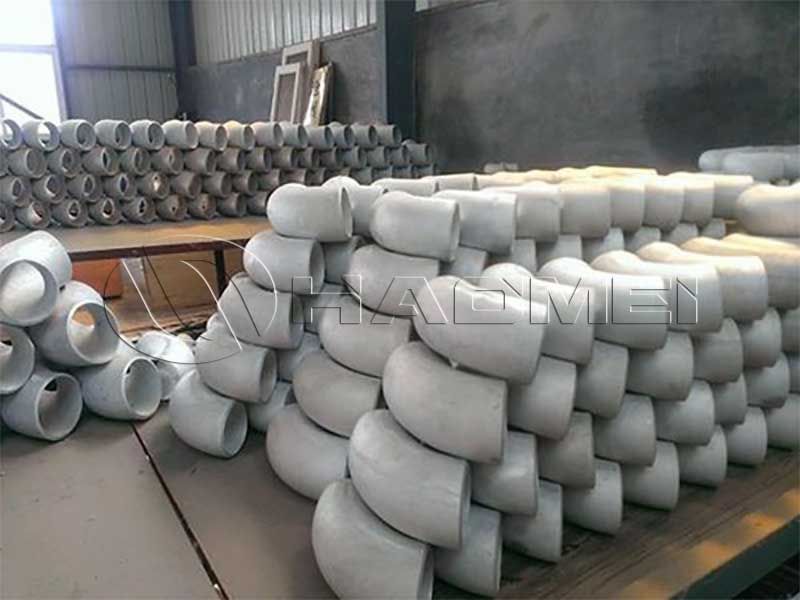
This article compares long-radius and short-radius elbows and explains how each design performs in practical marine piping layouts.
What Is the Difference Between Long-Radius and Short-Radius Elbows?
An elbow changes the direction of a pipe run, typically by 45°, 90°, or 180°. The "radius"refers to the centerline radius of the bend.
A long-radius (LR) elbow generally has a centerline radius equal to 1.5 times the nominal pipe diameter. For example, a 4-inch long-radius elbow has a centerline radius of approximately 6 inches.
A short-radius (SR) elbow typically has a centerline radius equal to the nominal pipe diameter. A 4-inch short-radius elbow therefore has a centerline radius of about 4 inches.
The shorter geometry makes the SR elbow more compact, while the LR elbow provides a smoother and more gradual flow path. In marine service, that apparently small geometric difference can have important consequences.
Flow Resistance and Pressure Drop
The most direct performance difference is flow resistance. When fluid passes through an elbow, it must change direction. This causes turbulence, velocity redistribution, and localized losses. The tighter the turn, the greater the disturbance.
A long-radius elbow allows the fluid to change direction more gradually. As a result, it typically produces lower turbulence and a lower loss coefficient than a short-radius elbow. In a long pipeline with many directional changes, these savings can become significant.
For pumping systems, lower pressure loss means less pump head is required to maintain the target flow rate. This may reduce energy consumption, allow the use of a smaller pump, or provide more operating margin in systems with long runs. Typical examples include ballast lines, cooling-water circuits, freshwater systems, fire-fighting lines, and process piping on offshore support vessels.
Short-radius elbows create a sharper directional change and usually generate a higher pressure drop. In a low-flow utility line, the difference may be acceptable. However, in high-flow systems, high-velocity lines, or networks with numerous fittings, the cumulative effect can increase pump duty and reduce overall hydraulic efficiency.
When specifying elbow aluminium fittings for marine use, engineers should consider not only the nominal pipe size and wall thickness but also the expected fluid velocity and total number of bends in the system.
Erosion and Wear in Marine Piping
Erosion is another important consideration, especially in lines carrying seawater, bilge water, slurry-like liquids, sediment-contaminated water, or fluids containing entrained particles. Even relatively clean seawater can carry sand, rust scale, marine debris, or particles introduced during operation and maintenance.
In a short-radius elbow, the flow changes direction abruptly. Particles within the fluid tend to strike the outer wall of the bend at higher energy and at a more concentrated location. Over time, this can produce localized thinning, surface damage, and eventual leakage.
Long-radius elbows distribute the directional change over a longer path. This reduces the intensity of impingement on the elbow’s outer radius and helps lower the risk of localized erosion. The benefit is particularly valuable in aluminum systems because preserving wall thickness is essential for maintaining structural integrity and corrosion allowance.
For systems constructed from aluminum 5083 alloy seamless pipe, long-radius elbows can support a more uniform flow pattern and help protect the piping network from accelerated wear. This does not eliminate the need for proper filtration, strainers, corrosion control, and inspection, but it can improve service life in demanding applications.
Installation Space: The Main Advantage of Short-Radius Elbows
The strongest argument for short-radius elbows is space efficiency. Shipboard and offshore layouts are often extremely congested. Pipes must compete with cable trays, ventilation ducts, machinery foundations, structural frames, access routes, insulation clearance, and maintenance space.
A short-radius elbow can make it possible to route a line through a tight compartment where a long-radius fitting simply will not fit. This is common in engine rooms, machinery skids, pump rooms, compact modular units, and retrofitted vessels.
In these cases, a short-radius elbow aluminium fitting may be the practical choice. It can reduce the footprint of a piping route and may avoid costly changes to surrounding equipment or structural arrangements.
However, compact geometry should not be the only criterion. If a short-radius elbow is necessary in a high-velocity or abrasive service, designers may consider additional measures, such as increased wall thickness, local reinforcement, erosion monitoring, or a revised piping arrangement that moves the elbow away from sensitive equipment.
Vibration, Stress, and Fatigue Life
Marine piping is exposed to vibration from engines, pumps, propellers, wave action, hull movement, and thermal expansion. Repeated cyclic loading can lead to fatigue cracking, particularly near welds, supports, branch connections, and changes in direction.
Long-radius elbows generally provide a smoother path for flow and can reduce turbulence-induced vibration. Their longer geometry also creates a more gradual change in pipe direction, which may help distribute mechanical stresses more evenly through the fitting and adjacent weld areas.
Short-radius elbows can be more rigid and compact, which is useful in tight layouts, but they may concentrate mechanical stresses more sharply at the bend and at nearby connections. If the elbow is close to a vibrating pump, unsupported pipe span, or heavy valve, the fatigue risk can increase.
Proper support design is therefore essential regardless of elbow type. Pipe clamps, guides, anchors, flexible connections, and expansion allowances should be designed as part of the complete system. Aluminum piping requires particular attention to support spacing and isolation from dissimilar metals to reduce galvanic corrosion and mechanical damage.
Choosing the Right Elbow for Marine Applications
Long-radius elbows are generally preferred when the system involves high flow rates, high fluid velocity, frequent directional changes, erosion-sensitive service, or long-term energy efficiency requirements. They are especially suitable for seawater cooling, ballast, fire main, and other critical utility services where pressure drop and durability matter.
Short-radius elbows are best reserved for locations where installation space is severely limited and the hydraulic penalty is acceptable. They can be effective in short, low-flow branches and compact equipment connections, provided that support, vibration, and erosion risks are properly evaluated.
Ultimately, the correct choice depends on the whole piping design—not just one fitting. By balancing hydraulic performance, available space, material selection, and fatigue resistance, marine engineers can create safer and more reliable systems. Whether using long-radius or short-radius fittings with aluminum 5083 alloy seamless pipe, thoughtful elbow selection is a small decision that can make a major difference over the operating life of a vessel.
Original Source:https://www.marinealu.com/a/long-radius-vs-short-radius-aluminum-elbows.html


没有评论:
发表评论