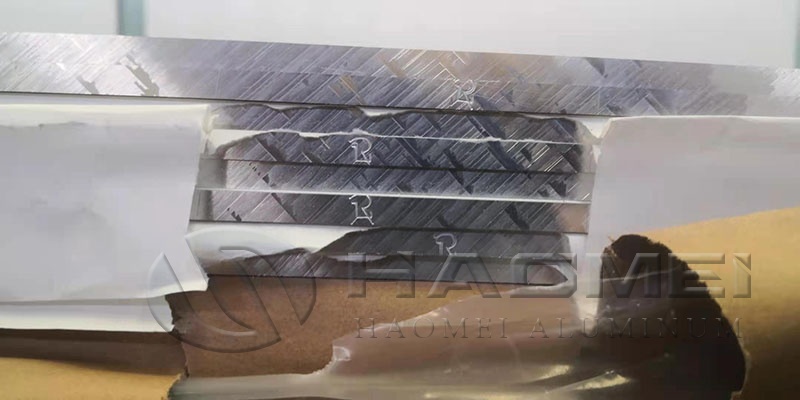
The Typical Super-duralumin 7075 Aluminum for Sale

 7075 aluminum for sale is a typical aviation super-duralumin. It is not only an "old" AL-Zn-Mg-Cu alloy, but also a young alloy with strong "energy". This was the first finalized super duralumin, which was finalized in 1944. It was used to make airplanes in the United States, Japan, and the former Soviet Union. It is only 74 "years old" and is still in the "middle-aged" stage.

It is "young" because it is now the main material for the key structure of aerospace vehicles. It seems that super duralumin will only withdraw when composite materials can be produced in large quantities and the price is reduced to be competitive with super duralumin.
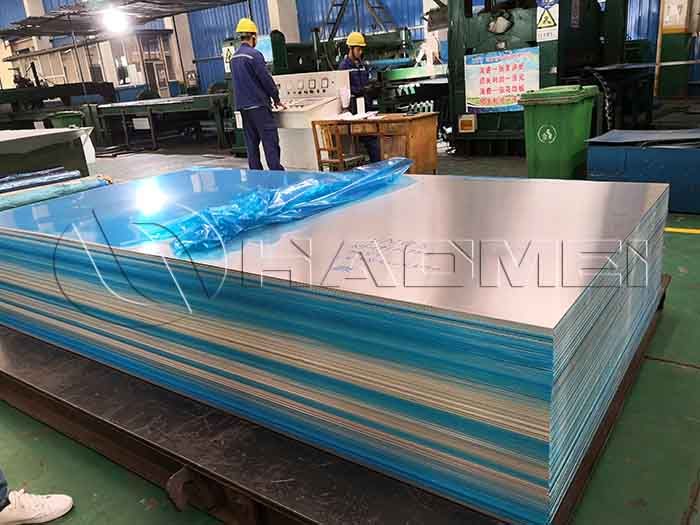
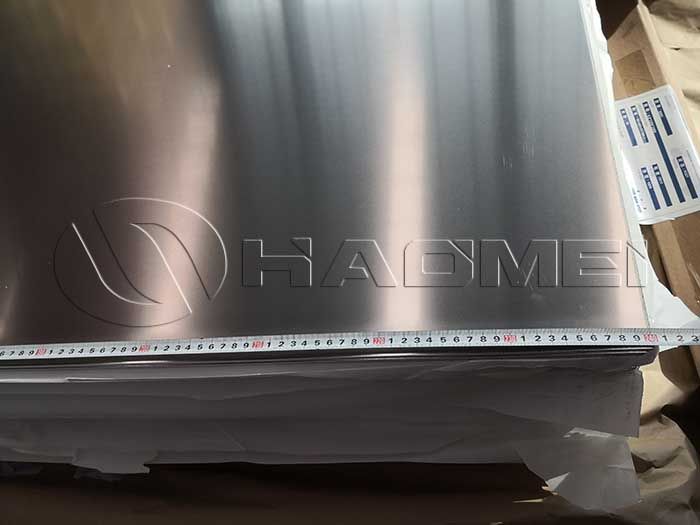
7075 aluminum for sale.jpgAfter more than 70 years of development, 7075 alloy has formed a considerable family. Now the commonly used alloys are 7075/7175/7475 alloys. 7275 alloys have been less used due to their unsatisfactory performance. 7375 alloys have been completely eliminated.

Among the 7075/7175/7475 alloys, 747 has the lowest impurity content. For example, the silicon content of 7475 alloy is only 25% of 7075 alloy, therefore it has higher toughness and better overall performance.

7075 aluminum alloy is an Al-Zn-Mg-Cu high-strength deformed aluminum alloy that can be heat-treated and strengthened. It is used to manufacture various structural parts, especially aerospace vehicle structural parts. It is the most widely used high-strength aluminum alloy today.

Its application range from C919 large aircraft front fuselage long truss, passenger observation window frame forgings, middle fuselage sheet bending and long truss, keel beam web, floor turning beam, middle and rear fuselage long truss to cell phone casings.

7075 grade aluminum has many tempers: T6, T73, T76 and T77. 7075 T6 Aluminum has the highest mechanical strength performance, but the fracture toughness is low and is sensitive to stress corrosion. Its toughness decreases with the decrease of temperature. Therefore, 7075 T6 aluminum is not suitable for manufacturing low-temperature structural parts and work pieces.

7075 thick aluminum plate and its extruded profiles will generate a lot of internal stress after quenching. They must be stretched before aging treatment to reduce them to the allowable range. Therefore, this kind of stretching is called pre-stretching. The pre-stretching amount is 1.5%~3%, otherwise serious deformation will occur.

Haomei is a big 7075 aluminum plate suppliers, providing free sample test and cooperate with many aircraft parts manufacturers at home and abroad. Welcome to leave message below to inquire it.


Original Source:https://www.aircraftaluminium.com/a/the-typical-super-duralumin-7075-aluminum-for-sale.html
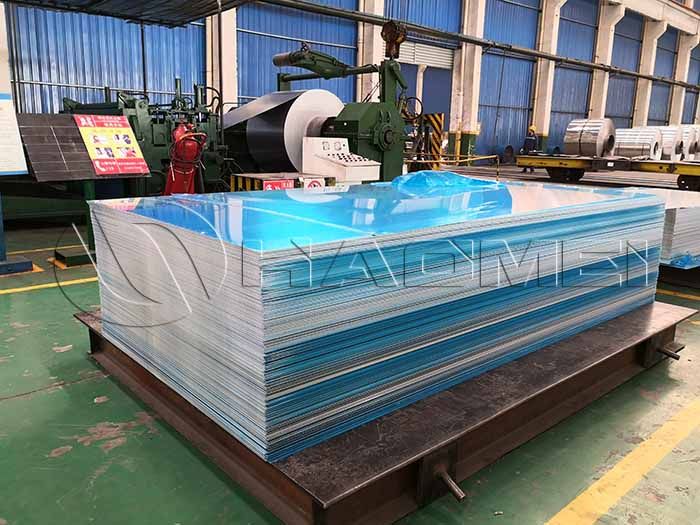
5454 Aluminum Sheet for Car Wheels

 The wheel hub is the main supporting metal component of automobile tires. Aluminum alloy and steel are two common materials. Whether aluminum alloy wheels or steel wheels is better has been controversial. Let’s have a look together.

Steel wheel hub: It is of simple manufacturing process, low cost, low price and strong resistance to metal fatigue. However, steel wheels also have many obvious shortcomings such as heavy weight.

5454 aluminum plate.jpg

Steel wheels of the same size are much heavier than aluminum alloy wheels. This will inevitably lead to the large inertia of steel wheels. It is inferior to aluminum alloy wheels in braking, and it has poor heat dissipation and is not good-looking.

Aluminum wheel hub: Aluminum alloy wheels are much lighter in weight and have less inertial resistance. The thermal conductivity of 5454 aluminum plate about three times that of steel. The heat dissipation is much better than steel wheels, and it is easier to withstand the thermal decay of tires and braking system.

In the case of high-speed rotation, the deformation of aluminum wheel is small, making it easier for cars equipped with aluminum alloy wheels to drive straight, thus reducing the resistance caused by tire rolling.

In terms of appearance, the aluminum alloy wheel hub is appropriately added with metal elements such as manganese, magnesium, chromium, titanium, so that it has better plasticity, and can have different metallic luster depending on the proportion of addition. Its appearance is much better than that of steel wheel.

However, aluminum alloy wheels are not without disadvantages. Generally, the manufacturing process of aluminum wheel hub is complicated than that of steel wheels, so its price is much more expansive. Aluminum alloy wheels are not as rigid as steel wheels.

In short, aluminum alloy wheel hub is suitable for passenger cars for it is more energy-saving, comfortable, and safe. They have basically become the standard configuration of most passenger cars.

5454 aluminum plate belongs to aluminum-magnesium alloy, which is a common material for making wheels. Haomei Aluminum, one of the 5454 aluminum plate suppliers in China, can offer rich tempers and different specifications. Welcome to leave message below to inquire it.


Original Source:https://www.autoaluminumsheet.com/a/5454-aluminum-sheet-for-car-wheels.html

Marine Grade Aluminum 5052 And 5083 Tooling Plate

 Ships have special requirements for the strength, corrosion resistance and weldability of aluminum alloys. Therefore, when choosing marine aluminum sheets, Al-Mg, Al-Mg-si or Al-Mg-Zn is often used. Of them, Al-Mg aluminum sheets are most used on the ships.

Marine grade aluminum 5052 contains less magnesium and has better forming properties and is better for forming while 5083 tooling plate has higher magnesium content, which is more brittle and harder, and not suitable for forming, but alu 5083 is harder than 5052 and has better anti-corrosion properties.

Marine grade aluminum 5052 .jpg

If it is used in inland freshwater waters, alu 5052 is enough to satisfying the shipbuilding requirements. If it is used in seawater or highly corrosive waters, 5083 can be used. In order to adapt to the seawater environment and beautiful appearance, 5083 will be used for the lower part of the boat (underwater part) and 5052 is used for the upper part of the boat( surface part).

The common tempers of 5083 aluminum plate are H116/H321 and H112. 5083 aluminum plate has been successfully used on yachts, cruise ships and other hulls. 5083 aluminum tooling plate is the main product that replaces the current steel plate in shipbuilding industry.

In order to reduce welding, 2 meter aluminum plate is often used. The large ships usually choose 2.5 m aluminum plate, which is generally 6m in length. Some special specifications are also used in accordance with shipyard contracts.

Aluminum sheets for ships will not rust and corrode and can withstand temperatures of minus 200 ℃, which means that the aluminum alloy yacht can withstand harsh weather wherever it goes. AIMg4.5/5083 is often chose for the shipbuilding, which has a maximum design stress level.

Boats built with aluminum for the hull and superstructure are not only sturdy and lightweight, which means that the boats have faster speeds and consume less fuel. At the same time, aluminum has excellent strength and anti-strike ability, making aluminum boats more resistant to foreign objects.

Safety at sea is the primary consideration for every shipowner. Aluminum will not burn or catch fire in the atmosphere. In view of the advantages and functionality provided by aluminum, many navies and coast guards use aluminum boats.

Haomei Aluminum has both 5052 and 5083 tooling plate. Welcome to leave message below to inquire what you need.


Original Source:https://www.marinealu.com/a/marine-grade-aluminum-5052-and-5083-tooling-plate.html

The Application of 5083 Cast Aluminum Plate

 5083 cast aluminum plate is with a high content of magnesium alloy, reaching 4.0%-4.9%. Usually, the intermediate value of 4.5% is taken during the production process, so 5083 aluminum plate is also known as Almg4.5 aluminum alloy.

5083 aluminum plate has good forming and processing performance,good corrosion resistance and excellent weldability, which is commonly used in the manufacturing of mechanical parts, mold manufacturing, and more widely used in the manufacture of parts for automobiles, ships and tanker bodies.

5083 cast aluminum plate.jpg

The Use of 5083 cast aluminum plate in the tanker industry: 5083 aluminum sheet is of light weight, good rigidity and high strength. The 3.0mm thick aluminum plate weighs only 8kg per square and has a tensile strength of 100-280N/mm2. It is an aluminum alloy especially suitable for tank trucks. 5083 has good corrosion resistance and stable chemical composition, which is suitable for all kinds of tankers.

The 5083 aluminum plate for tank body can reduce the weight of each car by 3-5 tons, thereby reducing the inertia of the car body. It can also achieve the effect of energy saving and emission reduction while improving the transportation efficiency.

The application of 5083 aluminium sheet in the shipbuilding industry: As the hull is exposed to seawater, it is subject to seawater and various microbial corrosion. Therefore, the toughness, strength, corrosion resistance and other performance requirements of the aluminum sheet are very strict. The technology and various parameter requirements during the manufacturing process are more precise.

5083 H116 in transportation field: It is widely used in automobile fuel tanks, aircraft fuel tanks, ship plate. The main features of 5083-H116 aluminum plate are low density, high tensile strength and high elongation. In the same area, the weight of aluminum-magnesium alloy is lower than other alloy.

Due to its complex processing technology, high technical and equipment requirements are required to achieve excellent performance, so 5083-h116 aluminum price is generally high. Welcome to leave message below to inquire it.


Original Source:https://www.aluminumtankerplate.com/a/the-application-of-5083-cast-aluminum-plate.html

How to Test PTP Aluminum Foil Quality

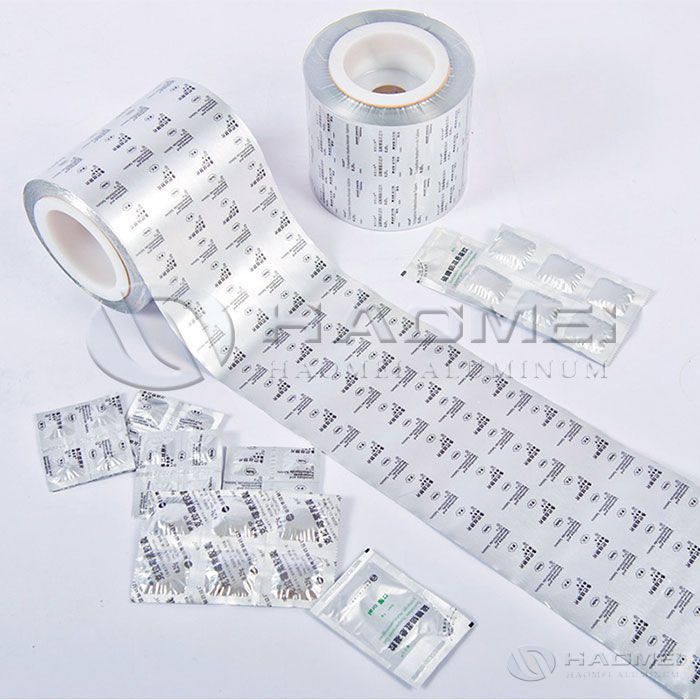
 The PTP aluminum foil is a main medicine packaging. It is made up of pharmaceutical aluminum foil, medicinal polyvinyl chloride (PVC), printing materials, protective agents, adhesives, etc. This blister packaging is to put medicines in the pits of a plastic hard sheet formed by blister, and then press and seal the plastic hard sheet with a piece of aluminum foil that has been gravure printed and coated with a protective agent and adhesive.

The PTP aluminium foil is made of electrolytic aluminum with a purity of more than 99%, which is made by rolling. has excellent electrical conductivity and light-shielding properties, and has extremely high moisture resistance, gas barrier properties and taste retention, which can most effectively ensure the medicine quality.

 PTP aluminium foil.jpg

When it is made into a blister pack,it is convenient for the patient to take the medicine and carry it. Therefore, this type of packaging is widely used in the field of pharmaceutical packaging and is one of the main packaging trends today. To ensure the blister packaging quality, we first need to guarantee the PTP foil quality.

Due to the rolling process used in the production of aluminum foil, there are inevitably some defects. Pinholes are the most important one. The size and quantity of pinholes are one of the important metrics to measure the quality of PTP blister foil.

It is also because of the existence of pinholes that the permeation of oxygen and water vapor to the aluminum foil is not zero. The size and number of aluminum foil pinholes have a decisive influence on the moisture resistance, gas barrier properties and light-shielding properties of aluminum foil and its composite materials.

How to inspect the pinhole degree of the finished medical aluminum foil? We need to make use of pinhole inspection table. We can use a wooden box of 800 mm* 600 mm*300 mm or an appropriate size, install a 30W fluorescent lamp in the wooden box, and put a glass plate on the wooden box. The glass plate is lined with black paper and leave a space of 400 mm x 250 mm to check the pinhole of the samples.

Take 20 specimens of 400 mm in length and 250 mm in width from the finished aluminum foil, and place them on the pinhole inspection table one by one, and inspect the pinholes in the dark. The requirement for pinholes is that there should be no dense, continuous and periodic pinholes. No pinholes should be larger than 0.3 mm in diameter. There is no more than 1 pinhole per square meter with a diameter of 0.1-0.3 mm.

As a professional PTP foil manufacturer, Haomei Aluminum has a strict control of PTP aluminum foil production process. Welcome to leave message below to inquire PTP foil price.

Original source: https://www.hm-alu.com/a/how-to-test-ptp-aluminum-foil-quality.html

The Requirements of CTCP Plate on Aluminum Base Plate

 Aluminum plate is one of the basic elements to make high-quality CTCP plate. So far, in the choice of CTCP plate base material, no better material that can replace aluminum plate has been found. There are two treatment methods of aluminum base plate: brush grinding and electric grinding.

Electrolytic grinding is achieved by chemical methods, that is, acid (usually hydrochloric acid or nitric acid) to corrode the plate surface into a grit layer. Brush grinding and electrolytic grinding have different requirements for the quality of aluminum plate. The brush grinding usually choose 3103 aluminum alloy. While electrolytic grinding chooses 1050 aluminum alloy.

CTCP plate.jpg

The CTCP Plate is made of f industrial pure aluminum with a content of more than 99.50%. The content of impurities is less than 1.50%. The impurities mainly include Si, Fe, Cu, Mn, Mg, Zn, Ti, Ni,etc. The three elements Si, Fe and Cu are common impurities in aluminum ingots, which can only be controlled and cannot be eliminated completely.

The above-mentioned trace elements contained in the aluminum plate have a certain effect on the quality of its electrolytic oxidation. Silicon is a main impurity, of which the content is generally controlled between 0.05% and 0.35%. If it is over 0.35%, it is detrimental to the uniformity of the aluminum plate's roughened surface.

Generally speaking, the content of iron in industrial pure aluminum is usually the most. Iron has the effect of making the electrolytic coarsening uniform. The copper has a certain solid solution strengthening effect and can accelerate the corrosion, which is conducive to electrolysis. It is better to control the content of copper below 0.05%.

Manganese is to refine the structure. It has a significant impact on the recrystallization process of aluminum and aluminum alloys. Its content should not exceed 0.4%. If it exceeds 0.4%, it will result in reducing printing performance of the UV-CTP plate. Magnesium has a tendency to inhibit the coarsening of recrystallized grains, which can simplify the heating treatment process of the ingot.

Haomei Aluminum has different types of CTP plates, PS plates and CTP plates. Welcome to leave message below to inquire what you need.

Original source: https://www.alumhm.com/a/the-requirements-of-ctcp-plate-on-aluminum-base-plate.html

2A12 Aluminum VS 6061 Sheet

 Both 6061 sheet and 2A12 aluminum are heat-treatable aluminum alloys. After heat treatment, the two are difficult to distinguish in appearance, but they have a huge price difference between the two, about 10,000 yuan/ton. How to tell 2A12 aluminum from 6061 aluminium sheet?

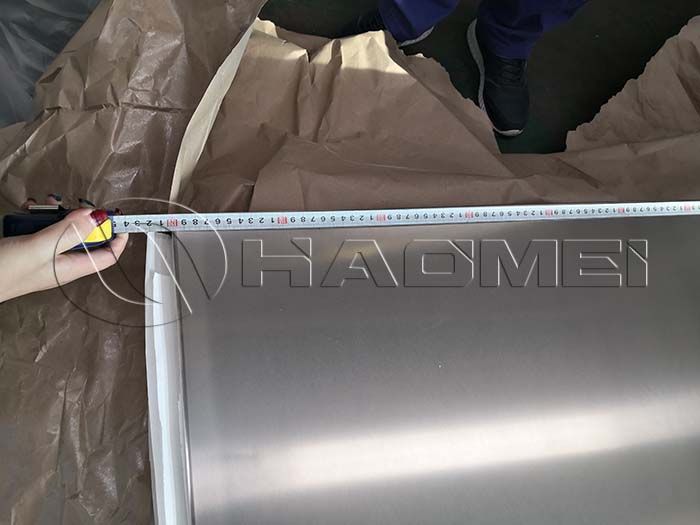
2A12 aluminum.jpg

Hardness

The hardness of 6061 aluminum plate is 90HB after heat treatment, while the hardness of 2A12 can reach around 120HB. There is a big difference in hardness between the two. You can use the hardness measurement equipment to prove this point.

Corrosion Resistance

2A12 aluminum shet has high strength, qualified plasticity and poor corrosin resistance. It is mostly used in the state of clad aluminum plate, which is the most widely used duralumin in the aviation industry.

6061 aluminium sheet has good corrosion resistance, weldability and workability. Its machinability makes it the right choice for many extrusion projects because it is easy to shape. Because of good corrosion resistance, it is not only widely used in aviation industry, but also for shipbuilding.

Density

The density of the two is quite different. The density of 6061 can only reach 2.7, while the density of 2A12 can reach around 2.78-2.79 due to the high content of copper alloy. You can get the aluminium sheet density through the following formula:

Weight formula: thickness (mm) * density * length (m) * width (m) = weight

Application

6061 aluminum alloy belongs to 6xxx alloy, having higher silicon content. 2A12 aluminum belong to 2xxx alloy, a kind of Al-Cu-Mg alloy.

6061 aluminum is mainly used for bicycle parts, aerospace parts and building structures. In the aerospace industry, 6061 sheet is used n areas of greater ductility. Since it is easier to shape, 6061 sheet is more commonly used for cans and other round good. 2a12 is widely used in aircraft structures, rivets, and truck wheels.

Haomei Aluminum has both 6061 and 2A12 aluminum sheet. Welcome to leave message below to inquire what you need.


Original Source:https://www.aircraftaluminium.com/a/2a12-aluminum-vs-6061-sheet.html

5083 Marine Grade Aluminum

  For workboats, ferries, fishing vessels, offshore structures, and deck equipment, 5083 marine grade aluminum is valued for high strength w...