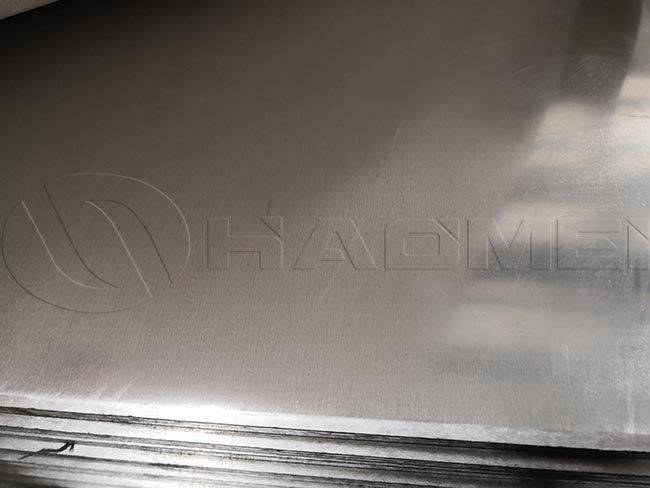
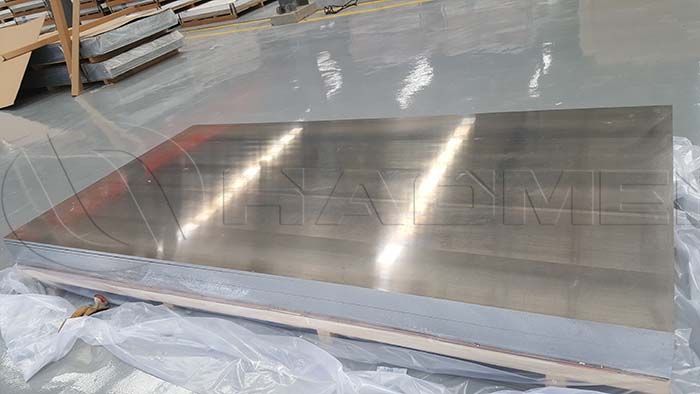
Aluminum 7075 Material Properties

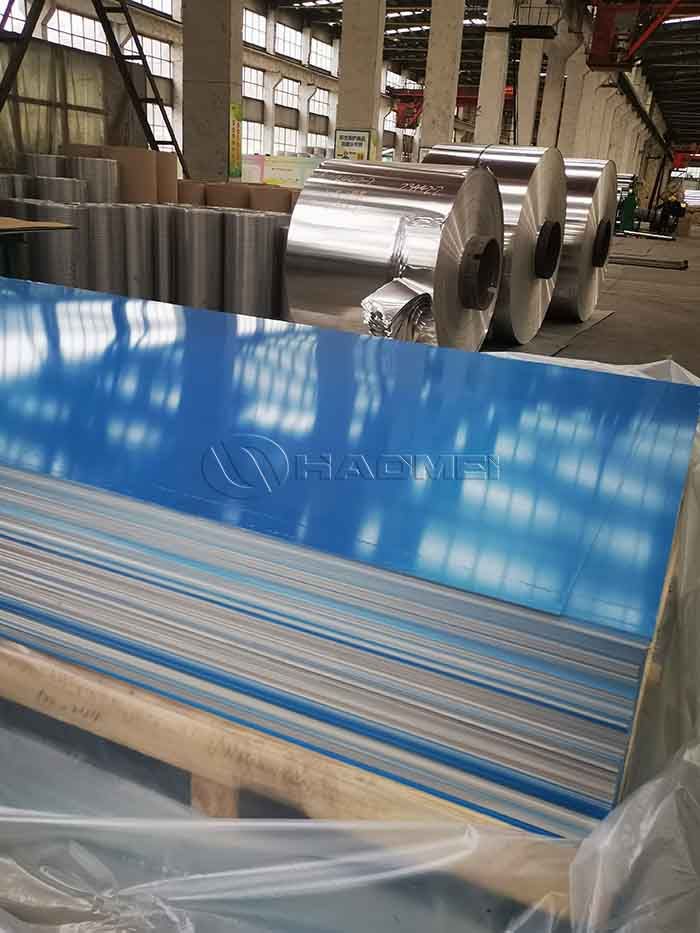
 7075 aluminum sheet is a commonly used grade in the 7xxx aluminum alloys. Zinc is its main alloying element. The addition of magnesium to the alloy containing 3%-7.5% zinc can form MgZn2 with a significant strengthening effect, so that the heat treatment effect of 7075 aluminum is far better than that of the aluminum-zinc binary alloy.

Aluminum plate 7075 is used to manufacture a variety of structural parts, especially aerospace structural parts. It is the most widely used high-strength aluminum alloy today, ranging from the front fuselage truss of the C919 large aircraft to the mobile phone casing. What are aluminum 7075 material properties?
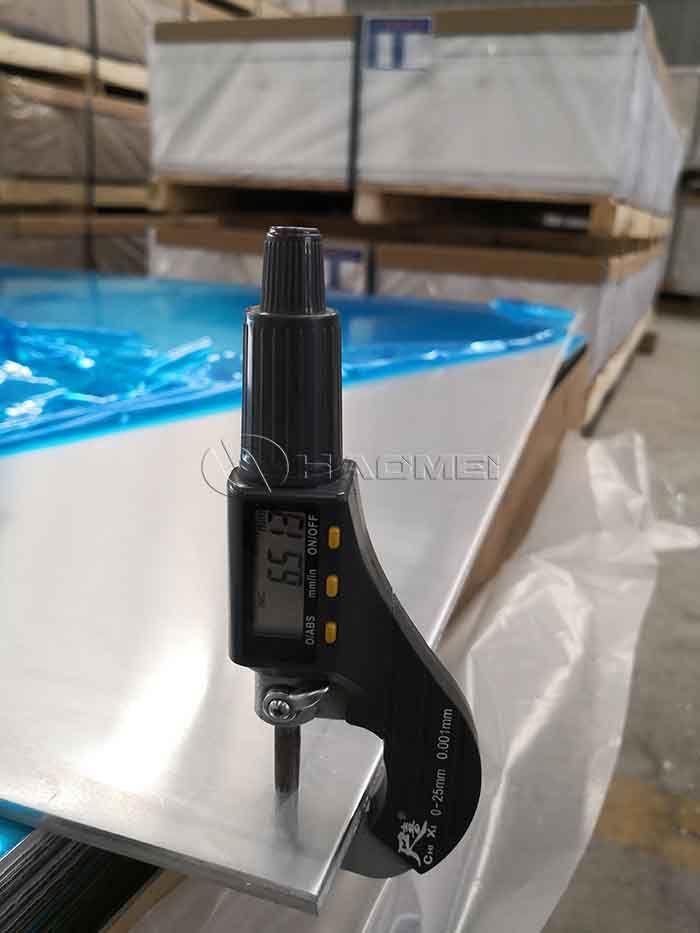
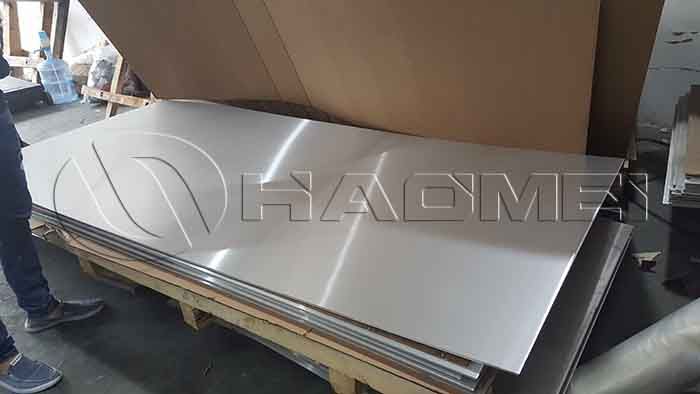
7075 aluminum sheet.jpg

It is available in various heat treatment tempers: T6, T73, T76, T77. Through a large number of experimental data and theoretical analysis, on the basis of 7075-T6, the aging heat treatment process was used to successfully develop 7075-T73, which is resistant to stress corrosion. Although this material sacrifices part of its static strength, its corrosion resistance has been significantly improved.

Later, 7075-T76 was further developed, which not only obtained stronger corrosion resistance, but also sacrificed a lower static strength than 7075-T73, which improved the comprehensive properties of aluminum alloy materials and became the best corrosion-resistant aluminum alloy.

7075 alloy can be resistance welded, and the long-term working temperature of the workpiece is less than or equal to 125℃. For incomplete annealing of materials or workpieces, the specification is 290°C~320°C, and after holding for 2h~4h, it is air cooled. Complete annealing specification is (390~430)℃/(0.5~1.5)h and it should be cooled down to ≤200℃ with a cooling rate not greater than 30℃/h.

The solution treatment temperature of 7075 alloy sheet is 460℃~490℃, and the treatment temperature of aluminum sheet should be close to the lower limit, and the number of repeated treatments should not be more than 2 times, so as to prevent alloy elements from diffusing through the aluminum clad layer and reducing the corrosion resistance of the material.

AA7075 composition

Alloy

Si

Fe

Cu

Mn

Mg

Cr

Zn

Zr

Ti

Standard

7075

0.40

0.50

1.2-2.0

0.30

2.1-2.9

0.18-0.28

5.1-6.1

-

0.20

GB/AMS/EN

Colored Aluminum Sheet Metal tor Race Cars

 The colored aluminum sheet metal for race cars are used for the four card doors, hood cover, trunk and fenders. The race car aluminium sheets include 6016, 6022, 6111, 6181, 5754, 5182 and 5052, among which, the inner panels of the body are basically made of 5182 alloy and 6181A alloy, while the outer panels of the body are mainly made of 6016, 6111 and 6022 alloys.

6000 series aluminum alloys are currently the most widely used aluminum alloys for automobile sheet metal parts in the automobile industry. They have excellent formability, high strength performance, corrosion resistance, hemming performance, high surface performance, etc. At the same time, after painting and baking, the strength performance has been improved to a certain extent.

1655372791346849.jpg

In the mid-1970s, the United States took the lead in developing 6009 and 6010 aluminum alloys. The paint hardening properties of 6009-T4 aluminum alloys and 6010-T4 aluminum alloys are better than those of 2036-T4 aluminum alloys, and the alloys have excellent corrosion resistance and weldability.

In the early 1980s, North America and Europe developed high-Cu 6111 aluminum alloys and low-Cu 6016 aluminum alloys respectively. 6111 aluminum alloys were significantly improved in paint hardenability and formability on the basis of 6010 aluminum alloys. 6016 aluminum alloy shows better formability and corrosion resistance.

Al6016 is widely used in ABS, but the heat treatment process is complicated, and pre-aging treatment T4P must be carried out between solution treatment and paint baking treatment to obtain good performance. Because it should have good formability before stamping, and the strength can be rapidly increased during the paint baking process after stamping, so it has high dent resistance.

Among many aluminum alloys, 5000 and 6000 aluminum alloys have excellent application effects in the field of automobile manufacturing. Welcome to leave message below to inquire what you need.

Original source: https://www.aluminium-auto-sheet.com/a/colored-aluminum-sheet-metal-tor-race-cars.html

ER5356 for Marine Aluminum Welding

 The most widely used aluminum welding wires for welding are er 5356 and 5456. What are their differences? Lets have a look together.

4043 aluminum wire, commonly known as ALSil, is an aluminum filler metal containing 5 percent silicon and can be recommended for welding 3003, 3004, 5052, 6061, 6063 and casting metals 355, 356 and 214. The melting point temperature range of ER4043 is 1065-1170oF, the color after anodizing is off-white, and the tensile strength is as low as 186MP.

5456 aluminum sheet.jpg

It is a kind of aluminum-silicon alloy welding wire with great versatility. The weld metal has excellent thermal crack resistance and can also guarantee certain mechanical properties. However, in the case of anodizing treatment, the color of the weld metal and the base metal is different. At the same time, the welding of aluminum-magnesium alloy generates brittle Mg2Si in the weld, which reduces the plasticity and corrosion resistance of the joint.

It is often used as a filling material for argon arc welding of aluminum alloy workpieces and castings other than aluminum-magnesium alloys and oxygen-acetylene gas welding, especially for heat-treated aluminum alloys that are prone to hot cracks, which can obtain better results.

5356 aluminum welding wire is an aluminum alloy filler metal containing 5% magnesium. It can be used for MIG or TIG welding. It has good seawater corrosion resistance and can generally be applied to base metals 5050, 5052, 5083 , 5356, 5454 and 5456 aluminum sheet welding. It is white in color after anodizing and has a tensile strength of 290MP.

It is a general-purpose welding consumable with a wide range of uses. 5356 aluminum welding wire features high strength, good forgeability, good corrosion resistance. This product also provides good color matching for anodized welds.

5356 aluminum wire is widely used in the welding parts of bicycles, aluminum scooters, locomotive carriages, chemical pressure vessels, ordnance production, shipbuilding, aviation and other industries. Welcome to leave message below to inquire aluminum welding wire.

Original site: https://www.marine-aluminium-plate.com/a/er5356-for-marine-aluminum-welding.html

5454 Grade Aluminum Sheet for Tank Truck

 Aluminum alloy tankers first appeared in the United States in the late 1920s. In the beginning, there were only aluminum alloy single tankers. In the 1940s, aluminum alloy semi-trailers appeared. In the 1960s, the tank shape of aluminum alloy tankers was more reasonable. In the 1970s, due to the oil crisis and other reasons, aluminum alloy tankers received rapid development.

Aluminum alloy tanker has the characteristics of light weight, larger load, lower operating cost, good corrosion resistance, good wear resistance, long service life, good electrical conductivity, safety, environmental protection and energy saving. Therefore, the popularity of aluminum tank trucks has far-reaching economic and social benefits.

5454 grade aluminum.jpg

5000 series Al-Mg sheet is mainly used in cylinders, heads and bulkhead of tank trucks after welding, wrapping or rolling. 5454 grade aluminum can adapt to harsh corrosive environment. It is a typical anti-rust aluminum with high strength, about 20% higher than 5052 aluminum plate.

5454 aluminum plate has all states such as O state, H12, H14, etc. In terms of performance, it is not only high in strength and corrosion resistance, but also has good plasticity and good formability.

The production of tank car body has high requirements on this raw material and processing technology such as good corrosion resistance and high processing performance,strong pressure resistance, etc. 5454 aluminum can satisfy these requirements and can be bent, stamped and stretched. More importantly, it can be used in high temperature environment, or transport high temperature liquid.

The solid solubility of Mg in Al is second only to that of Zn, with a limit solubility of 17.4% at 470 °C and only about 1% at room temperature. In theory, Al-Mg alloy should have strong age hardening effect, but due to the limitation of intergranular precipitation and dispersion of solid β phase (Al3Mg2), this hardening effect has no practical value, so 5454 alloy cannot be strengthened by heat treatment. Welcome to leave message below to inquire 5454 aluminum sheet price.

Original source: https://www.aluminium-tanker-plate.com/a/5454-grade-aluminum-sheet-for-tank-truck.html

What Are 2024T3 and 7075T6 Properties

 2024 aluminum is an Al-Cu-Mg aluminum alloy with a density of 2.73 g/cm, which can be strengthened by heat treatment, and has moderate plasticity in the quenched and just quenched states. It has poor corrosion resistance, but it can be effectively protected by covering it with pure aluminum; it is prone to cracks during welding, but it can be welded or riveted by special processes.

The common tempers of 2024 aircraft aluminum alloy is T3, T4, T351 and T851. What are aluminium 2024 t3 properties? It has an ultimate strength of 62000 PSI and a shear strength of 40000 PSI. 2024 plate has an ultimate tensile strength of 400–430 MPa (58–62 ksi) and a yield strength of at least 270–280 MPa (39–40 ksi). It has an elongation of 10-15%.

Al 7075 t6 properties.jpg

2024 t3 aluminum sheet is considered an aircraft alloy due to its strength and also has excellent fatigue resistance. Soldering is generally not recommended. Typical uses for 2024-T3 aluminum sheet are fuselage and wing skins, roofs and aircraft structures.

7075 aluminum sheet is a cold-processed forging alloy with high strength, far superior to mild steel. Zinc is the main alloying element in 7075. Adding magnesium to an alloy containing 3%-7.5% zinc can form MgZn2 with a significant strengthening effect, making the heat treatment effect of the alloy far better than that of aluminum-zinc binary alloys. It is especially suitable for manufacturing aircraft structures and other high-stress structures that require high strength and corrosion resistance.

7075 aluminum has O, T6, T651 and T7 tempers. What are Al 7075 t6 properties? 7075 t6 has an ultimate tensile strength of 510–540 MPa (74,000–78,000 psi) and a yield strength of at least 430–480 MPa (63,000–69,000 psi). It has an elongation at failure of 5-11%.

7075 T6 is typically achieved by homogenizing casting 7075 at 450°C for several hours, quenching and then aging at 120°C for 24 hours. This produces the peak strength of the 7075 alloy. The strength comes mainly from finely dispersed eta and eta' precipitates within the grains and along the grain boundaries.


Original Source:https://www.aircraftaluminium.com/a/what-are-2024t3-and-7075t6-properties.html

Which Alloys are Used for Aluminium Car Body Frames

 The alloys for aluminum car body frames include: 2000 series with the highest copper content and high hardness, 5000 series mainly containing magnesium elements and 6000 series with high magnesium silicon content, good corrosion resistance and oxidation resistance. Different stress-bearing parts of the car body will use different series of aluminum body panel, profiles, pipes and high-performance cast aluminum.

6061 aluminum alloy for car body.jpg

Skeleton part: It is the most stressed part of the body, which is made of 2000 or 7000 series.

Outer panel: It is the secondary stress-bearing part of the body, made of 5000 series or 6000 series like 6061 aluminum alloy.

Car door: It is made of 5000 or 6000 series.

Car floor plate: It is made of 5000 or 6000 series.

The surface quality of aluminum alloy processed by ordinary stamping process is poor, and the yield rate is low (only about 70%), which cannot meet the requirements of high precision, high reliability, high efficiency and low defect manufacturing of body parts. reliability, high efficiency and low defect manufacturing of body parts.

The hydroforming technology of automobile body parts has been widely used in the automobile industry of developed countries such as Europe, America, Japan and South Korea. The maximum pressure of the equipment has reached 400 MPa, and the inner and outer panels of car doors and fenders are processed.

Compared with the stamping process, the advantages of the hydroforming process are as follows:

(1) Reduce the blank size and save materials;

(2) Increase the forming limit and reduce the forming passes;

(3) The surface quality and dimensional accuracy of parts like 5754 h111 aluminum are greatly improved;

(4) Reduce the number and cost of supporting molds;

(5) Reduce the amount of subsequent machining and assembly welding;

(6) Parts with complex shapes, large degrees of deformation, and high integrity requirements can be formed.


Original Source:https://www.autoaluminumsheet.com/a/which-alloys-are-used-for-aluminium-car-body-frames.html

5059 Aluminum Sheet Transportation

 Al-Mg alloy is the most widely used wrought aluminum alloy. It is characterized by excellent resistance to marine climate and seawater corrosion, weldability and polishability, excellent plasticity (Mg≤5%), and good shock resistance. Aluminum 5059 is a kind of 5000 series aluminum-magnesium alloy with excellent comprehensive performance.

5059 aluminum sheet has low density and high tensile strength, which is higher than that of low-carbon steel. It has high plasticity, corrosion resistance, good weldability, and low cracking tendency. With its own unique advantages, it is widely used in the manufacturing of special tankers for petrochemical and other dangerous products. Its typical width for tank body/cylinder and bulk head/cleaning plate: 1500/1600/1800/2000/2200/2400mm.

Aluminum  sheet 5059.jpg

It is also used for semi trailer whose axle is placed behind the vehicle's center of gravity (when the vehicle is evenly loaded) and is equipped with a coupling device that can transmit horizontal and vertical forces to the tractor. The aluminum alloy semi-trailer is generally a three-axle semi-trailer, which is a heavy-duty transportation vehicle connected to the aluminum alloy semi-trailer head through the traction pin. The use of 5059 alloy can effectively realize the overall lightweight of the vehicle.

Since 5059 aluminum alloy has strong resistance to seawater and marine climate corrosion and good welding performance, it is often used in marine engineering, and the alloy can be used in ships from small boats to thousands of tons of ships and cruise ships.

5059 aluminum alloy is a new type of high-magnesium aluminum alloy registered by Corus Company in Germany in 1999. It is mainly used for structural parts of ships, spacecraft, rockets, etc. 5059H131 and 5059H136 aluminum alloys have better elastic resistance, mechanical properties and corrosion resistance than 5083H131, 5083H136, 2519T87 and 7039 aluminum alloys.

5059 aluminum sheet transportation contains many types and high content of elements, and it is easy to form a variety of complex non-equilibrium intermetallic phases during solidification and the elimination of these complex non-equilibrium intermetallic phases depends on atomic diffusion kinetics. Calculation by the homogenization kinetic equation shows that the homogenization time of the alloy is 18.9 h.


Original Source:https://www.aluminumtankerplate.com/a/5059-aluminum-sheet-transportation.html

Aluminum Circle, Strip, and Foil: Which Alloy Is Right for Your Application?

  Aluminum Circles for Cookware: 1050 vs. 1060 vs. 3003 Alloy In the cookware manufacturing industry, aluminum discs have become an ideal ma...