What Are Uses of Aluminium Tooling Plate 5083

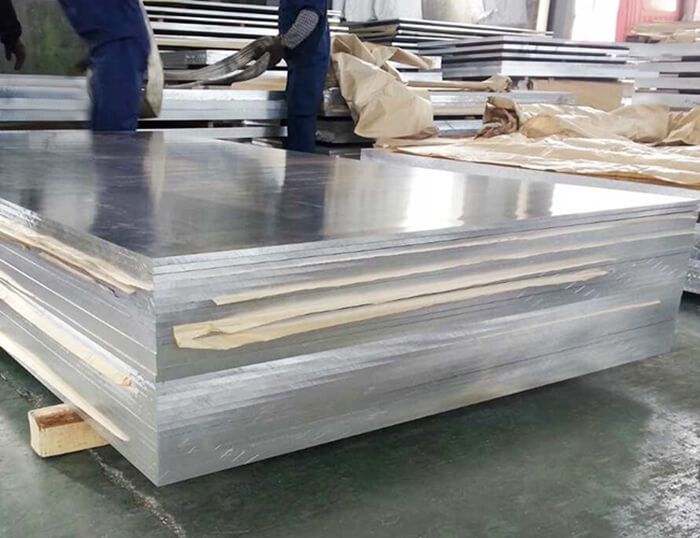
 Aluminum tooling plate 5083 is a typical anti-rust aluminum plate with high corrosion resistance and rust resistance. The underwater part of the hull is in contact with seawater all year round, and the material selected must be able to resist the corrosion of seawater and be durable. 5083 H116 and h321 have good corrosion resistance and are more suitable for the underwater environment of the ocean than H111 and H112.
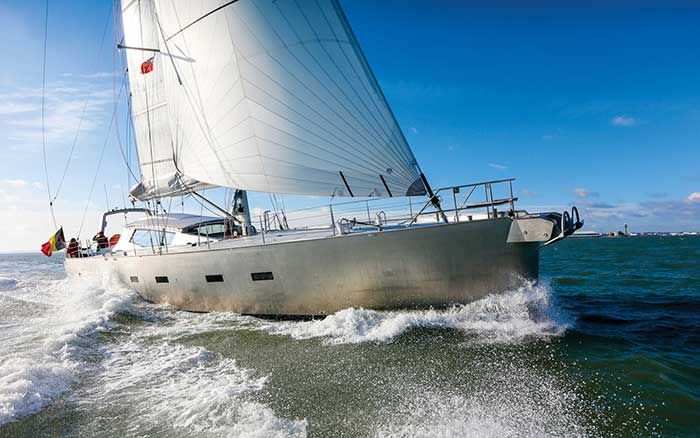
aluminum sheet for marine application.jpg

Keel

The keel is a longitudinal member that connects the bow post and the stern post in the center of the base of the hull. It is located at the bottom of the ship and is usually the first part of the ship to be built.

The keel is usually made of 5083 aluminum plate, the main alloying element is magnesium, which has good corrosion resistance and weldability, and medium strength.

Contact wheel

Marine aluminum plate 5083 is also a good choice when used in the machine. The contact wheel material also often chooses 5083 aluminum sheet.

The contact wheel is suitable for polishing and grinding operations. The harder the contact wheel, the greater the roughness of the machined surface. On the contrary, it is very small. The larger the diameter of the contact wheel, the larger the contact area during machining and the smaller the roughness of the machined surface.

It can be seen that the contact wheel is important for processing. The marine aluminum plate 5083 has strong hardness and high corrosion resistance, is resistant to grinding, is not prone to corrosion, and is more durable.

Chimney

The luxury passenger ship chimney built by Guangzhou Shipyard International for the Swedish Gotland Shipping Company is a steel-aluminum hybrid structure. As the exhaust device of the ship, the chimney plays an important role in keeping the ship clean.

The aluminum alloy for the chimney can choose en aw 5083 datasheet. Excellent corrosion resistance makes it y widely used in marine applications such as ships, automobiles, aircraft welding parts, subway light rail, pressure vessels that require strict fire protection,etc.


Original Source:https://www.marinealu.com/a/what-are-uses-of-aluminium-tooling-plate-5083.html
Effect of Homogenization Annealing on Microstructure and Properties of 6056 Aluminum Alloy

 6056 aluminum alloy is an Al-Mg-Si-Cu alloy widely used in the automotive and aviation fields. Its strength is 15% higher than that of 6061 aluminum alloy. Its weldability, corrosion resistance and cutting performance are better than 7075 and 2024.

The composition of 6056 aluminum alloy is complex. During the semi-continuous casting process, the ingot structure will deviate from the equilibrium state, resulting in severe dendrite segregation and a large amount of non-equilibrium solidification eutectic structure.

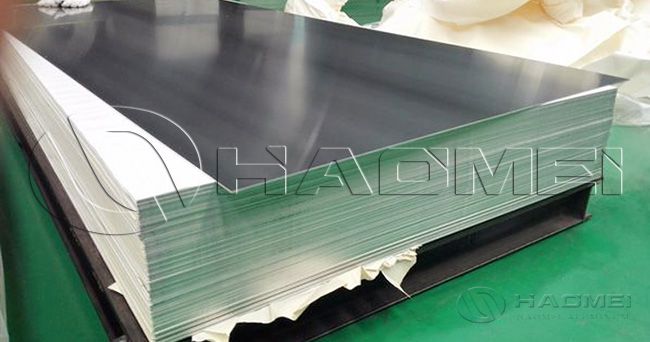
6056 aluminum alloy .jpg

Therefore, 6056 aluminum alloy ingot must be homogenized annealed to eliminate dendrite segregation, minimizing the residual crystalline phase in the matrix, and improving the plasticity of the alloy.

Homogenization annealing treatment is one of the key links to obtain ideal process and mechanical properties of 6056 aluminum alloy. The increase in temperature is conducive to accelerating the diffusion process, that is, accelerating the homogenization process.

The homogenization annealing temperature should be increased as much as possible, but considering the accuracy of the homogenization annealing equipment and the actual production, the homogenization temperature is selected at 540 ℃.

Through the observation of DSC curve of 6056 aluminum cast rod after homogenization treatment at 540 ℃×12 h, the endothermic peak at 554 ℃ has disappeared, that is to say, after the homogenization annealing treatment, the non-equilibrium freezing point eutectic structure mostly disappears.

With the progress of homogenization annealing treatment, the strength of 6056 aluminum alloy begins to gradually decrease, and the plasticity increases. The strength of 6056 aluminum alloy treated by homogenization annealing treatment at 540 ℃×6 h decreases to 214 MPa, and the ductility increases to 6.0%.

The strength of 6056 aluminum treated by homogenization annealing at 540 ℃×12 h decreases to 205 MPa, and the ductility increases to 16.5%. This is due to the dissolution of the second phase that hinders the movement of dislocations and pinned grain boundaries during the homogenization process, which reduces the strength of 6056 aluminum alloy.

The casting stress is gradually eliminated, the alloy dendritic segregation and non-equilibrium eutectic structure are eliminated, the structure becomes uniform, and the alloy plasticity is enhanced, so the elongation rate is increased.


Original Source:https://www.autoaluminumsheet.com/a/effect-of-homogenization-annealing-on-microstructure-and-properties-of-6056-aluminum-alloy.html

The Application of Aluminum on Aeroplane

 Aluminum has changed many different industries in the past 100 years. Due to the light weight and high strength of aluminum, many alloys such as 2024 alloy, 7075 T6 aluminum and 7150 aluminum are widely used on the aeroplane, making the aircraft a safe, economical and feasible mode of transportation.

7075 T6 aluminum.jpg

Why is aluminum used in the aircraft industry

Two outstanding reasons why aluminum is so indispensable to the aerospace industry have been mentioned: high strength and weight ratio, which is of great value to the aerospace industry. The aircraft fuselage must be strong and durable enough to withstand the stress of take-off and landing over time.

At the same time, if the metal is too heavy, it will require more fuel consumption during the flight. This means that aluminum is generally a more cost-effective choice for aircraft. Strength and weight are not the only advantages of aluminum. Another major benefit of aluminum alloy is its superior corrosion resistance.

This is a major factor in aircraft durability. Aircraft are constantly affected by various factors and often experience extreme weather like freezing temperatures and various precipitations in high altitude areas.

In addition, aircraft aluminum is easy to shape. The aeroplane requires high precision to ensure aerodynamics, not to mention the small parts that can be found on the aircraft. The good formability makes it cost-saving.

What are the different uses of aluminum in airplanes

The skin of an airplane is usually made of aluminum. And most other metal parts on the plane are also made of aluminum. For example, the engine of a piston-driven airplane is made of aluminum. Most of the metal fixtures in the aircraft, such as seats, doors, cabinets, etc., are also made of aluminum.

What are the common aircraft aluminum

The alloy closely related to aircraft applications is 7075. 7075 is known for its excellent mechanical properties, ductility, high strength, toughness and fatigue resistance. Welcome to contact us for the 7075 aluminum cost.

In recent years, some higher performance alloys have been developed and replaced 7075 in for certain aerospace applications. One example is 2024, whose chemistry makes it ideal choice for the parts that require high cycle fatigue resistance.

Other popular alloys used in the aviation industry include 6061, 6063, 2014, 5052, 7050, 7085 and 7068.


Original Source:https://www.aircraftaluminium.com/a/the-application-of-aluminum-on-aeroplane.html

The Five Most Common Aluminum Plate

 5083 Aluminum Plate

Haomei en aw 5083 h321 has been widely used for C80 coal truck, liquid tankers, refrigerated trucks, new energy passenger cars,etc. 5083 belongs to the heat-treated alloy that has good workability, corrosion resistance and welding performance. We also realize the mass production of 5083/5454/5182-H111 (5-8mm×1800-2400mm×5000-12000mm)by hot continuous rolling, which has won unanimous praise from users.

en aw 5083 h321.jpg

1060 Aluminum Sheet

It belongs to pure aluminium alloy. The production process is relatively simple and the technology is relatively complete, which has huge price advantage. It has excellent tensile strength and compressive strength.

1060 aluminum chemical composition: iron (Fe) 0.35%, manganese (Mn) 0.03%, magnesium (Mg) 0.03%, silicon (Si) 0.25%, zinc (Zn) 0.05%, titanium (Ti) 0.03%, copper (Cu) 0.05 %. Aluminum (Al) exceeds 99.6%.

Mechanical properties: 1060 aluminum plate’s compressive strength is higher than 75 MPa, and compromise strength is higher than 35 MPa.

3003 Aluminum Plate

3003 aluminum plate is a representative product of the aluminum-manganese alloy, featuring excellent anti-rust performance.

3003 chemical composition: Al: remainder; Si: 0.6, Cu: 0.05--0.2, Zn: 0.10, Mn: 1.0--1.5, Fe: 0.7, each of the rest alloy element: 0.05.

Mechanical properties: tensile strength σb (MPa)) 120-160

7075 Aluminum Plate

7075 sheet mechanical properties: tensile strength: 524Mpa, 0.2% yield strength: 455Mpa, elastic modulus E: 71GPa, hardness: 150HB, density: 2.81g/cm3.

Chemical composition: Si: 0.40, Fe: 0.50, Cu: 1.2-2.0, Mn: 0.30, Mg: 2.1-2.9, Cr: 0.18-0.28, Zn: 5.1-6.1, Ti: 0.20 ,each of the rest alloy element: 0.05, Al: remainder.

6061 Aluminum Sheet

6061 aluminum is a high-quality aluminum alloy product manufactured by the heat treatment process and pre-stretching process. Although its strength cannot be compared with the 5XXX series or 7XXX series, it has excellent corrosion resistance, high ductility and good anodizing effect.


Original Source:https://www.aluminumtankerplate.com/a/the-five-most-common-aluminum-plate.html

Clasificación de la placa de cuadros de aluminio por diseños

 En términos generales, hay dos métodos para clasificar la placa de rodadura de aluminio. El primer método es por etiquetas de aleación. De esta manera se puede dividir en 1xxx (1060), 3xxx (3003) y 5xxx (5052, 5083). El otro estándar de clasificación recae en diferentes diseños en la superficie. Aunque los trabajadores experimentados pueden nombrar al menos diez tipos de diseños sin pensar, solo cinco tipos son ampliamente utilizados.

placa de aluminio.jpg

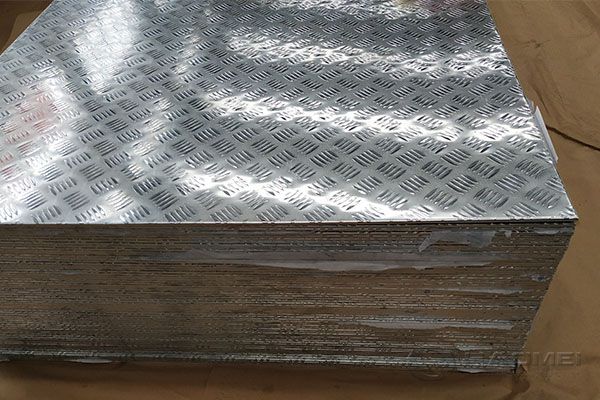
  El tipo más popular de placa de rodadura de aluminio normalmente se conoce como placa de cinco nervaduras. Como su nombre lo indica, este tipo de placa se caracteriza por el diseño de cinco costillas en la superficie. La forma de cada costilla es similar a la de las hojas de sauce. Cinco costillas paralelas entre sí. Cada grupo de cinco costillas forma un ángulo entre 60 y 80 grados junto con cualquiera de sus grupos circundantes, lo que dota a la placa de un excelente rendimiento antideslizante. Además, tiene un precio más bajo en comparación con las placas de otros diseños. Por lo tanto, gana una gran popularidad como materiales antideslizantes para edificios y plataformas. Otro tipo de placa de aluminio antideslizante es la placa de rasgado, que sirve principalmente como pisos antideslizantes para camiones, plataformas, pisos, elevadores, etc.

  La placa de rodadura de aluminio de cáscara de naranja tiene diseños como cáscaras de naranja en la superficie. Hay un diseño clásico de cáscara de naranja y un diseño cambiado de cáscara de naranja. Este tipo de placa de aluminio muestra un rendimiento antideslizante menos satisfactorio que las placas de cinco costillas y rasgaduras, pero es más popular como materiales de cobertura para refrigeradores, acondicionadores de aire y materiales de embalaje para productos necesarios. La placa de aluminio con diseños en forma de semiesfera también se denomina placa de aluminio con forma de perla. Su diseño es tan hermoso que la gente generalmente lo aplica para empacar. Debido a la forma especial y la disposición de los diseños, tiene una dureza mucho más fuerte que otros tipos de placas de aluminio. La placa de aluminio de diamante, con diseños de diamante, es otro tipo ampliamente utilizado para el embalaje.

Original source: https://www.placadealuminio.es/a/clasificacion-de-la-placa-de-cuadros-de-aluminio-por-disenos.html

Polished Aluminium Sheet for Luminous Letters

 The aluminum-edged luminous letters are surrounded by colored aluminum edging, which makes the resin characters present a beautiful and generous appearance in another posture, which greatly increases the weather resistance of the luminous characters.

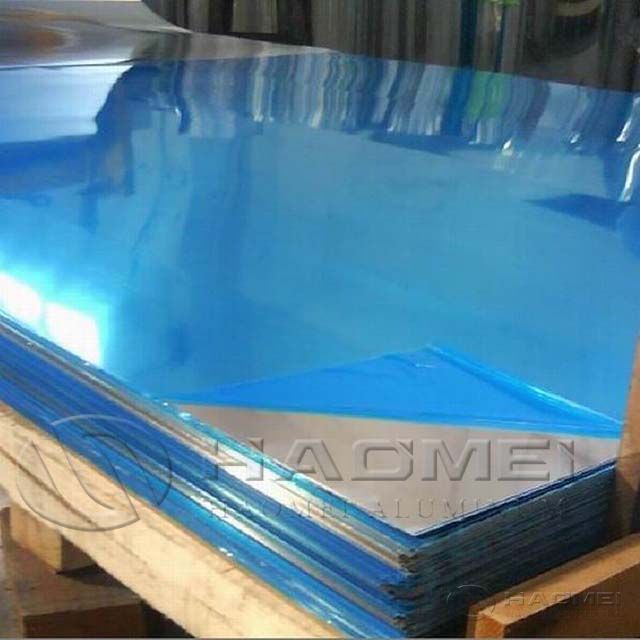
The polished aluminium sheet is widely used in various luminous characters and light boxes. It has rich colors, including red, yellow, white, blue, green, black, silver, brushed gold,etc. It can be customized according to customer requirements. What are the advantages of Haomei polished aluminium sheet?

polished aluminium sheet.jpg

1. It can be guaranteed for ten years and the quality is stable. The rich colors and durable coating meets the different needs of customers. It is suitable for long-term outdoor use.

2. It is easy to process, which eliminates the troubles of welding and painting. Its price is also very competitive.

3. As a big polished aluminum mirror sheet manufacturer and exporter, we have rich exporting experience and ensures the quality during the transportation.

4. The aluminum mirror sheet has high quality heat dissipation function, which is three times stronger than that of iron, which can better cool down the fonts made of color aluminum sidebar.

How to make luminous letters with aluminium mirror sheet? Both the borderless panel and the bottom plate are engraved and formed by the engraving machine. The panel is made of high-transmitting acrylic panel, and the bottom plate is usually aluminum mirror sheet.

The LED light source (light strip or module) is generally placed on the bottom plate, and finally the three-dimensional shell and the bottom plate are sealed with glass glue to complete the production.

Original source: https://www.alumhm.com/a/polished-aluminium-sheet-for-luminous-letters.html

What’s The Aluminium Circles Manufacturing Process

 The aluminum round discs is a popular choice for making cookware, utensils, crafts, traffic signs, etc. It has two processing ways: DC and CC. According to the forming ways, it can be divided into punching, cutting and laser cutting.

    The whole manufacturing process is like this: ingot- melting-holding furnace- continuous casting/direct casting- cold rolling- tension levelling- pumping/cutting/laser cutting- inspection- annealing- inspection- packing- warehouse- delivery.
    The production equipment includes press machine, cutting machines, tension levelling, annealing furnace, moulds,etc.

    Raw material


    Tension levelling


    Press machine 


    Cutting machine


    Annealing furnace 


    Mould


x


Aluminium Strip for Cables Armoring

  Cable factories facing Christmas and New Year shutdowns have little tolerance for material delays or coil defects. An armor-strip issue di...