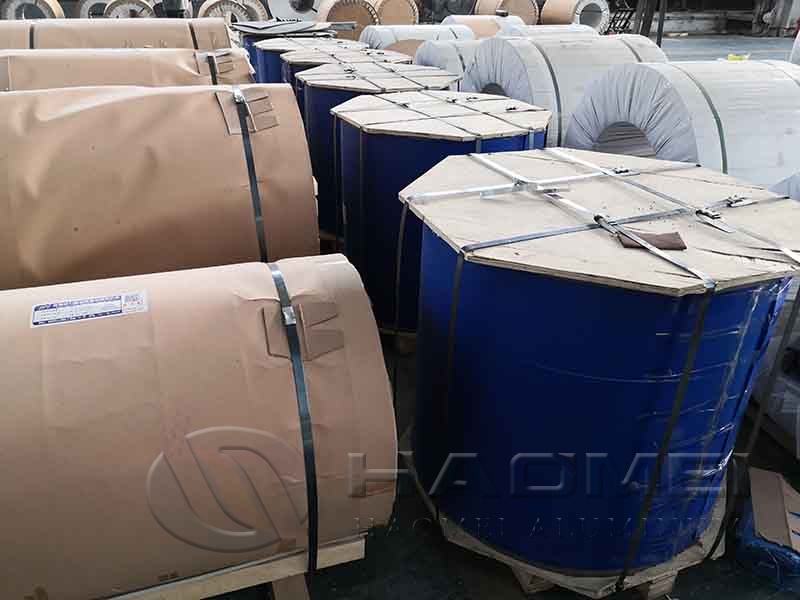
Aluminio Serie 3000: 3003 Chapa de aluminio

 Los principales grados de láminas de aluminio serie 3000 son 3003 y 3105. Aquí hay una descripción general de ellos.
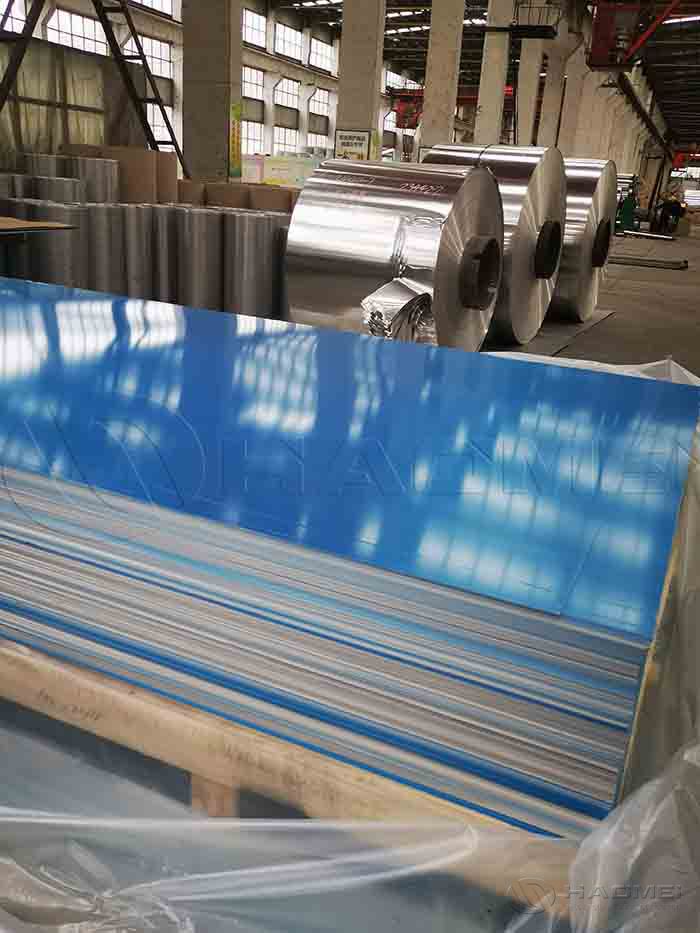
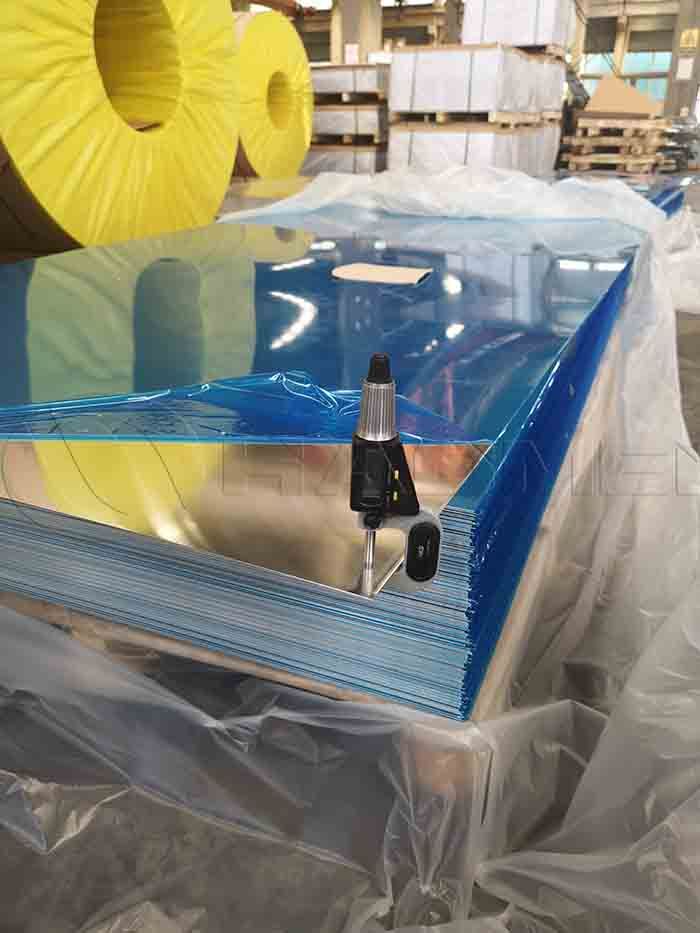
aluminio serie 3000 .jpg

hoja de aluminio 3105

La lámina de aluminio 3105 es un material principal de tapa de botella de aluminio. 3105 es uno de los aluminios antioxidantes más utilizados con una resistencia ligeramente mayor que la del aluminio puro industrial y el aluminio 3003. ¿Cuáles son sus ventajas de la lámina de aluminio 3105 en el envasado de vino?

1. Excelente rendimiento de sellado

La tapa de la botella de aluminio utiliza un material de sellado especial para su almohadilla interior. Su baja permeabilidad previene eficazmente la oxidación del vino en botella, de manera que el vino mantiene la frescura y el aroma afrutado. No importa cuánto tiempo sea el tiempo de almacenamiento, no se producirán productos químicos.

2.Requisitos de protección de la salud y el medio ambiente

Durante el almacenamiento, el vino tinto puede contaminarse con roble porque los tapones de corcho producen un TAC compuesto. La junta de las tapas a prueba de robos de aluminio es el recubrimiento de PVDC de 0,20 ㎛, que se caracteriza por una calidad estable, resistencia a los ácidos, resistencia al alcohol y en línea con los estándares de envasado de higiene alimentaria.

3. Fácil de abrir

La tapa de aluminio es fácil de abrir y no requiere herramientas especiales. Por el contrario, el tapón de corcho es difícil de abrir o incluso no se puede abrir debido a la rotura. Será muy inconveniente beber vino en recepciones de bodas, picnics, vino de aviación y otras ocasiones si no hay un abridor.

4. Preferencia del consumidor

Cuando se preguntó a los consumidores cómo elegir diferentes tapas de botellas para el mismo vino, un tercio de los consumidores tendía a comprar vino con tapas de aluminio, y una cuarta parte de los consumidores dijo que los tipos de tapas no influirían en sus decisiones de compra. Actualmente, solo el 30% de los consumidores reutilizará las tapas de aluminio.

Pero este movimiento alienta a la industria a continuar promoviendo activamente la ventaja del reciclaje. En Europa, se reciclará el 40% de las tapas de botellas de aluminio. Como fabricante de material de tapas de botellas de aluminio, también esperamos que se utilicen más tapas de aluminio para proteger nuestro medio ambiente.

hoja de aluminio 3003

La lámina de aluminio 3003 es una aleación de aluminio Al-Mn. Tiene excelentes propiedades de trabajabilidad y soldabilidad para aleaciones de aluminio, que es un 20 % más fuerte que el aluminio puro.

Las propiedades de la lámina de aluminio 3003 están profundamente influenciadas por la tecnología de procesamiento además de su propia composición.

Tres tecnologías comunes de procesamiento de láminas de aluminio 3003

1. Recocido completo

El calentamiento a 390-430 ℃ y el tiempo de mantenimiento es de 30-120 min dependiendo del grosor de la lámina de aluminio 3003, y luego se enfría con un horno a 300 ℃ con una velocidad de 30-50 ℃/h. Después de estos pasos, déjelo para que se enfríe naturalmente.

2. Recocido rápido

El calentamiento a 350-370 ℃ y el tiempo de mantenimiento es de 30-120 min, dependiendo del espesor de la hoja de aluminio 3003. Después de estos pasos, déjelo para enfriamiento natural o enfriamiento por agua.

3. Enfriamiento y Envejecimiento

La temperatura de enfriamiento es de 500-510 ℃, refrigeración por aire; el envejecimiento artificial es de 95-105 ℃ durante 3 horas; el envejecimiento natural es de 120 horas a temperatura ambiente.

Estándares de placas de aluminio 3003

Estándar chino: 3003 GB/T 3190-1996

ISO: AlMn1Cu ISO 209.1-1989

Estándar japonés: A3003 JIS H4000-1999 JIS H4100-1999

Estándar ruso: AMU/1400 FOCT4785-1974

ES: EN AW-3003/AlMn1Cu EN 573-3-1994

Estándar alemán: AlMnCu/3.0517 DIM1725-1-1986

Estándar francés: 3003 (A-M1) NFA50-411 NFA50-451

Norma británica: 3103 (N3) BS 1470-1988

Estándar americano: 3003/A93003 AA/UNS

fuente original: https://www.placadealuminio.es/a/aluminio-serie-3000-3003-chapa-de-aluminio.html
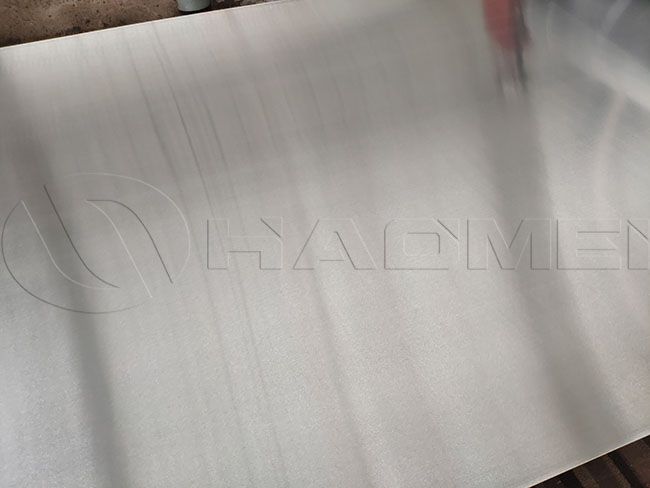
What Are 2024T3 and 7075T6 Properties

 2024 aluminum is an Al-Cu-Mg aluminum alloy with a density of 2.73 g/cm, which can be strengthened by heat treatment, and has moderate plasticity in the quenched and just quenched states. It has poor corrosion resistance, but it can be effectively protected by covering it with pure aluminum; it is prone to cracks during welding, but it can be welded or riveted by special processes.

The common tempers of 2024 aircraft aluminum alloy is T3, T4, T351 and T851. What are aluminium 2024 t3 properties? It has an ultimate strength of 62000 PSI and a shear strength of 40000 PSI. 2024 plate has an ultimate tensile strength of 400–430 MPa (58–62 ksi) and a yield strength of at least 270–280 MPa (39–40 ksi). It has an elongation of 10-15%.

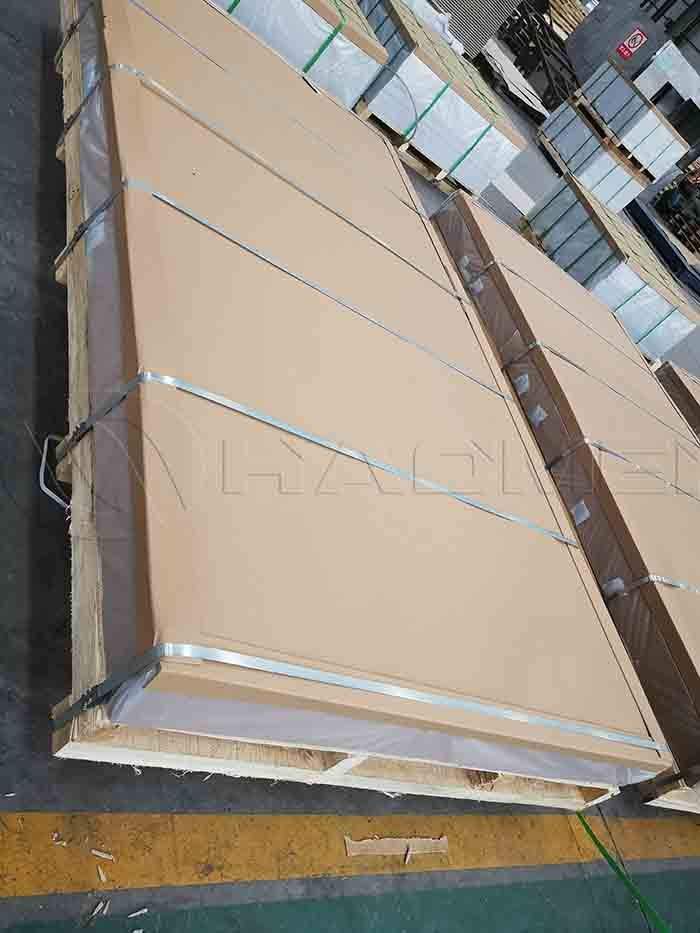
Al 7075 t6 properties.jpg

2024 t3 aluminum sheet is considered an aircraft alloy due to its strength and also has excellent fatigue resistance. Soldering is generally not recommended. Typical uses for 2024-T3 aluminum sheet are fuselage and wing skins, roofs and aircraft structures.

7075 aluminum sheet is a cold-processed forging alloy with high strength, far superior to mild steel. Zinc is the main alloying element in 7075. Adding magnesium to an alloy containing 3%-7.5% zinc can form MgZn2 with a significant strengthening effect, making the heat treatment effect of the alloy far better than that of aluminum-zinc binary alloys. It is especially suitable for manufacturing aircraft structures and other high-stress structures that require high strength and corrosion resistance.

7075 aluminum has O, T6, T651 and T7 tempers. What are Al 7075 t6 properties? 7075 t6 has an ultimate tensile strength of 510–540 MPa (74,000–78,000 psi) and a yield strength of at least 430–480 MPa (63,000–69,000 psi). It has an elongation at failure of 5-11%.

7075 T6 is typically achieved by homogenizing casting 7075 at 450°C for several hours, quenching and then aging at 120°C for 24 hours. This produces the peak strength of the 7075 alloy. The strength comes mainly from finely dispersed eta and eta' precipitates within the grains and along the grain boundaries.


Original Source:https://www.aircraftaluminium.com/a/what-are-2024t3-and-7075t6-properties.html

Race Car Aluminum Sheets 7075

 Aluminum alloy has become one of the preferred materials for automobile lightweight due to its high specific strength, good corrosion resistance, formability and weldability. In the automotive industry, automobile lightweight is one of the most important means of energy saving and emission reduction. Limited by the difficulty of sheet metal forming, the all-aluminum body realized by high-cost and low-efficiency sheet metal forming technology is mainly used in high-end sports cars, race cars and luxury cars.

After a long period of development, the most common aluminum alloy sheets used for automobile bodies are 2××× (Al-Cu-Mg) series, 5××× (Al-Mg) series, 6××× (Al-Mg -Si) alloys and 7××× (Al-Zn-Mg-Cu) aluminum alloys.

7075 aluminum sheet is an Al-Zn-Mg-Cu alloy, which can be heat-treated and strengthened. Among them, Zn and Mg mainly play the role of strengthening, and the role of Cu is mainly to improve the corrosion resistance of the alloy. 7075 aluminum plate is a superhard aluminum alloy with very good mechanical properties. The tensile and shear strength can reach more than 600, and the elongation rate can reach as high as 70%.

7075 aluminum alloy is widely used in aerospace and related fields, especially in the manufacture of aircraft structures and other high-stress structures that require high strength and strong corrosion resistance. In recent years, with the "consumption upgrade" and "lightweight" trend, 7075 aluminum has gradually extended from the traditional aerospace and military fields to the fields of mechanical equipment, mold processing, automobiles and even consumer electronics due to its ultra-high performance and practicability.

7075 aluminum sheet.jpg

The main criterion for ultra-high-strength aluminum alloys is the so-called yield strength. 7075 aluminum alloy can be obtained in two tempers T6 and T7. In 7075-T6, a yield point of about 500MPa is reached, while for 7075-T7, the value is about 450MPa. A yield point of 450 to 500 MPa is already a very high value for aluminum alloys

Different parts of race cars have very different requirements for materials. For example, the front and rear parts of a car like front and rear longitudinal beams is required to absorb impacts from the front and rear. The area enclosed by strength and deformation can be roughly considered as the material's ability to absorb energy. Of course, we don't want these energy-absorbing parts to break prematurely during the collision, so a certain elongation is the basic requirement for these parts.

The second need is strength. The intensity should not be so strong that the main energy is transmitted backwards, nor so weak that it cannot absorb enough energy. Proper strength and good deformability are the requirements for these parts. 7000 race car aluminum sheets meets this requirements.


Original Source:https://www.autoaluminumsheet.com/a/race-car-aluminum-sheets-7075.html

Which Temper of EN 5083 Aluminum Is Suitable for Shipbuilding

 Marine aluminum alloys are generally used for shipbuilding. The use of medium-hard aluminum alloy materials both has corrosion resistance and certain processing strength. At the same time, the ships can be made entirely of aluminum alloy materials after heating or welding.

En 5083 aluminum belongs to the aluminum-magnesium alloy series. Among them, Mg is the main strengthening element, which plays a certain role in solid solution strengthening. Its corrosion resistance and strength are suitable for shipbuilding. It can be used for the hull and floor of the boats.

En 5083 aluminum.jpg

5083 aluminum plate is an important component of the 5000 series aluminum alloys. Due to its high strength, strong corrosion resistance, easy processing and welding, it is mostly used in shipbuilding, and it is also called marine aluminum plate. It is the most representative product among many marine aluminum sheets. The 5083 aluminum plate has stable performance, and it can resist corrosion well in environments such as seawater and steam.

The 5000 series aluminum alloys are widely used in the field of marine engineering because of its excellent corrosion resistance. In shipbuilding, 5083 and 5086 aluminum alloys are used for shell structures, and 5052 and 5454 aluminum alloys are used to make ship decks and upper outfitting panels.

In the process of ocean transportation, liquefied natural gas (LNG) storage tanks have strict requirements on material performance, and it is necessary to ensure that the strength, mechanical properties and corrosion properties of the material are not affected at low temperature. 5083 aluminum alloy has the performance to meet the above conditions at the same time. It is the main manufacturing material for offshore low-temperature storage devices such as combustible ice and natural gas.

Aluminium 5083h111, h112, h116 and h321 are often used on the hulls of yachts, cruise ships, and fishing boats. The use of 5083 aluminum plate s not only significantly lighter, but from the perspective of ship designers, ships made of aluminum plates can have faster speeds and longer service life under the same power conditions.

Aluminum alloys are also used on barges. In 1964, an all-aluminum barge was built in the United States. The aluminum materials used exceeded 180 tons. The chosen aluminum alloy is 5083 aluminum. The cargo capacity is 14% higher than that of steel barges.

Tugboats can also be made of aluminum alloy. The hull of the American "Sauter" tugboat is welded with 5083 and 5086 alloys, and the manufacturing time is about 30% shorter than that of steel barges.


Original Source:https://www.marinealu.com/a/which-temper-of-en-5083-aluminum-is-suitable-for-shipbuilding.html

Annealing Process of 5454 Aluminum Alloy for Tanker Truck

 5xxx Al-Mg alloys are deformed aluminum alloys mainly composed of Mg elements, among which 5454 aluminum alloy is one of the typical grades. 5454 aluminum alloy has many advantages such as medium strength, good welding performance, excellent processing and forming performance and good corrosion resistance.

It has been widely used in the fields of automobile manufacturing, canning industry, electronic communication and light industrial building materials, and it is also one of the potential main materials for structural parts of seawater desalination devices in future marine engineering. What is its annealing process?

5454 aluminum alloy.jpg

With the increase of annealing temperature, the yield strength and tensile strength of 5454 aluminum alloy gradually decrease, and the elongation gradually increases, but when the annealing temperature is ≤90 ℃, there is only a slight change.

When the annealing temperature rises to 120-150 ℃, the yield strength decreases greatly, the change in tensile strength is small, and the elongation increases to 13% at 150 ℃. When the annealing temperature rises to 180-240℃, the properties change slowly.

When the annealing temperature reaches 270 ℃, the yield strength decreases greatly and the elongation increases greatly, but the change in tensile strength is small; at 300 ℃, the yield strength and tensile strength sharply decreased, the elongation increased sharply, and the performance reached the required value of the 5454-O state standard (Rp0.2≥85 MPa, Rm is 215-285 MPa, A≥17%).

At 330 ℃,the yield strength and tensile strength decreased slightly, and the elongation increased slightly; at 360-570 °C, the properties changed slowly, but when the annealing temperature reached 600 °C, the yield and tensile strength decreased slightly , while the elongation rapidly decreases to 15.5%.

When the annealing temperature is less than or equal to 90 °C, the properties change little, and the grain size does not change significantly, indicating that this temperature range does not have much influence on the properties of the 5454 aluminium.

In the range of 120-270 ℃, with the increase of annealing temperature, a large number of dislocations formed in the cold rolling process can move or disappear, part of the internal stress is released, so that the yield strength and elongation have a large change. However, the tensile strength and grain structure of 5454 aluminum change little, and slight recovery and recrystallization occur.

At 270-300 ℃, the internal structure of the alloy begins to nucleate and grow, the fibrous structure basically disappears, the small-angle grain boundaries are swallowed, the grains recrystallize, and the performance meets the O state standard requirements.

At 330℃, the strength is further reduced, the elongation is further increased, and recrystallization is basically completed; at 360-570 °C, the performance changes little, the grain grows slightly, and the residual small-angle grain boundaries are completely swallowed; at 600 ℃, the performance is abnormal, the crystal grains are re-spheroidized to form equiaxed crystals, and remelted balls are formed in some areas, and overburning occurs.


Original Source:https://www.aluminumtankerplate.com/a/annealing-process-of-5454-aluminum-alloy-for-tanker-truck.html

Painted Aluminum Coil for License Plate

 The application of aluminum in automobiles is becoming more and more extensive. The use of aluminum alloy to build the body not only improves the performance of the car, but also conforms to the current lightweight trend of the automobile industry. The painted aluminium coil for license plate is also very common.

Although there are many kinds of materials for the processing of automobile license plate, it is mostly designed with aluminum alloy materials.It features light weight, good flatness, excellent rust-proof performance and easy coloring.

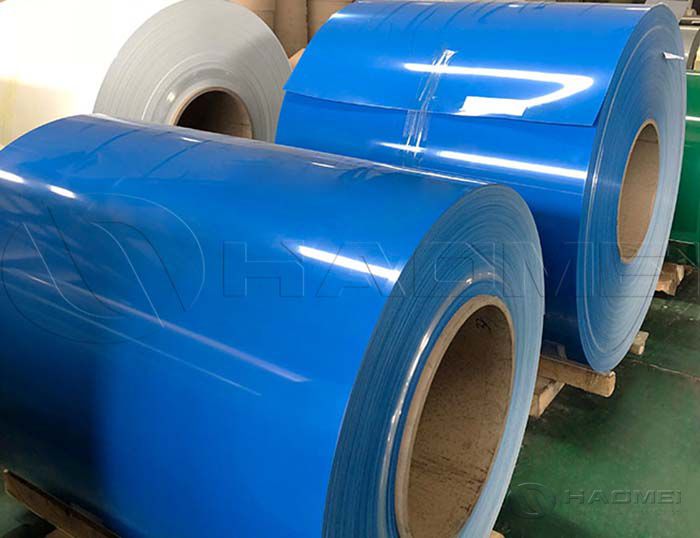
painted aluminium coil for license plate.jpg

There are many alloy grades and specifications of aluminum plate and col for license plates. The common alloys are 1060, 1100, 3003 and 5052 colored aluminum coil. It can also be combined with the actual production of users. 1100 pre painted aluminum coil is used in a large amount while 5052 aluminum painted plate is also used for meeting higher requirements.

1100 aluminum coil is an industrial pure aluminum, of which the aluminum content is 99.00%. Its strength is relatively low, and it cannot be strengthened by heat treatment. It has high corrosion resistance, electrical conductivity and thermal conductivity, low density and good plasticity. After anodizing, the corrosion resistance can be further improved, and a beautiful surface can be obtained at the same time.

The main alloys of the automobile aluminum license plates of some customers with high requirements are 5005 and 5052 coated aluminum coil. Haomei 5005 and 5052 aluminum coil is with stable quality and performance, good formability and corrosion resistance.

The main body of the license plate is generally made of aluminum plate. First, a large aluminum coil is unfolded. Then the unfolded aluminum material is sent to the oven to be heated and shaped, which can make the bent aluminum material flat. This is to remove the internal stress of the metal. After that, it is sent to be cut into individual license plates, and holes for hanging are also punched out at the same time.

As one of the big aluminum coil stock suppliers, Haomei Aluminum has rich colors and specifications of painted aluminum coils for you. Welcome to leave message below to inquire what you need.

Original source: https://www.hm-alu.com/a/painted-aluminum-coil-for-license-plate.html

What Are Popular Uses of The Flexible Aluminum Strip


Aluminum strip for transformer

Dry-type transformer aluminum strip is a special-purpose flexible aluminum strip product produced for transformers. It is got by the slitting of the high-purity aluminum coil with an aluminum content of more than 99.60%. The main alloys are 1060 and 1070. The conductivity is over 63 and the resistivity is below 0.028. The thickness tolerance of the Haomei aluminum strip can be controlled within 0.02mm.

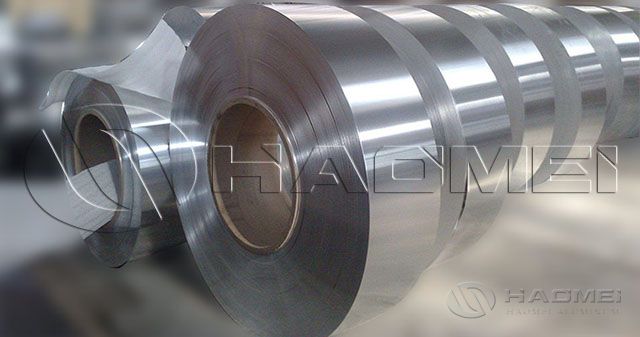
flexible aluminum strip.jpg

Aluminum strip for window spacer

The aluminum strip for spacer is an aluminum product made of high-purity aluminum. After dozens of processes, the surface is smooth and does not oxidize and corrode. It will also not have any effect on the desiccant, effectively eliminating the atomization phenomenon. The main alloys are 1100, 3003 and 3105.

Aluminum strip for shutter

It features bright surface and durability, making it ideal for a wide variety of building and construction applications. Aluminum shutter is mainly made of aluminum alloy, no fading, no aging, sunshade, heat insulation, breathable and fireproof, etc. It is mostly used in office buildings, bedrooms, hotels, villas and other places. The common alloys are 3004, 3005, 5052 and 5754.

Aluminum fin stock

After being processed by professional coiling equipment, aluminum strip can have a high heat dissipation effect. It is a common material in the refrigeration industry, especially in recent years, with an increasing amount. The use of aluminum strips as cooling fins can reduce the cost of raw materials without significantly reducing the cooling effect. The price of aluminum is only one-third of the price of copper.

Aluminum ceiling strip

In suspended ceilings made of mineral fiber boards, aluminum strip ceiling strips can enhance the decorative appearance of the ceiling support structure. This narrow and thin coated aluminum strip is often used to cover the surface of the T-rail. The strip ceilings are being manufactured in different widths and at any desired length. This feature makes them an ideal solution in many applications and designs.

Aluminium strip for lamp base

Because aluminum alloy materials have better electrical conductivity and anti-corrosion and anti-rust properties than steel materials, and light weight. 3004 aluminum strip for lamp base as the characteristics of high strength, good corrosion resistance, and good formability. This material is more suitable for producing lamp holders.

Aluminum alloy lamp for lighting have been widely used since they replaced cast iron lamp holders in the 1990s. This product has the characteristics of light weight, durability, and resistance to corrosion. There are two surface treatment ways: coated and non-coated. As a big aluminum strip supplier, Haomei Aluminum provides rich alloys of aluminum strips with different surface treatment. Welcome to leave message below to inquire what you need.

Original Source: 

Aluminium Strip for Cables Armoring

  Cable factories facing Christmas and New Year shutdowns have little tolerance for material delays or coil defects. An armor-strip issue di...